


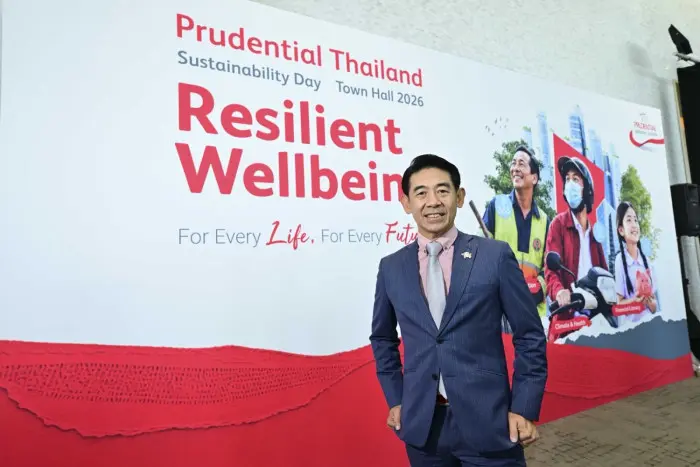
Climate change is emerging as a growing health and financial risk, with rising temperatures, air pollution and extreme weather threatening not only public health but also household incomes and long-term financial security, says insurance and asset management company Prudential.
Bundit Jiamanukoonkit, chief executive and managing director of Prudential Thailand, said climate change was no longer simply an environmental challenge, as its effects extend to healthcare expenses, income stability and the financial resilience of vulnerable households.
Higher temperatures and air pollution can increase health risks, while climate-related disruptions can affect people's ability to earn a living.
"When medical expenses rise simultaneously as income becomes less secure, families may struggle to maintain adequate savings and insurance coverage, widening the protection gap," said Mr Bundit.
Life insurance should not be limited to paying benefits when an incident occurs. It must also help people build awareness, prepare for risks and mitigate their impact before losses happen, he noted.
According to Prudential, Asia accounted for about 30% of global economic losses from natural disasters in 2025, but only around 5% of those losses were insured.
To strengthen resilience, the company established its "Financing the Transition" framework, targeting US$6 billion in investment by 2030.
The group has committed $1.5 billion since 2024 to areas including renewable energy, resilient infrastructure, water management, and health and ecosystem adaptation.
Prudential also identified public-private partnerships, better risk assessment data and risk-sharing mechanisms as important tools for mobilising long-term investment and helping communities prepare for climate-related threats.
In Thailand, Prudential is focusing on research to understand how climate risks translate into health and financial consequences.
The firm's ongoing collaboration with Mahidol University examines the effects of climate change on the health of the Thai population, with the aim of developing evidence to assess risks, identify protection gaps, and inform future policies and insurance solutions.
The Climate Care project studies how climate-related risks affect the health, incomes and coping behaviour of vulnerable groups. A separate collaboration with Urban Studies Lab seeks to use community-level data to develop practical approaches to risk prevention and preparedness.
Financial education is another part of the strategy, helping people build resilience before unexpected expenses or income disruptions occur.
Prudential is also seeking to extend direct protection to groups that may face barriers to accessing insurance. The firm's "Give the Future" initiative, now in the fourth year of implementation, has provided more than 200,000 insurance policies to vulnerable groups.
Mr Bundit said sustainability requires coordinated efforts to help people understand risks, prepare financially and access appropriate protection before a crisis occurs.
By combining research, prevention and insurance, Prudential aims to strengthen the ability of Thai households to withstand interconnected climate, health and financial shocks.