



Beyond the titles and the money
Manchester City's dominance of English football has not been merely a sporting success story told through titles, victories and the stars who have worn the sky blue shirt. It has also become the focal point of a wide-ranging financial debate that raises an extremely sensitive question: what if the club had never received the money that helped it build a side capable of dominating at home and in Europe?
One team's superiority does not simply cost rivals a match or a title. It can strip clubs of Champions League qualification, wipe out enormous revenues, or send them tumbling into the lower divisions, with economic consequences that drag on for years.
That is the thinking behind an attempt by "BBC Sport" to estimate the potential financial cost of Manchester City's rise during the period covered by the investigation, factoring in Premier League finishing position revenues, European prize money, relegation, and the results that settled domestic cup finals.
The report's calculations put the total potential losses to rival clubs at up to 844 million pounds. City, meanwhile, banked around 1.17 billion pounds in prize money, broadcast revenues and bonuses tied to their success over the same period.
Those figures settle nothing. They are not a verdict on compensation owed, and they do not prove any single club would have avoided relegation or reached the Champions League without City's dominance. They are an attempt to measure the scale of the potential financial impact in a case still ringed by serious legal and sporting disputes.
From a team far from the summit to a force dominating England

Manchester City were nobody's idea of a European heavyweight when Sheikh Mansour arrived in 2008. Their Premier League history amounted to little next to their traditional rivals, and the upper reaches of the table were unfamiliar territory.
Since finishing fifth in 1991-1992, the last campaign before the Premier League was founded, the best they had managed was eighth in 2004-2005.
Then the Abu Dhabi money started flowing. The club's financial muscle was transformed, and it showed in the signings, the results and the scale of the ambition.
According to the report, an independent Premier League panel branded the funding arrangement at the heart of the dispute a "disguised funding system". City's sponsorship revenues, meanwhile, climbed from a level comparable to Stoke City's in 2008-2009 to figures that eventually dwarfed Manchester United's.
Fifth place followed in 2009-2010. From there City settled into the top four and never dropped out of it across the entire period the report covers.
Which raises the central question: would rival clubs have finished higher, or banked more money, had City never been able to assemble a squad that strong?
City deny the breaches attributed to them and have lodged an appeal. The financial analysis rests on the charges and findings set out in the report, which does not mean every estimated loss has been legally established or become due for compensation.
How did the potential losses reach 844 million pounds sterling?
The report divided the potential financial impact on other clubs into four main areas, based on the value of the prize money announced in the seasons concerned. The estimated losses were distributed as follows:
- £188.2 million: differences in financial revenues linked to league positions in the Premier League.
- £349.7 million: potential losses linked to relegation from the Premier League.
- £217.8 million: potential lost revenues from participation in the Champions League.
- £88.3 million: losses linked to the domestic cups and the Europa League.
Add it up and the total hits £844 million. For the league positions, the report assumed every side that finished a season behind Manchester City may have missed out on the money that comes with climbing one place in the table.
Relegation costs came from a different sum: the minimum revenue a club could have banked by staying in the Premier League the following season, minus the first instalment of the parachute payments handed to relegated sides.
On the Champions League, the report set Manchester City's earnings from the competition against what other clubs picked up when they played in the Europa League instead.
None of these calculations predict what might have happened in a different scenario. They measure the financial gaps that came out of the actual results.
£1.17 billion: what has Manchester City won?
Manchester City, by contrast, collected around £1.17 billion in revenues linked to their participation and successes during the period covered by the report. The breakdown looks like this:
- £812.3 million from the Premier League, including prize money and broadcasting income.
- £363.4 million from the Champions League.
- £900,000 from winning the FA Cup.
- £300,000 from lifting the EFL Cup three times.
Those numbers show what a sustained spell at the top can be worth. The returns go well beyond the direct prize money, with qualification for the major competitions and the financial distributions that follow adding plenty more.
What the report did not account for were the potential future gains flowing from sporting success: rising sponsorship values, bonuses tied to achievements, or the extra money players can earn off the back of a team's improved standing.
It also left out the flipside for players, namely the bigger salaries and performance-related bonuses they might have banked had they joined clubs with a better chance of competing.
Tottenham the worst affected: a bill of £119.9 million

Tottenham Hotspur come out as one of the biggest financial losers of Manchester City's rise, according to the report's estimates. Their former manager Mauricio Pochettino called the era a period of deception, arguing that sanctions, however severe, would not be enough to repair what had happened.
Why Spurs? In four of the eight seasons City qualified for the Champions League, Tottenham missed out on a place in the competition by a single position.
Across those four campaigns, City banked 148.2 million pounds from the Champions League. Tottenham took 29.9 million pounds from the Europa League. The 2014-2015 season laid the gap bare: City finished runners-up in the league, Spurs came fifth.
City then collected 71.2 million pounds the following European season after reaching the Champions League semi-finals, while Tottenham's Europa League returns stopped at 17.7 million pounds. That's a difference of 53.5 million pounds.
Spurs also finished below City in the league on six occasions, and the total gap in prize money tied to final positions across those seasons came to 6.6 million pounds.
Not everything went against them, mind. In 2013-2014, City's League Cup final win over Sunderland handed the London club a Europa League place the following season, worth 5.1 million pounds.
Weighing those gains against the potential losses across the various competitions, the report put Tottenham's net negative financial impact at around 119.9 million pounds. By this assessment, no club was hit harder.
Liverpool and the League Cup final: a loss worth £37.8 million
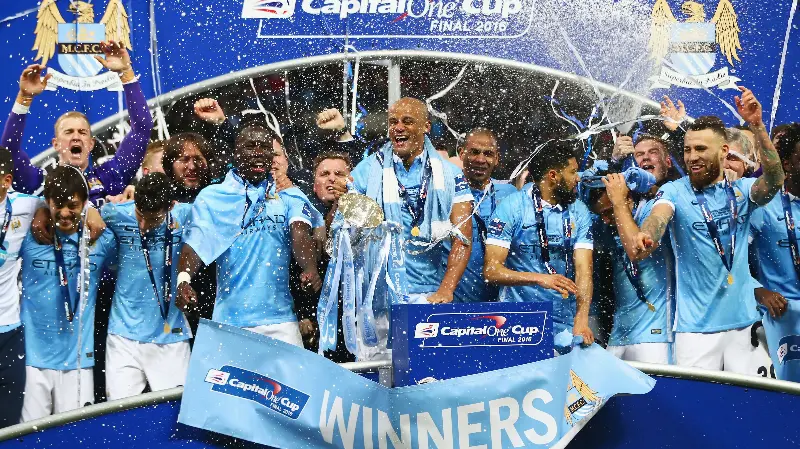
The potential losses were not linked solely to league position and European qualification, but extended to domestic cup finals that could determine the course of an entire season. Liverpool's meeting with Manchester City in the 2015-2016 League Cup final offers a clear example. The match finished 1-1 after normal and extra time, before Manchester City settled the title on penalties.
That result reshaped the European qualification calculations. The Europa League place passed to the next highest-ranked side in the domestic league, West Ham United, after Liverpool failed to finish the season in a position that qualified for continental competition. A Liverpool win in that final, the report argues, would have given them the chance to play in the Europa League and opened the door to additional revenue.
For an estimated comparison, BBC Sport drew on the revenue Manchester United earned when they won the Europa League in the 2016-2017 season, which amounted to 37.8 million pounds, including 26.6 million pounds from the "market pool" share, which is linked to television broadcasting rights. That does not mean Liverpool would have banked the same money or lifted the trophy. It simply provides a benchmark for estimating the potential financial value of European participation.
Add 10.6 million pounds from the prize money differences linked to league positions across the nine seasons covered by the report, and the total potential financial impact on Liverpool reached 52.3 million pounds.
Manchester City won the FA Cup once during the period under study, beating Stoke City in the 2010-2011 season. The report estimated the difference in prize money linked to the final at around 900,000 pounds, bearing in mind that the runner-up would usually receive the chance to qualify for the Europa League.
Everton, Chelsea and Arsenal: the Champions League makes the difference
Tottenham and Liverpool weren't the only ones hit. Other clubs featured in the calculations too, having missed out on chances to play in the Champions League. Everton come out among the worst affected, denied qualification once in 2013-2014 and finishing one place below the final Europa League spot in four other seasons.
Those figures put the gap between Champions League and Europa League football at roughly £32.6 million, based on Manchester City's revenues of £39 million against the £6.4 million Everton banked from the Europa League.
Four near-misses on Europa League qualification cost Everton an estimated £23.2 million. Throw in £10.6 million from differences in league position revenues and the total climbs to £66.4 million, which puts them third on the list of the worst affected clubs.
Chelsea's case stems from their fifth-placed finish in 2017-2018. Manchester City collected £79.2 million that year after reaching the Champions League quarter-finals, while Chelsea took £39.4 million for winning the Europa League. That's a £39.8 million gap. Arsenal also missed out on the Champions League after finishing fifth in 2016-2017, and set against City's revenues, the report put their shortfall at around £22.1 million.
Manchester United escaped lightly. City went out in the round of 16 of the Champions League in 2015-2016, earning £42.6 million, while United won the Europa League and collected £37.8 million. The difference? Just £4.8 million.
The spectre of relegation: Hull City lose £99 million

Defeats cut deeper when relegation from the English Premier League is on the line, because the damage stretches well beyond a single season. Revenues shrink, budgets tighten and keeping hold of players becomes a battle. Parachute payments soften the blow, but they rarely cover everything a club loses on the way out of the top flight.
Nowhere does the report claim Manchester City inevitably sent another team down. What it looked at instead was whether the strength of the Sky Blues shifted the maths in the survival scrap. The assessment took the total prize money collected by the following season's bottom club as a minimum for what a relegated side could have banked by staying up, then subtracted the first instalment of parachute payments.
Hull City sit second on the list of worst affected, relegated twice in the period studied, with estimated losses of £93.78 million. They also finished behind Manchester City four times, adding £5.2 million to the gap linked to finishing-position revenue. That takes the total potential financial impact to around £99 million.
Fourth place goes to Swansea, with losses of £63.1 million. Of that, £54 million came from relegation and £9.1 million from differences in finishing positions across their seven seasons in the Premier League. Newcastle went down after finishing eighteenth in 2015-2016, with estimated losses of £60.4 million, including £7.9 million tied to finishing positions.
Norwich (£43.8 million), Wigan (£39.6 million), Burnley (£31.1 million), Bolton (£26.4 million) and Birmingham (£25.1 million) all feature too. The numbers lay bare the financial risk that comes with relegation. They prove nothing about whether any of those clubs would have survived had Manchester City's results gone differently.
Money piling up with every season: and figures that open the door to questions
Money piling up with every season, and numbers that raise questionsPremier League revenue distribution ties part of the payments to where each club finishes, rather than handing the champion a separate, fixed bonus. The system works on "a base amount and multiples". Finish 20th and you get the base amount. Finish 19th and you get double that, 18th gets three times the amount, and the increase carries on up the table according to where clubs land.
That means the financial gap between Manchester City and the runners-up in a title-winning season comes down, in this specific respect, to the value of a single base amount. But that amount has shot up alongside the growth of television broadcasting contracts. A single place was worth £755,881 in the 2010-2011 season. By 2016-2017, it had reached £1.94 million.
Everton, Liverpool and Stoke City suffered most from the differences between positions, according to the estimates in the report, having finished the nine seasons covered by the study below Manchester City. The total gap for each of them is put at around £10.7 million. West Bromwich Albion and West Ham United lost an estimated £9.9 million each through positional differences, with Swansea down £9.1 million.
Clubs that lasted only a single season in the Premier League recorded smaller differences. Blackpool are in for around £756,756, Portsmouth £800,424 and Huddersfield Town £1.93 million.
The BBC Sport calculations expose a financial dimension that league tables and trophy-lifting photographs tend to hide. Build a dominant side and the effects show up in your rivals' budgets, their chances of competing in continental competition, and their ability to stay in the division at all. Estimating losses, though, is not the same as proving legal responsibility for them. Financial differences alone cannot prove that a particular club would have finished higher or escaped relegation in a different scenario.
What the numbers offer is an attempt to measure the potential impact of Manchester City's rise on the rest of English football, with the club continuing to deny any wrongdoing and standing firm on its legal position. City collected around £1.17 billion from the revenues covered by the report. Their rivals, the estimates suggest, missed out on £844 million.
So the issue stretches well beyond titles and results, posing a bigger question about money and fair competition in modern football. How far can huge investment change the fate of other clubs, and who picks up the bill when financial differences become the deciding factor in the competition's future?