



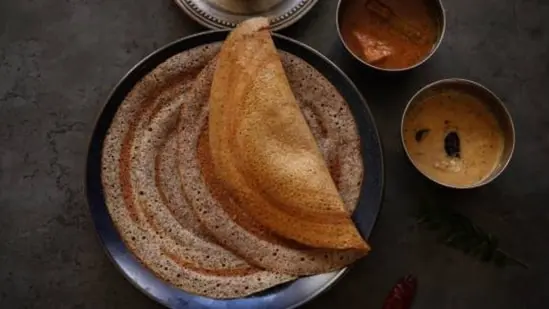
Golden, crisp, and packed with wholesome grains, multigrain dosa is a refreshing way to start the day with better nutrition. Chef Kunal Kapur’s high protein multigrain dosa gives the classic South Indian favourite a protein-rich upgrade by blending millets, lentils, and whole grains into one fermented batter. Paired with fresh coconut chutney or homemade sambar, this breakfast delivers balanced nutrition while remaining light enough for summer mornings.
Inspired by South Indian cooking, Chef Kunal Kapur's multigrain dosa recipe combines urad dal, moong dal, chana dal, ragi, jowar, bajra, and rice to create a naturally protein-rich batter. This healthy breakfast is served with dosa chutney or homemade sambar, adding vegetables, healthy fats, and additional protein. Fermentation improves flavour while making nutrients easier to absorb, creating a high-protein recipe that supports active lifestyles, healthy weight management, and balanced nutrition.">supports active lifestyles, healthy weight management, and balanced nutrition.">supports active lifestyles, healthy weight management, and balanced nutrition.
Blending lentils with multiple grains creates a complete amino acid">amino acid">amino acid profile that supports muscle maintenance and recovery. Millets contribute dietary fibre">dietary fibre">dietary fibre that helps manage appetite while promoting steady digestion and balanced blood sugar levels. Slow-digesting complex carbohydrates provide consistent energy">consistent energy">consistent energy instead of sudden spikes, making this breakfast suitable before work, school, or exercise. Ragi naturally supplies calcium, while jowar, bajra, and lentils provide iron, magnesium, B vitamins, and antioxidants">iron, magnesium, B vitamins, and antioxidants">iron, magnesium, B vitamins, and antioxidants that support bone health, metabolism, and overall wellness.
Unlike regular dosa, which mainly uses white rice and urad dal, multigrain dosa includes several nutrient-rich grains and lentils that significantly increase protein, fibre, vitamins, and minerals">protein, fibre, vitamins, and minerals">protein, fibre, vitamins, and minerals. The wider variety of ingredients creates a more balanced breakfast with better nutritional value while maintaining the crisp texture and familiar flavour. Fresh chutney and homemade sambar complete the meal by adding vegetables, healthy fats, and additional nutrients, making multigrain dosa an excellent choice for healthy eating throughout the summer season.
Multigrain Dosa vs Regular Dosa: Which One Is Better?
|
Feature |
High-Protein Multigrain Dosa |
Regular Dosa |
|---|---|---|
|
Main Grains |
Ragi, jowar, bajra, rice, lentils |
Rice and urad dal |
|
Protein |
Higher |
Moderate |
|
Fibre |
Higher |
Lower |
|
Glycaemic Index |
Lower |
Higher |
|
Energy Release |
Slow and steady |
Faster |
|
Calcium |
Higher (from ragi) |
Lower |
|
Iron |
Higher |
Moderate |
|
Weight-Loss Friendly |
Yes |
Moderate |
|
Best Served With |
Chutney and homemade sambar |
Chutney and sambar |
|
Overall Nutrition |
High protein, fibre, vitamins |
Mainly carbohydrates |
Quick Recipe Snapshot
Preparation Time: 20 minutes
Fermentation Time: 8 hours
Cooking Time: 20 minutes
Total Time: 8 hours 40 minutes
Servings: 4
Difficulty: Moderate
Cuisine: South Indian
Main Ingredients: Millets, lentils, rice
Best Served With: Coconut chutney and homemade sambar
Chef Kunal Kapur's High-Protein Multigrain Dosa
Crispy multigrain dosa, blended with protein-rich lentils and millets, creates a wholesome breakfast, paired perfectly with fresh chutney and sambar.
Ingredients
For the Batter
- ½ cup urad dal
- ¼ cup moong dal
- ¼ cup chana dal
- ½ cup ragi flour
- ¼ cup jowar flour
- ¼ cup bajra flour
- ½ cup rice
- Salt to taste
- Water as required
For Coconut Chutney
- 1 cup grated coconut
- 2 tablespoons roasted chana dal
- 2 green chillies
- Small piece of ginger
- Salt
- Water
- Tempering
- 1 teaspoon oil
- ½ teaspoon mustard seeds
- Curry leaves
Instructions
- Soak rice and lentils separately for 6–8 hours.
- Grind into a smooth batter.
- Mix in the millet flours and salt.
- Ferment the batter overnight.
- Heat a non-stick dosa pan.
- Spread a thin layer of batter evenly.
- Cook until crisp and golden.
- Prepare coconut chutney and add tempering.
- Serve hot with chutney and homemade sambar.
Easy Ways to Boost the Nutrition
- Add oats flour to increase soluble fibre.
- Include flaxseed powder for healthy omega-3 fats.
- Use very little oil while preparing the dosa.
- Pair the dosa with protein-rich sambar.
- Prepare fresh coconut chutney without excess oil.
- Add grated vegetables to the batter for additional vitamins.
- Choose homemade batter over packaged mixes.
- Replace white rice with brown rice for more fibre.
- Serve alongside fresh fruit for a balanced breakfast.
- Control portion sizes while maintaining adequate protein intake.
Nutritional Value Per Serving
This multigrain dosa provides protein, complex carbohydrates, fibre, and essential minerals">protein, complex carbohydrates, fibre, and essential minerals">protein, complex carbohydrates, fibre, and essential minerals that support healthy eating and sustained energy. The combination of millets and lentils creates a balanced breakfast suitable for fitness, weight management, and everyday nutrition.
|
Nutrient |
Approximate Amount |
|---|---|
|
Calories |
285 kcal |
|
Protein |
14 g |
|
Carbohydrates |
40 g |
|
Fat |
7 g |
|
Fibre |
8 g |
|
Calcium |
180 mg |
|
Iron |
3.8 mg |
|
Magnesium |
90 mg |
|
Sodium |
260 mg |
|
Potassium |
320 mg |
FAQs
Is Chef Kunal Kapur's high-protein multigrain dosa good for weight loss?
Chef Kunal Kapur's high-protein multigrain dosa provides protein and fibre that support balanced nutrition and healthy weight-management goals.
Which grains are used in Chef Kunal Kapur's high-protein multigrain dosa?
Chef Kunal Kapur's high-protein multigrain dosa commonly includes ragi, jowar, bajra, rice, urad dal, moong dal, and chana dal.
Can Chef Kunal Kapur's high-protein multigrain dosa be prepared without fermentation?
Chef Kunal Kapur's high-protein multigrain dosa develops better flavour, texture, and digestibility after proper fermentation.