



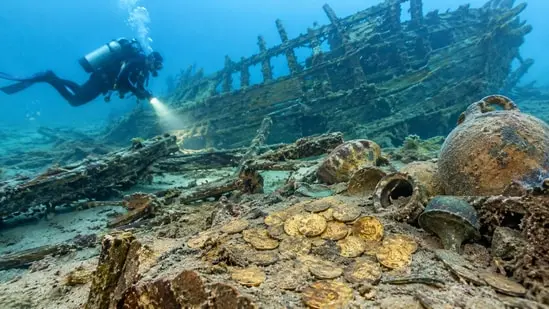
In 2008, while a team was searching for diamonds near the southern coast of Namibia, they stumbled upon an archaeological find. A shipwreck dating back to the Portuguese explorers of the 16th century. The ship, called Bom Jesus, sank off the coast of Namibia in 1533 after it was caught in a storm while en route from Portugal to India. The wreck contains a surprising assortment of cargo, including thousands of silver and gold coins, ingots of copper and lead, weapons, navigational instruments, and more than 100 elephant tusks. According to the University of Oxford's Pitt Rivers Museum, the find enabled researchers with an opportunity to investigate the origin of ivory cargo and examine the trading links connecting Europe, Africa, and Asia during the early period of maritime expansion.
A diamond-mining operation uncovers a lost vessel
The find was made in April 2008 off Oranjemund, a port town in southern Namibia. Workers for Namde, the Namibian government-owned operation in partnership with the world diamond giant De Beers, had been digging and draining a portion of the seabed to find alluvial diamonds. It was then that a geologist observed a strange piece of copper emerging from the uncovered sediment. Several other copper ingots and what looked like the remains of cannon barrels emerged at the worksite, and experts in archaeology were brought to the site.
The diamond excavation was put on hold to secure the site. Later, the archaeologists discovered they had found a Portuguese shipwreck dating to the 16th century. As a lot of a historical evidence and archaeological data were present, they were able to identify the wreck as the Bom Jesus. It sank in 1533, when it was on its way to India. The wreck is one of the oldest known European shipwrecks along the southern African coast. The cold waters of the Benguela Current preserved a great portion of the material found on board.
Gold coins and ivory reveal the scale of ancient trade
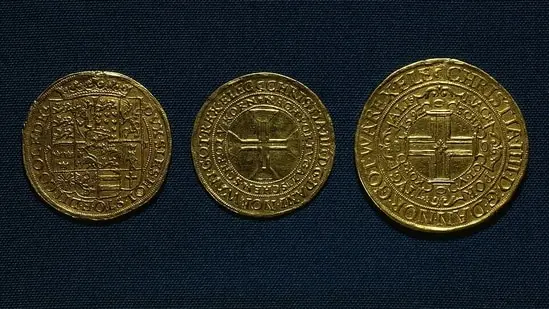
The items recovered were thousands of Spanish and Portuguese gold and silver coins, several tons of copper and lead ingots, cannons made of bronze, swords, guns, navigational aids, and pewter tableware. The dig also found 100 elephant tusks, making the ivory collection one of the most extraordinary aspects of the find. The variety of cargo sheds light on the trading routes of the 1500s.
The copper originated in Central Europe, while the coins reflected the financial connections of European trading powers. The ivory came from Africa, and the vessel was carrying its cargo towards the Indian subcontinent. In research published in Current Biology, the Ivory was studied in 2020 using chemical and genetic techniques. Researchers confirmed that the elephant tusks came from African forest elephants, not savanna elephants. They also determined that the elephant came from West Africa and that the ivory came from at least 17 different herds. The research further found that some of the genetic lineages in the ivory are not present in living elephants, giving scientists important clues about elephant populations 400 years ago.
A rare archaeological record of maritime history
The find was more than just a lost ship. The materials onboard helped researchers understand commerce in the early days of European international trade, as Portuguese traders opened shipping lines with Africa and Asia. The cargo also showed the imports and exports of metal, currency, and animal products spread across the world. In the case of ivory, it shed light on the role of natural resources and African-based trade networks.
The Pitt Rivers Museum at Oxford University has also established that the find was of great scientific value. The results have enabled historians and scientists to piece together some parts of the lost trading world 400 years ago. What started out as an ordinary diamond mining expedition ended with an extraordinary find for archaeology buried underneath the Namibian coastline.