



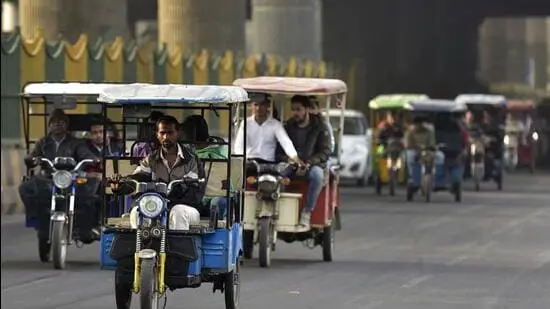
The Delhi government is working on a dedicated policy to regulate electric rickshaws in the capital, aiming to streamline their registration, operation and enforcement amid their rapid growth across the city, transport department officials said.
The department is formulating the policy, which will seek to strike a balance between ensuring order on roads and protecting livelihoods. There are over 200,000 registered e-rickshaws in the national capital, according to official figures.
“E-rickshaws have emerged as a popular, affordable mode of transport across unauthorised colonies, resettlement areas and along metro feeder routes, ferrying thousands of commuters daily. However, the absence of a comprehensive policy has also led to overcrowding on arterial roads, parking issues and commuter safety complaints,” said an official.
The Delhi government is expected to place the draft policy in the public domain once interdepartmental consultations are completed. The official said the policy will mandate clear guidelines for the registration of unregistered e-rickshaws.
“The department is considering that after the policy is notified, owners of unregistered e-rickshaws are given a certain time to get their vehicles registered. This will ensure that their daily livelihoods are not affected despite the regulations,” said an official aware of the developments, requesting anonymity.
The policy might also make badges and uniforms compulsory for e-rickshaw drivers, the official added.
According to a second official, the policy under discussion may include clearly demarcated zones where e-rickshaws can operate, restrictions on high-speed corridors, and tighter enforcement of registration and fitness norms.
“The objective is not to curb e-rickshaws but to integrate them better into the city’s transport ecosystem,” the second official said.
The policy will also aim to regulate operational areas and routes to ensure smoother traffic flow and better road management. In 2014, the government issued a notification banning the parking and plying of e-rickshaws on 236 thoroughfares in the city.
However, enforcement of the rules has posed a challenge, transport experts said.
Amit Bhatt, managing director (India), International Council on Clean Transportation (ICCT), said, “E-rickshaws fill a critical gap that buses and autos are unable to. They are used for first-mile and last-mile connectivity. In the policy that the government is working on, it should focus on integrating e-rickshaws with other shared transport and also address drivers’ vehicle-charging issues. Many times, such rickshaws are charged through illegal electricity points that often lead to accidents.”