



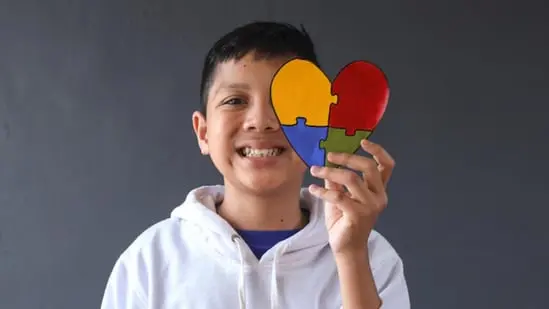
A child with a neurodevelopmental disorder requires a supportive home environment to be able to navigate the world with more comfort, confidence and security. Parents and caregivers need to take certain initiatives early on and build everyday habits that are rooted in efficiency, from teaching the child to communicate better to managing routines and expressing needs to feel emotionally safe.
ALSO READ: Can autism or ADHD be diagnosed in adulthood? Psychologist shares what they look like in adults
Among neurodevelopmental disorders, Autism Spectrum Disorder, or ASD, is diagnosed in schoolchildren. However, supporting a child with ASD does not begin and end with therapy. It also depends on the family's role, including how parents and caregivers respond to the child, understand their needs and create an encouraging, structured atmosphere at home.
World Health Organization defines Autism Spectrum Disorders as a diverse group of conditions and states that they are all characterised by some degree of difficulty with social interaction and communication.
To break it down simply, a child with autism may find it difficult speaking or expressing their needs, find it hard to maintain eye contact, struggle to get along well socially with peers, or get easily agitated by sounds, lights, textures or crowded spaces.
For better management, HT Lifestyle, in a chat with Dr Nikith D’Souza, department of paediatrics at St John’s Medical College Hospital, Bengaluru, attempted to understand how parents can support a child with autism at home, as the first support begins not in therapy but at home.
The paediatrician opined, "Based on studies, about 1 in 100 children worldwide live with Autism Spectrum Disorder, or ASD, and in India, it is becoming increasingly recognised as awareness and understanding of the condition grow. A diagnosis of ASD can feel overwhelming, almost like stepping into unfamiliar territory. But what evidence and countless families have shown is that the right support, when started early and carried forward with intention, can deeply change a child’s life path.”
Dr D’Souza also emphasised that support should not be interpreted as changing or ‘improving’ the child. Rather, it is about understanding them, standing by them and creating an environment where they can truly achieve.
Some of the red flags highlighted by the doctor include avoiding eye contact, not responding to their name, not talking or pointing, or losing skills they once had. If parents notice any of these signs, he advised them to consult a paediatrician instead of waiting for the symptoms to resolve on their own.
Here's a detailed guide from the doctor on how parents can support their autistic kids at home:
1. Intervene early:
- Early support in the first few years of life can help children with ASD show better outcomes in communication, behaviour, and independence.
- Parents, grandparents, and siblings play a key role as the child's first support system.
- Early intervention does not happen only in therapy. It can begin at home through everyday interactions, play and engagement.
- Choose activities and toys that encourage shared participation between the child and caregivers.
- Avoid screen time until the age of 2 years to reduce early dependence on screens.
2. Embrace Augmentative and Alternative Communication devices (AAC):
- Embrace Augmentative and Alternative Communication (AAC) devices as a bridge between your child’s inner world and the people around them, especially when spoken language is limited or absent.
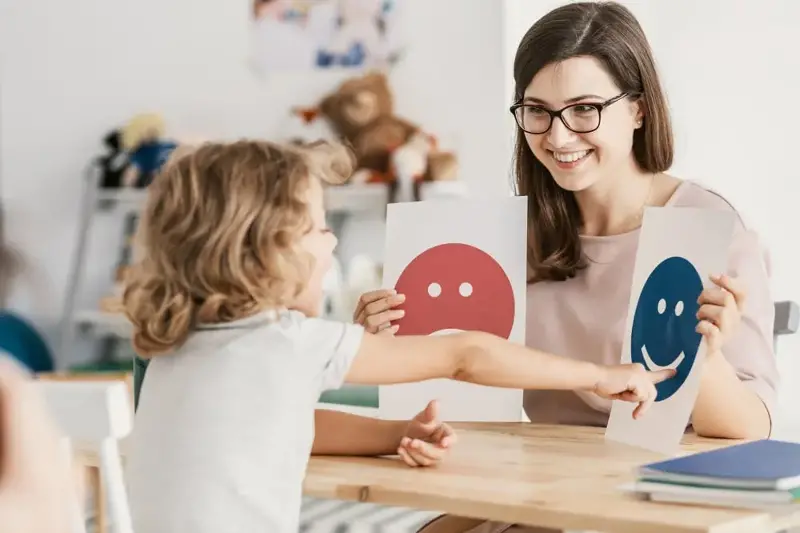
- Use picture boards, communication books, or speech-generating apps on tablets so your child can point, tap, or select symbols to express needs, choices, and emotions.
- Start by modelling AAC yourself, speaking while you press the same icons, to help your child understand that these tools carry real meaning.
- Over time, consistent AAC use can reduce frustration, support language development, and allow children with ASD to participate more fully in family and learning activities at home.
3. Look for strengths amid chaos and enter their world through these interests:
- Notice your child's strengths, such as a strong memory, interest in patterns, creativity or deep focus on specific topics.
- Use these interests as a way to connect, communicate and teach.
- For example, if your child loves trains, use trains for sorting, counting or storytelling activities.
- If your child enjoys rhythmic movement, turn it into calming activities that support sensory needs.
- Creative tools like crayons, blocks or clay can help children express feelings and improve fine motor skills.
- Building learning around the child's interests can reduce frustration, support connection, and make home-based learning more joyful.
4. Build structure and routine- consistently
- Create a predictable daily routine to help the child feel safe, secure and more in control.
- Use visual timetables with pictures or chart for activities such as waking up, meals, playtime and bedtime.
- Involve the child in making the timetable so they feel included and prepared.
- A clear routine reduces anxiety.
- Try to follow the same sequence every day, while allowing some flexibility when needed.
- Add a fixed 'special interest time during the day to include activities the child enjoys.
- Consistent routines can reduce chaos, support self-regulation and create a stable home environment.
5. Seek support for yourself
- Caring for a child with ASD can be rewarding, but it can also be emotionally demanding.
- Parents and caregivers should seek support for themselves, not just for the child.
- Join local or online parent-support groups to share experiences, practical tips and challenges.
- Speaking to other caregivers can help reduce isolation, stress and burnout.
- Make space for your own well-being, regular breaks, counselling if needed, and simple self-care routines, so you can sustain the patience and energy your child relies on.
Note to readers: This article is for informational purposes only and not a substitute for professional medical advice. Always seek the advice of your doctor with any questions about a medical condition.