



A craft can survive for centuries, but it still needs people willing to buy it. That is where trade shows step in. At the 19th edition of HGH India, which took place from June 30 to July 3, 2026, at the Bombay Exhibition Centre in Mumbai, the Indian Heritage Pavilion brings master artisans face to face with retailers, designers, gifting professionals and buyers looking for something beyond factory-made products. I spoke with four craftsmen representing very different art forms, from Khurja pottery and Varanasi metal carving to Rogan art and Surat's rare Sadeli craft. Each one is protecting a legacy, but none is treating tradition like a museum piece.
Rakesh Petigara is finding fresh uses for a craft that almost disappeared
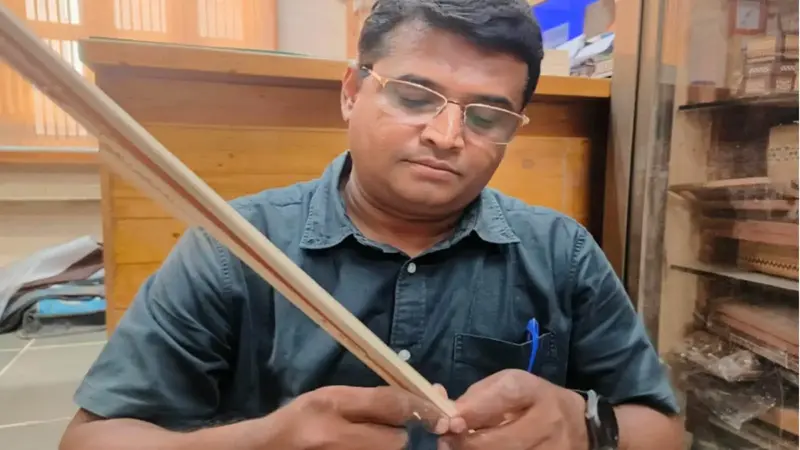
Surat's Sadeli craft is one of India's most detailed forms of wood inlay work. Tiny wooden pieces are assembled into geometric patterns with astonishing precision, making every creation look like a miniature mosaic. Rakesh Petigara explained that the craft travelled to Gujarat through the Parsi community from Persia and once had close to a hundred master artisans. Today, only a handful continue the practice.
Instead of limiting Sadeli to jewellery boxes and decorative keepsakes, Rakesh has expanded into products that fit modern homes. Coasters, pen holders, trays, tissue boxes, furniture accents and interior details now sit alongside traditional pieces. His goal is simple. If people can use Sadeli every day, they are far more likely to value it. He also believes younger artisans need support, financial backing and better exposure so this highly skilled craft does not disappear.
Sagar Kumar Singh is taking temple craftsmanship into everyday homes
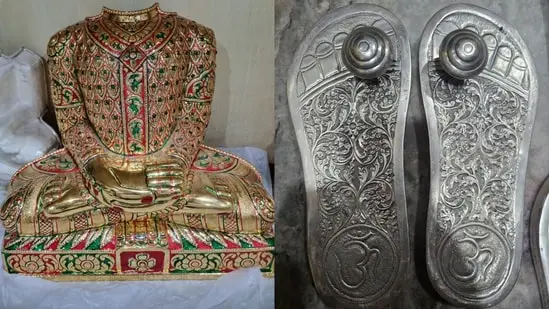
For generations, Sagar Kumar Singh's family has specialised in intricate metalwork from Varanasi, a craft closely linked to temples and sacred spaces. That connection remains strong, but he has also noticed that buyers want handcrafted metalwork inside their homes.
His answer has been to introduce fresh designs while keeping the carving process completely handmade. Decorative pieces, pooja room accessories and home décor have become part of his collection, opening the craft to customers beyond religious institutions. He credits exhibitions like HGH India for creating direct conversations with buyers from cities across the country, giving traditional artisans a chance to explain the work behind every piece instead of competing only on price.
Raisuddin is showing that Khurja pottery belongs in contemporary homes too
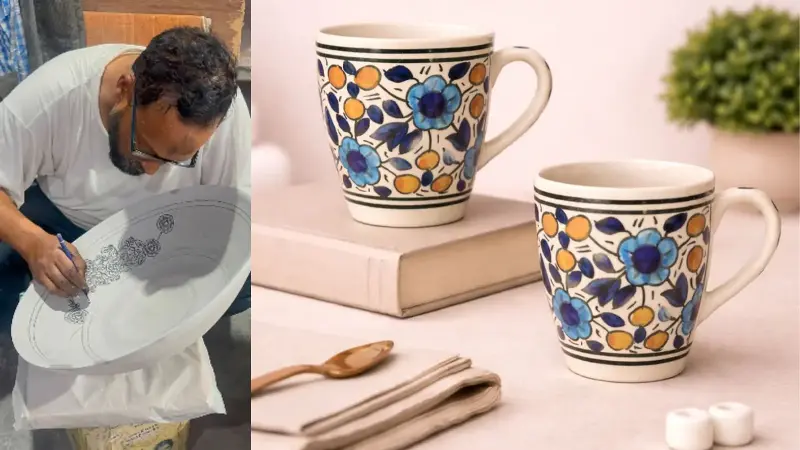
Khurja pottery has long been recognised for its distinctive ceramic work, but Raisuddin feels the craft has far more to offer than people expect. Alongside classic pottery, he now creates lamps, decorative accessories and home décor designed for present-day interiors.
He believes exhibitions play a major role in helping artisans reach buyers who may never visit Khurja itself. Instead of relying on local demand, craftsmen can introduce new collections to retailers and interior professionals looking for handmade products with a story behind them. That direct connection has helped him keep the craft relevant while staying true to its roots.
Sumar Khatri is carrying a 400-year-old painting tradition into modern spaces
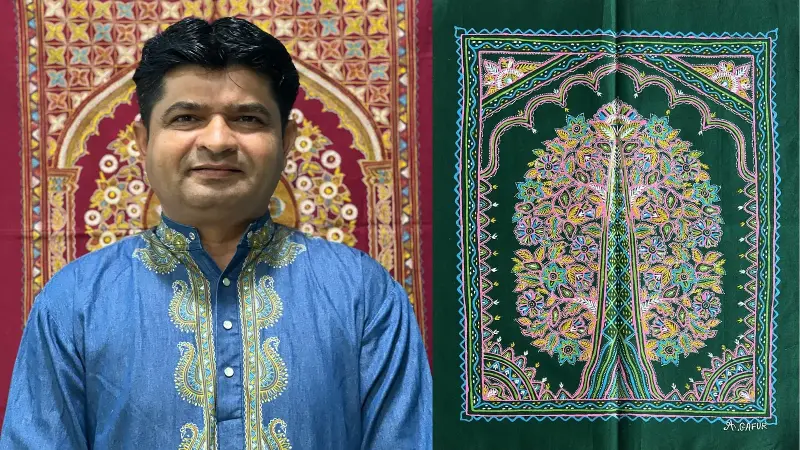
Rogan art from Nirona village in Kutch remains one of India's rarest art forms, and Sumar Khatri has spent more than 37 years practising it. Signature motifs like the Tree of Life continue to attract collectors, but he also pays close attention to changing customer preferences and international demand.
He shared that traditional Rogan designs continue to receive strong appreciation, especially from overseas buyers, proving that authentic craftsmanship still has a place in modern homes. Trade exhibitions allow him to introduce the art to people seeing it for the first time, turning curiosity into conversations and, often, into lasting customers.
A platform that keeps traditions in motion
The biggest takeaway from these conversations was not about preserving history. It was about keeping history useful. Every artisan I spoke with is making thoughtful choices to suit present-day homes and lifestyles without losing the craft's identity. Trade shows like HGH India make those conversations possible by bringing makers and buyers into the same room. Sometimes, all a centuries-old craft needs is the right audience to write its next chapter.
Similar articles for you
Round vs rectangular dining tables: Design expert explains what works best, plus top-rated picks to shop online
Cushion covers to brighten up your rooms this summer; My top 8 picks
Office chairs with lumbar support: Understanding why this is important for your back
Switched my armchair to an ergonomic office chair: Changed how I work from home
The author of this article holds a Master's Degree in Interior Design and has spent over a decade in research, teaching, and designing homes from scratch.
Disclaimer: At Hindustan Times, we help you stay up-to-date with the latest trends and products. Hindustan Times has an affiliate partnership, so we may get a part of the revenue when you make a purchase. We shall not be liable for any claim under applicable laws, including but not limited to the Consumer Protection Act, 2019, concerning the products. The products listed in this article are in no particular order of priority.