



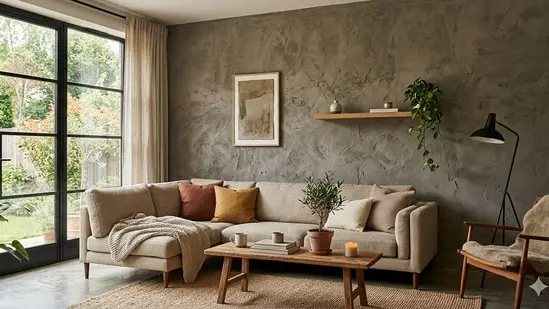
Don't let walls retreat into the background when they have so much potential.
They actively shape how your room feels and looks, making their impact can be incredibly transformative in nature. Just add one painting or a hanging textile artwork and notice how the mood changes altogether. Need a more edgy style? Pin graphic posters, and see how the mood instantly becomes more punk rock from a mellow artistic style to textile artwork.
ALSO READ: Which false ceiling style is the best? Know the 5 types and how to match them with your interior aesthetics
But here's what most people have been missing: treating walls merely as a base for everything else, whether it is hanging art, displaying souvenirs, or adding decor. What is walls themselves could become the statement piece of your interiors?
Textured walls are coming in to solve the problem of boring old walls. And most importantly, sometimes rooms are compact, but the right textured walls can give an illusion of taller height or a more expansive space. For more insights on how textured walls are becoming the new highlight this year, HT Lifestyle, in a conversation with Pratik Singhvi, chairman and managing director at Euro Pratik, shared how textured walls work and what the different types are.
“Textured walls add a structural depth to the space, while also combining the tactile sophistication and material realism. In essence, these walls stand out as architectural statements giving homes a fine touch,” he reasoned, suggesting that textured walls play a bigger role in interior styling, instead of solely relying on furniture or decor pieces to set the mood of the space.
In this way, there is no need for excessive decoration since the walls now act as the focal point by themselves.
So what are the varieties of textured walls? Pratik shared with us these three:
1. Chisel surfaces: Sculpted stone expression
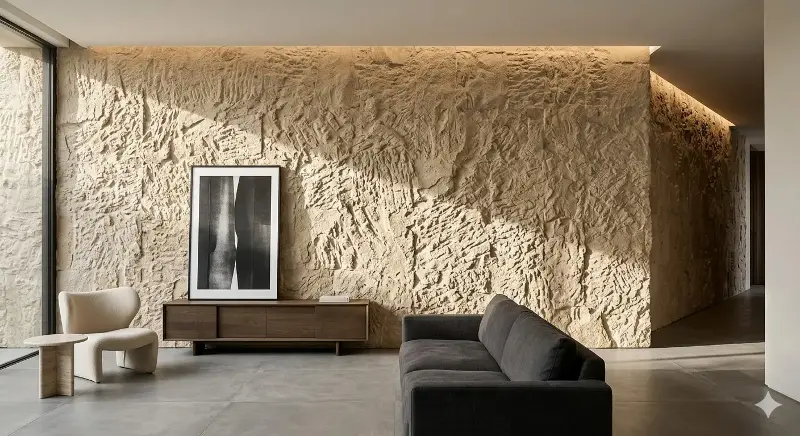
- Inspired by hand-tooled stone finishes, these walls create a carved, sculptural appearance instead of looking flat or painted on.
- The texture introduces a rustic and rugged character, adding raw material depth to interiors.
- The standout feature of this is how the uneven surface interacts with natural and artificial light, creating shifting shadows and visual dimension throughout the day.
- The trend aligns with the concept of ‘architectural minimalism,' where the wall texture itself becomes the focal point without relying heavily on decor.
- Chisel-textured walls work well in living rooms, statement corridors, and hospitality spaces where visual clutter is not desired.
- The strength is in its tactile feel.
2. Soft, linear sophistication
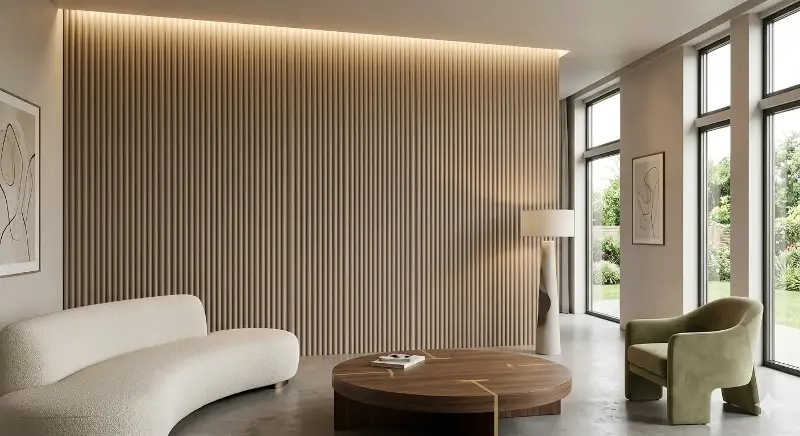
- Soft geometric and controlled linear texture designs combine clean structure with visual softness and creating walls that feel refined without appearing harsh.
- Linear patterns introduce rhythm and continuity across large wall surfaces, making spaces feel more cohesive.
- These designs work well in bedrooms, lounges, and corporate interiors.
- Linear textured walls can also visually elongate spaces, making teh rooms appear taller or more expansive.
3. Fluted and slatted panels: Vertical rhythm
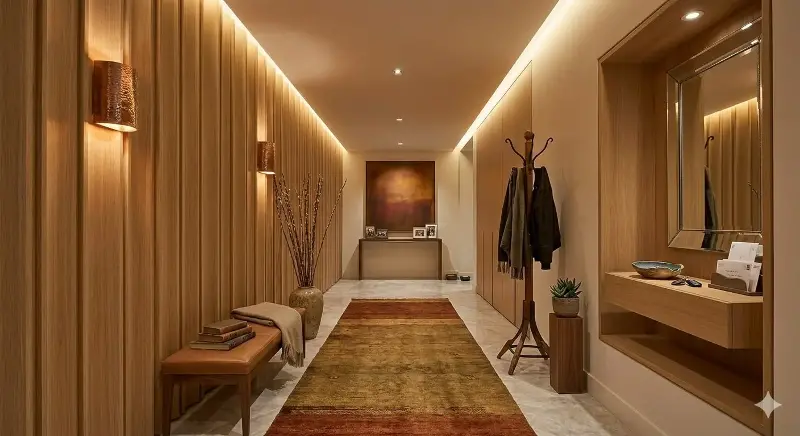
- Fluted and slatted wall panels introduce movement and space, giving the room the illusion of height.
- The vertical grooves of these textures add movement, height perception, and acoustic softness.
- They work well in entrance foyers, corporate boardrooms and reception spaces.