


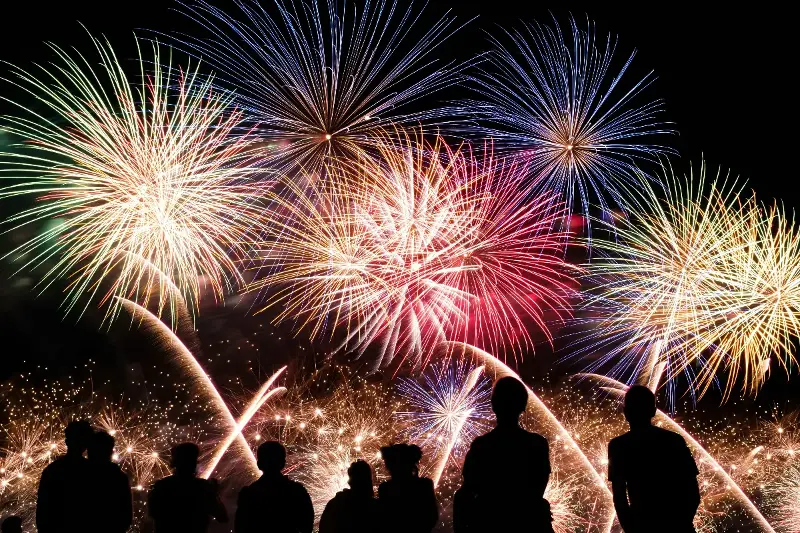
Fireworks are often remembered as a vibrant burst of color, a sharp crack in the sky, and the shared excitement of a crowd looking upward. Yet behind every sparkling display lies a long story of invention, ritual, craftsmanship, and global identity. From ancient festivals to modern city celebrations, fireworks carry meanings far richer than simple entertainment.
Origins in China
The earliest fireworks were not designed to create dazzling light—their purpose was to make noise. Around 2,000 years ago, people in China discovered that throwing bamboo stalks into fires caused them to explode with a loud pop as trapped air expanded inside. These early "firecrackers" were traditionally used to ward off bad luck and celebrate seasonal turns.
By the ninth century, Chinese alchemists developed gunpowder by combining saltpeter, sulfur, and charcoal. Craftspeople filled bamboo tubes with this mixture, creating far louder blasts.
-
Evolution of Design: Makers eventually attached explosive tubes to sticks and arrows, creating the earliest precursor to modern rocket fireworks.
-
Cultural Significance: Red firecrackers became enduring symbols of luck, joy, and protection during key celebrations.
-
Global Hub: Today, the city of Liuyang in Hunan province serves as the world's leading center of pyrotechnic production, supplying major international events.
From Alchemy to Spectacle
Knowledge of gunpowder gradually traveled west along trade routes, reaching Europe and the Middle East by the thirteenth century. European rulers quickly recognized the theatrical potential of these vibrant materials for grand festivities.
During the Renaissance, fireworks became a highlight of royal celebrations in Italy, France, and England. They were featured at coronations, grand weddings, and major state gatherings. Displays were launched from elaborate wooden castles and stage backdrops, accompanied by live orchestral music. Italian pyrotechnicians played a central role, refining designs and guarding secret family recipes for generations.
The Science Behind the Colors
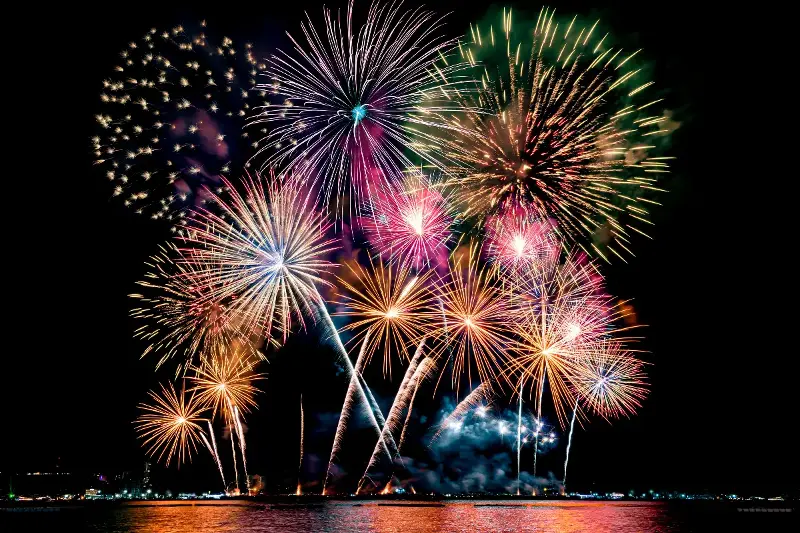
Early fireworks were primarily gold, white, and orange, produced naturally by burning charcoal and metals. The brilliant, colorful displays seen today emerged in the nineteenth century when chemists discovered how specific metal salts alter flame colors.
-
Red: Created using strontium compounds.
-
Green: Produced by barium salts.
-
Blue: Formed with copper compounds—traditionally the hardest shade to perfect.
-
Yellow & Purple: Achieved with sodium and mixed chemical blends.
-
Sparks & Flashes: Powered by aluminum, titanium, and magnesium.
An aerial shell contains a lifting charge, a timed fuse, and small pellets called "stars." The precise arrangement of these stars inside the shell determines the final shape in the sky—from cascading waterfalls to perfect geometric rings.
Fireworks in Global Traditions
Different cultures give fireworks their own special meanings:
-
Japan: Summer festivals (hanabi taikai, meaning "fire flowers") showcase delicate, artistic color combinations along riversides.
-
India: Fireworks are closely linked with Diwali, the festival of lights, representing the triumph of light over darkness.
-
United Kingdom & United States: Fireworks mark major historic milestones, including Bonfire Night in November and Independence Day on the Fourth of July.
-
Latin America & Malta: Intricate structures called castillos spin and release multi-tiered effects during community and religious festivals.
Art, Safety, and a Changing Future
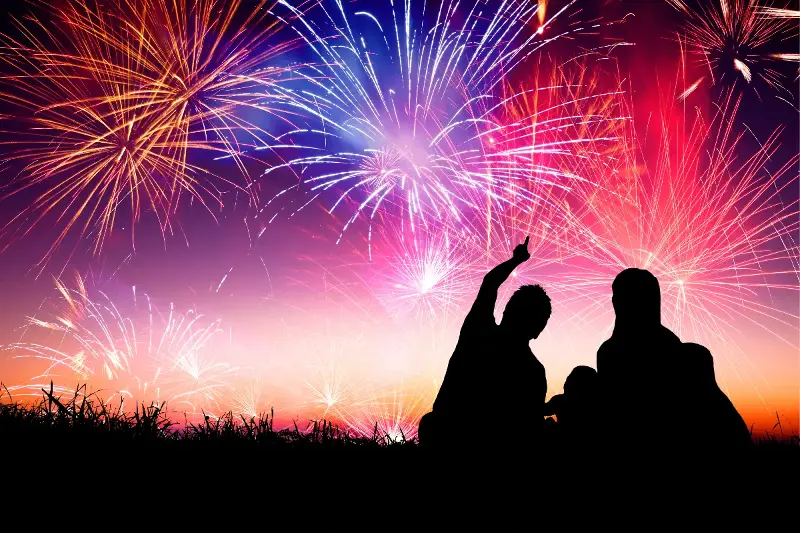
Modern displays function much like live stage performances. Computers synchronize shells to music with millisecond precision, allowing fireworks to burst in time with a song's beat. Major international competitions treat the night sky as a grand canvas.
At the same time, the industry is adapting. To minimize environmental impact and protect sensitive individuals or animals, organizers are increasingly adopting low-noise fireworks or incorporating drone light shows. While drones offer quieter, intricate patterns, fireworks remain a timeless symbol of shared wonder—bringing people together to look up at the same transformed sky.