


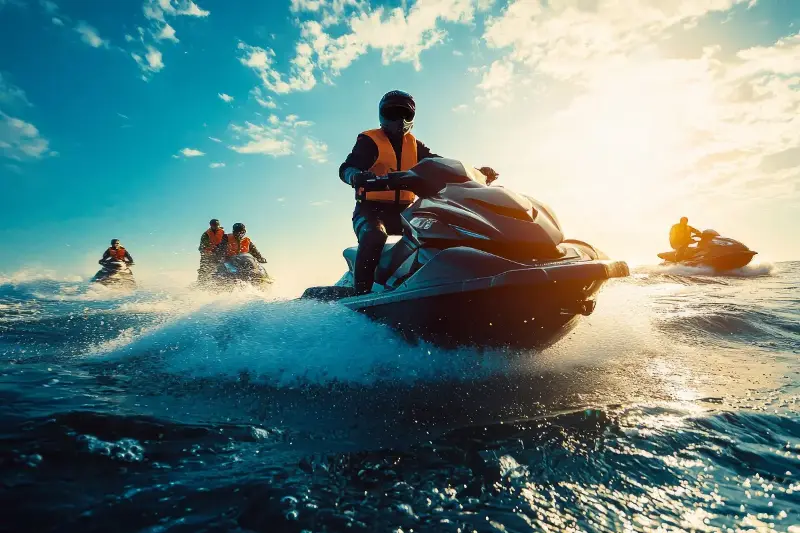
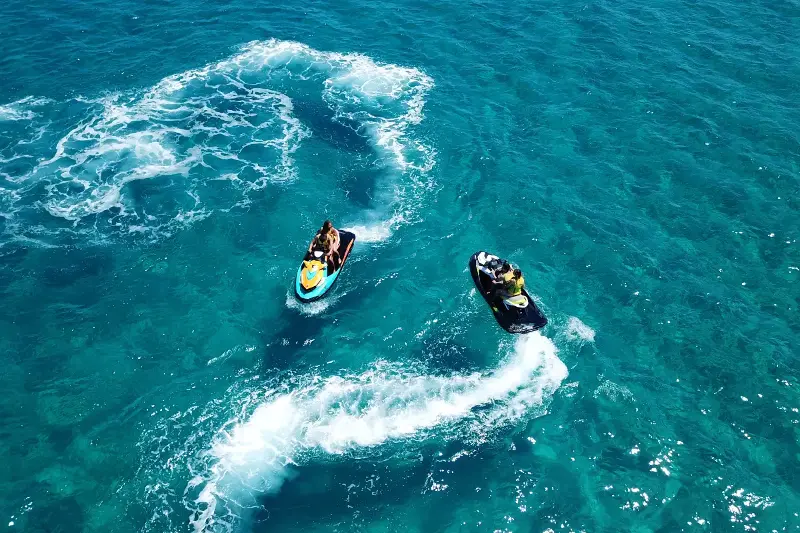
Few vehicles make the water feel as alive as a personal watercraft (PWC). Often referred to generically as a jet ski, this compact machine combines motorcycle-like agility with the freedom of open water. It can carve tight turns, tow a wakeboarder, explore coastlines, or simply provide an exhilarating ride across a calm lake. Behind that splashy image is a surprisingly clever piece of engineering with a history reaching back more than half a century.
While "Jet Ski" is technically a trademark owned by Kawasaki, it has become a common term for various personal watercraft. Major industry manufacturers include Sea-Doo, Yamaha, and Taiga. Whether built for stand-up agility or sit-down cruising, these machines rely on waterjet propulsion rather than exposed propellers, making them safer around swimmers and shallow launches.
From Backyard Innovation to Global Sport
The modern personal watercraft was invented by Australian designer Clayton Jacobson II during the 1960s. After a motorcycle injury, Jacobson envisioned a watercraft that offered the thrilling sensation of leaning into turns without the risk of hard pavement impacts. His early designs placed the rider on a small platform powered by an internal jet pump.
The industry evolved through distinct era-defining milestones:
-
1968: Bombardier introduced an early commercial stand-up model under the Sea-Doo name.
-
1973: Kawasaki launched the iconic stand-up Jet Ski, demanding athletic balance and gaining instant popularity with thrill-seekers.
-
1980s: Multi-passenger sit-down models arrived, offering enhanced stability, seating for up to three people, and ample storage space.
This transition to sit-down models made the activity accessible to families and tourists, turning a niche sport into a cornerstone of recreational boating.
How Jet Propulsion Works
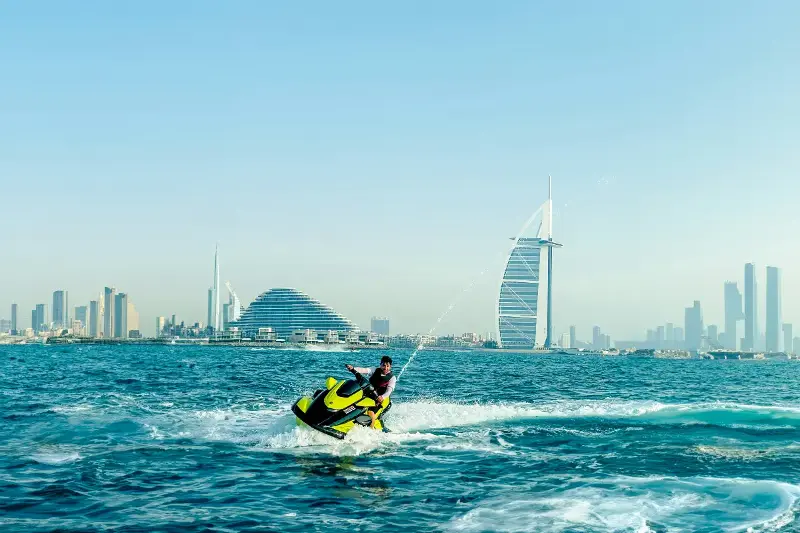
A personal watercraft operates without an underwater propeller. Instead, it draws water through an intake grate under the hull. An engine-driven impeller accelerates this water through an internal pump and expels it via a rear steering nozzle to generate powerful forward thrust.
Key operational characteristics include:
-
Thrust-Based Steering: Turning the handlebars rotates the rear nozzle. Because directional control relies on thrust, riders must maintain active throttle to turn effectively.
-
Electronic Brake and Reverse: Modern systems (such as Sea-Doo's iBR or Yamaha's RiDE) redirect jet thrust to slow the craft, assist in low-speed reverse, and simplify docking.
High-Performance Engineering and Features
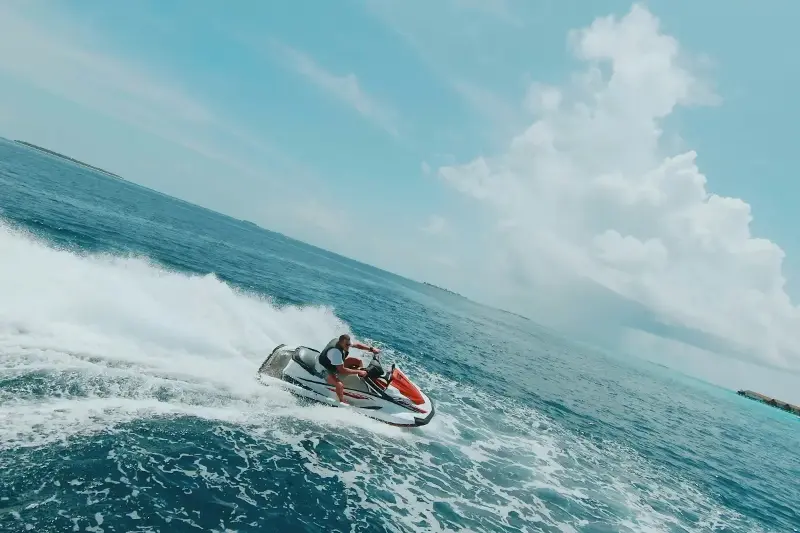
Today's flagship models deliver incredible performance. Supercharged engines can generate 250 to over 300 horsepower in a hull measuring just 10 to 12 feet in length. In many regions, manufacturers voluntarily cap top speeds electronically at around 65 mph to emphasize operator safety.
Modern touring and recreational models offer a wide array of advanced amenities:
-
Electronic cruise control and trim adjustment
-
Waterproof storage compartments and integrated Bluetooth audio systems
-
GPS navigation displays and reboarding steps
-
Tow pylons for skiers, tubers, and wakeboarders
The Rise of Electric Personal Watercraft
Electric personal watercraft represent the newest chapter in marine innovation. Companies like Taiga are developing electric models that deliver instant torque alongside near-silent operation.
Electric propulsion significantly reduces local emissions and engine noise, which is particularly beneficial near quiet marinas, residential waterfronts, and sensitive marine habitats. While battery range depends heavily on speed, load, and water conditions, ongoing advancements in energy density and fast-charging infrastructure continue to expand their practicality for short trips and rental fleets.
Essential Safe Riding Practices
To enjoy a safe and memorable experience on the water, operators should follow foundational marine guidelines:
-
Wear Gear: Always wear a fitted, approved life jacket and attach the engine cut-off lanyard to shut off power if swept overboard.
-
Maintain Distance: Keep a clear buffer zone from swimmers, docks, wildlife, and other vessels.
-
Stay Clear of Debris: If the intake grate draws in weeds or plastic, shut down the engine completely before clearing the pump area.
-
Operator Awareness: Avoid riding after dark, monitor changing weather patterns, and maintain sharp focus while operating the craft.
From motorcycle-inspired origins to sophisticated modern craft, personal watercraft remain one of the most dynamic ways to enjoy open water.