


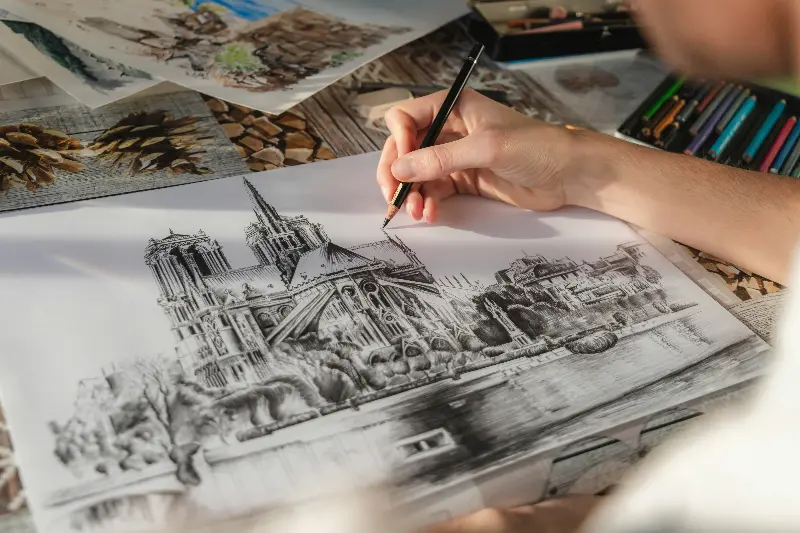
The city is a living organism, always changing, and full of stories waiting to be told. While photographs capture frozen moments, there’s something uniquely powerful about a hand-drawn sketch. Urban sketching bridges the gap between observer and participant, turning artists into storytellers whose lines, smudges, and washes bottle the energy, culture, and quirks of city life.
Whether you wield a battered sketchbook or simply admire the works of urban sketchers online, you’ll discover that these personal sketches do much more than record what’s on the surface—they capture the very soul of the urban landscape.
WHAT MAKES URBAN SKETCHING SO SPECIAL?
At its heart, urban sketching isn’t just about architectural accuracy or aesthetic appeal. It’s about presence. Sketchers must slow down, breathe in the rhythms of the city, and notice details that are often overlooked. Consider the elements that make a place come alive:
- The neon flicker of a late-night diner sign.
- The tilt of balconies on old, weathered tenements.
- The fleeting smiles between strangers on a crowded tram.
Interestingly, urban sketching is an act of selective storytelling. Unlike the impartial eye of a camera, a sketcher’s hand can emphasize what feels important, edit out distractions, and infuse a scene with personal emotion. The resulting artwork resonates with both the artist and the viewer, making even the most familiar street scenes feel fresh and intimate.
A GLOBAL MOVEMENT BORN FROM LOCAL CURIOSITY
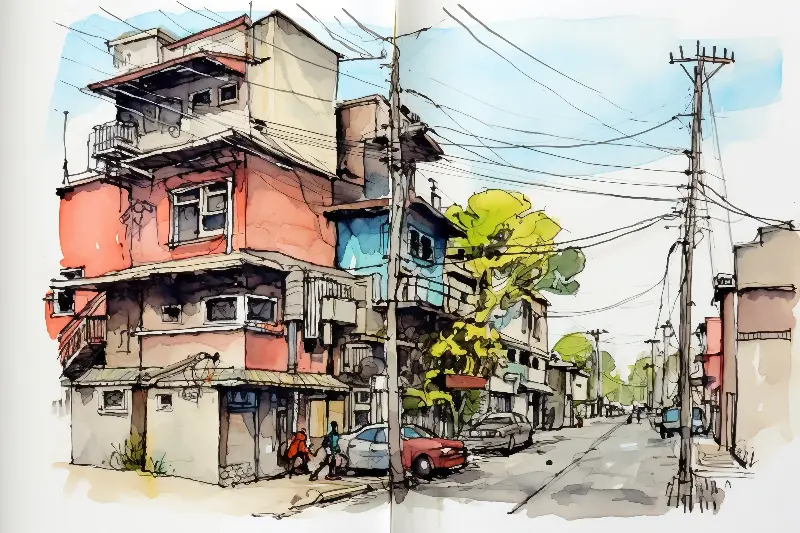
Although artists have drawn cityscapes for centuries, the contemporary urban sketching movement gained real momentum after 2007 when journalist Gabriel Campanario started the Urban Sketchers blog. The platform united people from Barcelona to Bangkok under the shared mantra: “See the world, one drawing at a time.” Today, Urban Sketchers is a global phenomenon. What’s remarkable is the diversity of styles and stories within this community:
- The Romantics: Rendering the majestic spires of Paris in delicate, flowing watercolors.
- The Energizers: Capturing the bustle of a street market in broad, chaotic ink lines.
- The Chroniclers: Using precise technical pens to document every brick and wire of a changing neighborhood.
Despite the differences, the unifying theme is always spirit—a commitment to documenting what it feels like to be in a certain place at a certain moment.
THE ART OF NOTICING: WHY SKETCHES EVOKE CITY LIFE
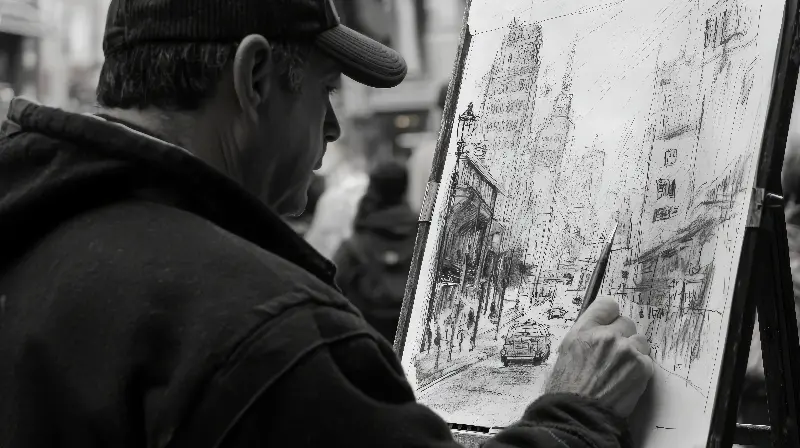
Urban sketching demands observation at a level hardly required by taking a photo. Many sketchers say that the act of drawing connects them deeply to their surroundings—a kind of visual meditation that changes the way they experience familiar places. By spending an hour fully immersed in a spot, artists notice the patchwork of graffiti on a subway wall or the composition of people queuing for coffee on a rainy morning.
Through personal interpretation, flaws and all, these sketches often highlight things others miss:
- Crooked perspectives reveal the awkwardness of buildings squeezed by urban growth.
- Loose, sketchy lines echo the restless, fleeting nature of city life.
- Incomplete drawings—perhaps interrupted by rain or crowds—reflect the unpredictability intrinsic to urban living.
Rather than being seen as failures, these quirks make each sketch vibrate with authenticity.
URBAN SKETCHING AS VISUAL STORYTELLING
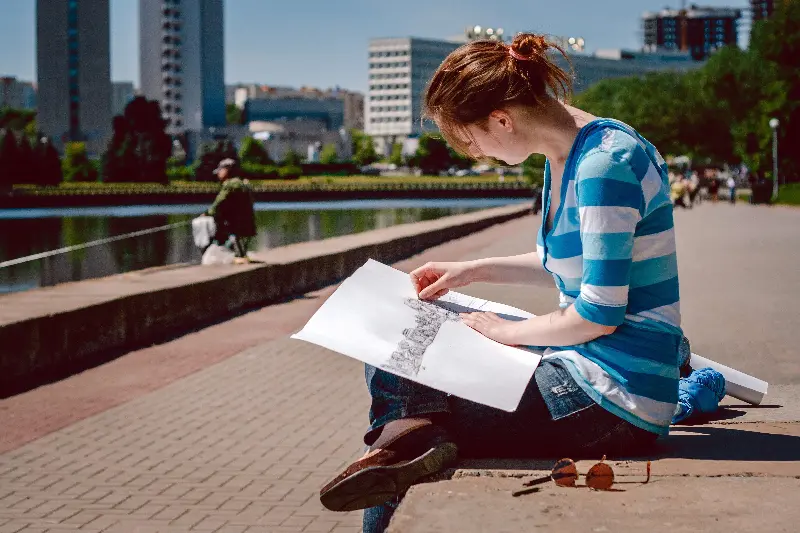
What separates urban sketches from pure architectural illustration is their narrative power. Every sketch presents a story, told through the choice of subject, angle, and detail. One drawing might focus on a guitarist busking in an underground station, his figure dwarfed by tiled arches and moving crowds. Another might zoom in on the mingled aromas and colors of a Sunday market.
Sometimes, urban sketches include handwritten notes or snippets of overheard conversation. These personal touches create a diary-like quality, transforming double-page spreads into vibrant urban journals. As a result, viewers don’t just see a city—they feel a slice of its everyday rhythm.

A DEMOCRATIC ART FORM FOR EVERYONE
Perhaps one of the most beautiful aspects of urban sketching is its accessibility. You don’t need expensive materials or years of formal training. Many urban sketchers use nothing more than a simple pen, a pocket-sized sketchbook, and a basic set of watercolors. Because it’s about process rather than perfection, people from all walks of life—students, retirees, architects, and waiters—find joy in documenting their experiences.
The movement promotes sharing and learning. In public gatherings known as “sketch crawls,” artists draw together and swap stories. Social media communities foster a wide-reaching, supportive network. Each new post invites others to slow down and see their surroundings with greater curiosity.
Personal sketches are an antidote to uniform, digital imagery. They remind us that cities are as much about people’s experiences as they are about bricks and boulevards. Each sketch, with its hand-drawn quirks, becomes a unique, heartfelt tribute to the living spirit of urban life. So next time you step into the buzz of your own city, pause for a moment. There’s a story waiting to be drawn—and only you can capture it the way you see it.