


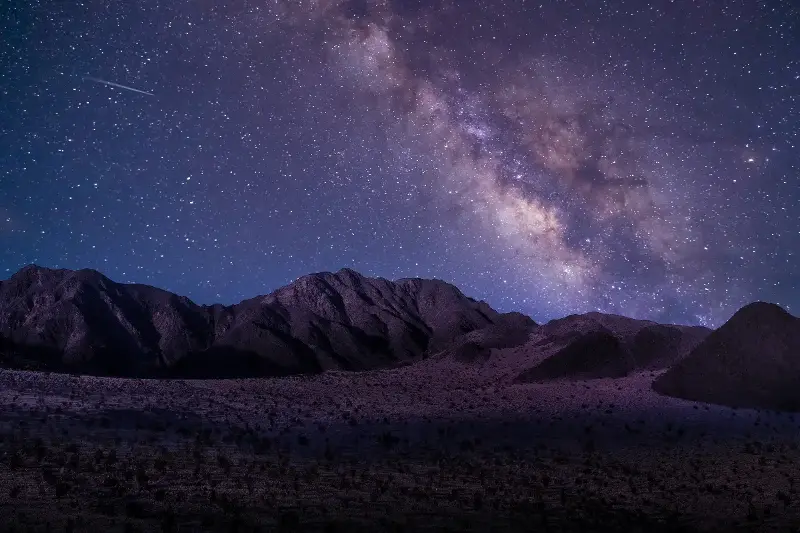
Ever gazed up at the night sky and wondered just how far it all stretches? For centuries, the universe has piqued human curiosity, its sheer size and complexity stretching even the wildest imaginations. Science has given us numbers that are almost too vast to comprehend, but these figures speak volumes about how small we are and how truly infinite the cosmos appears to be. Let’s journey through the mind-bending figures that reveal our universe’s staggering scale.
DISTANCES THAT DEFY IMAGINATION
While the moon feels close at 384,400 kilometers away, cosmic distances escalate quickly once we look further. Our sun, a mere eight light-minutes away, sits about 150 million kilometers from Earth. To put that in perspective, traveling at the speed of a fast jumbo jet, it would take nearly 19 years to reach the sun.
Now, consider our nearest neighbor outside our own solar system: Alpha Centauri.
- Distance: 4.37 light-years (approximately 41 trillion kilometers).
- Travel Time: Using the Parker Solar Probe—the fastest spacecraft ever built (700,000 km/h)—it would take over 6,800 years to arrive.
- Galactic Scale: The Milky Way spans 100,000 light-years, while the observable universe stretches at least 93 billion light-years across.
GALAXIES GALORE AND COUNTING
Our galaxy, the Milky Way, is only one among an estimated two trillion galaxies in the observable universe. This is a number so large it defies visualization. Each galaxy is a massive city of celestial objects:
- Stars: The Milky Way boasts between 100 and 400 billion stars. There may be more stars in the universe than grains of sand on every beach on Earth.
- Exoplanets: If only 5% of our galaxy’s stars had planets in the “habitable zone”, there could be hundreds of millions of potentially life-supporting worlds in our galaxy alone.
Multiply that by the trillions of other galaxies, and the possibilities for life become practically endless.
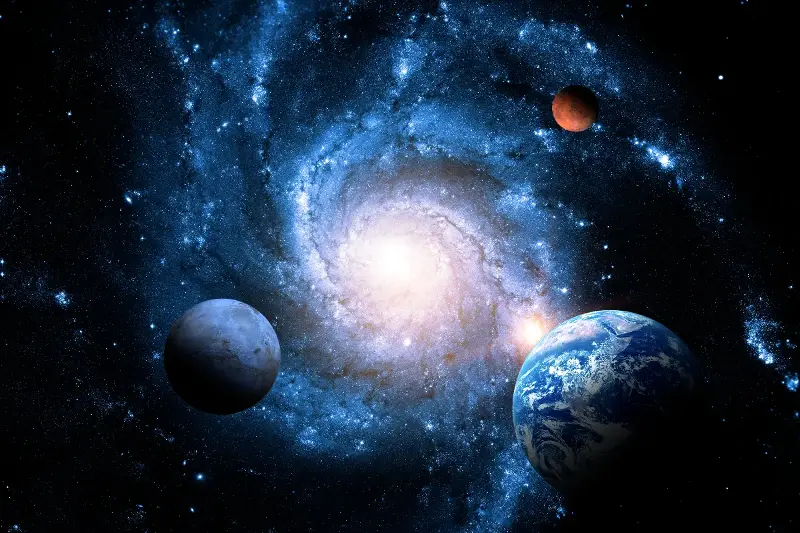
THE AGE OF THE UNIVERSE: LOOKING BACK IN TIME
The universe is ancient—measured at approximately 13.8 billion years based on cosmic background radiation. To understand this timeline, imagine condensing it into a single calendar year:
- January 1: The Big Bang occurs.
- Early September: The Solar System finally forms.
- December 31, 11:59 PM: All of recorded human history occurs in the final seconds of the year.
Because light takes time to travel, peering deeper into space is literally looking back in time. When you see Sirius, the brightest star in our sky, you are seeing it as it was nine years ago. Some of the starlight reaching us today began its journey before Earth even existed.
THE PARTICLE PARADE: ATOMS AND DARK MYSTERIES
The composition of the universe is perhaps its greatest mystery. Estimates suggest there are around one hundred quinvigintillion atoms (a 1 followed by 80 zeros), yet these atoms account for only about 5% of the cosmos. The rest is made of:
- Dark Energy (68%): An enigmatic force causing the universe to expand faster and faster.
- Dark Matter (27%): A mysterious substance we cannot see, but which provides the gravity that holds galaxies together.
The stars themselves vary wildly in size. Betelgeuse is so large that if placed at the sun’s position, it would engulf the orbits of Mercury, Venus, Earth, and Mars. Conversely, neutron stars cram the sun’s mass into a sphere just a few kilometers across; a sugar-cube-sized piece would weigh a billion tons.
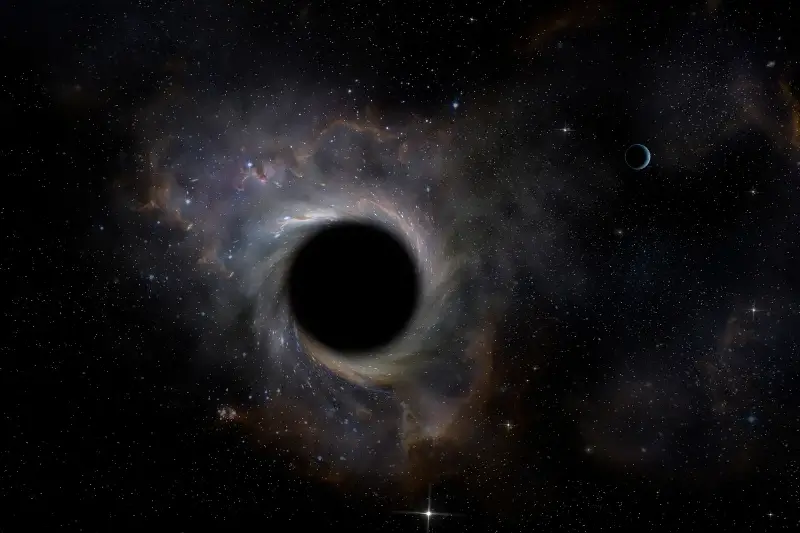
BEYOND THE OBSERVABLE: WHAT LIES OUTSIDE
The "observable" universe is limited by the distance light has traveled since the Big Bang. Most cosmologists agree that the universe likely extends infinitely beyond what we can see. These regions may have different laws of physics or parallel realities. We will never see them because they are receding so fast that their light will never reach us, no matter how long we wait.
A PLACE FOR WONDER
Though these numbers can make us feel small, they also reveal incredible opportunities for discovery. Every time we look up, we are tapping into a legacy of exploration as vast as the cosmos itself. Next time you marvel at the night sky, remember: these numbers are proof of a universe more immense and mysterious than words can ever capture.