



The next time you find yourself wandering an airport terminal, consider this: you’re standing in a marvel of modern engineering, a crossroads where cultures, stories, and history converge. Airports may primarily exist to move travelers from point A to point B, but beneath the surface, they are brimming with impressive feats and unexpected quirks. Here is a journey across the world in terminals, uncovering the facts that make airports truly extraordinary.
AIRPORTS AS ARCHITECTURAL MARVELS
Airports have become playgrounds for visionary architects, with some terminals becoming sightseeing destinations in their own right. These structures are often engineered for smooth passenger flow just as much as aesthetic beauty:
- Starfish Design: The futuristic Beijing Daxing International Airport is shaped like a giant starfish to dramatically reduce walking distances for passengers.
- Massive Footprints: Dubai International Airport’s Terminal 3 is one of the largest buildings ever constructed by floor space.
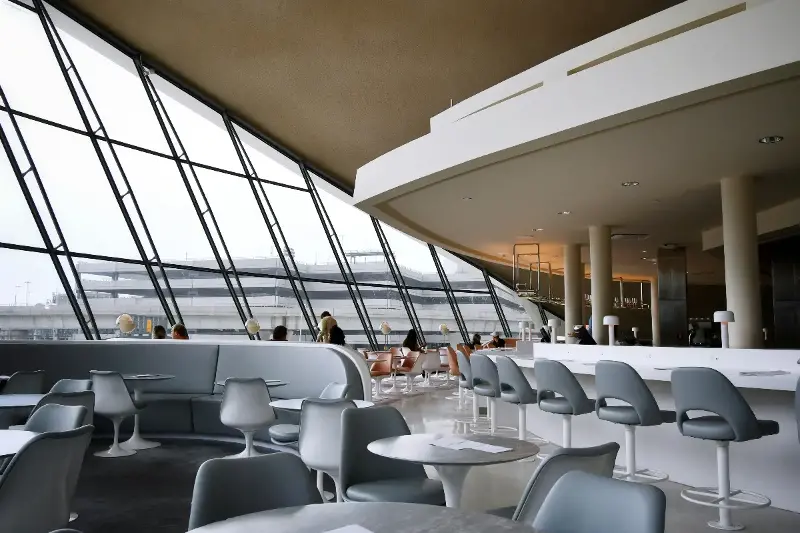
- Adaptive Reuse: The iconic old TWA Flight Center at New York’s JFK, a masterpiece of mid-century modern design, now functions as a luxury hotel, blending nostalgia with modern comfort.
NATURE IN THE HEART OF TRANSIT
The stereotype of airports as sterile boxes is being challenged by hubs that integrate lush ecosystems into their design. Many international hubs now prioritize biophilic elements to reduce traveler stress:
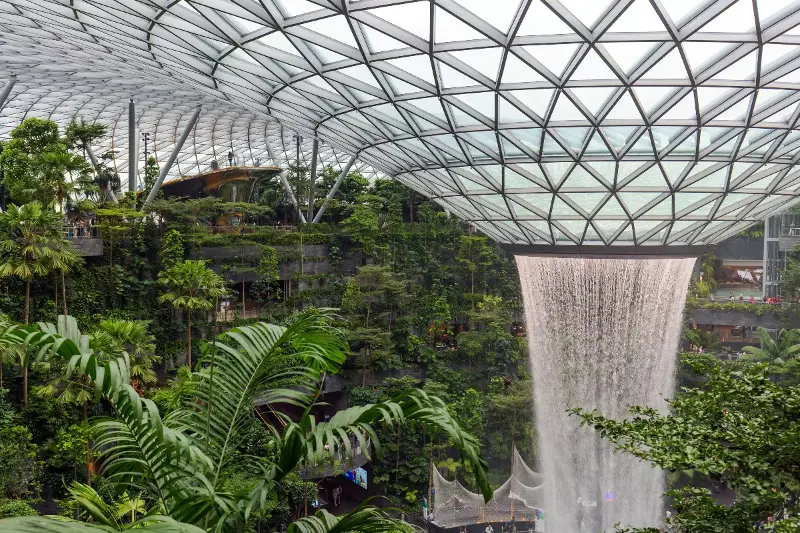
- Indoor Cascades: Singapore Changi features the world’s tallest indoor waterfall, nestled within a five-story garden of 2,000 trees.
- Marine Life: Vancouver International Airport showcases a massive aquarium with native Pacific Northwest marine life.
- Indoor Orchards: In Doha, Qatar, Hamad International Airport features a tranquil indoor orchard and world-class art installations.
TERMINALS AS CULTURAL TIME CAPSULES
Airports often welcome travelers into the culture of their destination before they even clear customs. These hubs act as cultural gateways:
- Operational Breweries: Munich Airport embraces German tradition with an on-site brewery.
- Museum Programs: San Francisco International Airport curates rotating exhibits, ranging from vintage airline uniforms to rare artifacts.
- Cinematic Nods: Auckland International in New Zealand greets travelers with giant figures from famous films shot within the country, celebrating its local cinematic heritage.
UNEXPECTED AMENITIES AND HIDDEN LUXURIES
If you think airport life is only about uncomfortable seats, modern amenities might surprise you. Today's terminals offer services designed for maximum relaxation:
- Wellness: Helsinki Airport offers traditional Finnish saunas open to all passengers, while Seoul’s Incheon provides free showers and an ice-skating rink.
- Literary Escapes: Estonia’s Tallinn Airport features a free lending library where you can grab a book for your flight.
- Sustainability: Oslo Airport utilizes locally sourced wood, moss walls, and solar panels to maintain an eco-conscious footprint.
AIRPORTS AND WILDLIFE ODDITIES
Believe it or not, airports are sometimes sanctuaries for wildlife or utilize nature for operational maintenance:
- The Woolly Crew: Amsterdam’s Schiphol Airport employs a herd of sheep to keep the grass around the runways trimmed in an eco-friendly way.
- Pollination Programs: Dallas/Fort Worth International hosts bee colonies to promote local pollination and honey production.
- Artificial Ecosystems: Kansai International, built on an artificial island, uses specialized designs to protect local bird and fish populations in the surrounding bay.
UNEXPECTED PIECES OF HISTORY
Sometimes, airports are keepers of stories hidden in plain sight. Many runways sit atop layered historical sites:
- Cold War Relics: Tempelhof Airport in Berlin, once a vital lifeline during the Berlin Airlift, now serves as a vast urban public park.
- Preserved Sites: The Ford Island runway in Hawaii remains preserved, still bearing marks from significant historical events of the 1940s.
- Subterranean Secrets: Beneath Paris Charles de Gaulle lies a world of secret passages and abandoned rail lines from the airport's early development.
Airports are more than just stepping stones; they are platforms for innovation and local culture. Next time you pass through a terminal, look closer—you might just spot a hidden gem or a piece of living history.