


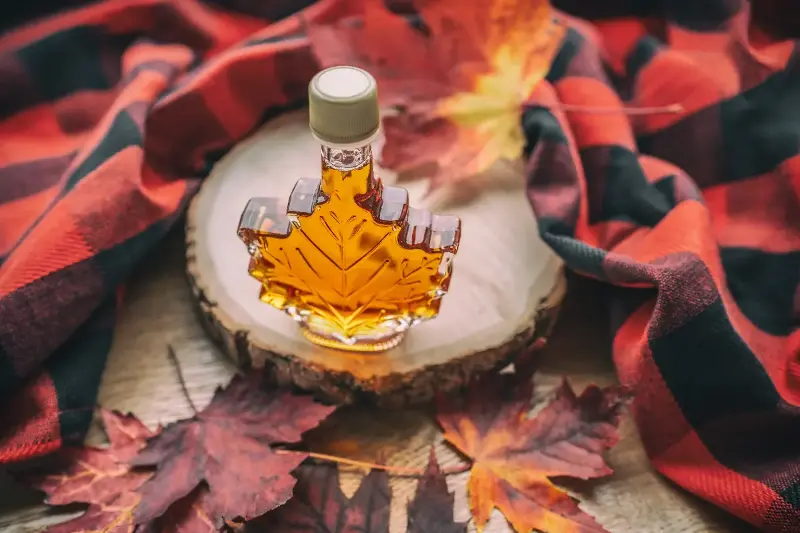
Few foods are as closely woven into the national identity of a country as maple syrup is with Canada. Pour it over a stack of fluffy pancakes or drizzle it on French toast, and you are tasting not just sweetness, but history, culture, and the enduring magic of the Canadian forest.
But how much do you really know about that sticky golden treat in your pantry? Join us for an engaging journey from the first thaw in the maple forest to the syrup on your morning table.
THE ORIGINS OF MAPLE SYRUP: A SWEET LEGACY
Maple syrup has roots as deep as the ancient forests of North America. For centuries before European settlers arrived, Indigenous peoples like the Anishinaabe and Haudenosaunee were harvesting and boiling maple sap. Legends speak of a gift from the Creator, showing how maple offered a life-sustaining source of energy after cold winters.
It’s believed the early Indigenous method involved:
- Cutting V-shaped notches in maple trees.
- Placing birch bark containers underneath to collect sap.
- Concentrating the sap by dropping heated rocks into hollowed-out logs or by freezing and removing the surface ice overnight.
European settlers later adopted these techniques, refining them with metal kettles and wooden buckets. Through generations, this process evolved—but the essence, a deep respect for nature’s sweet bounty, has always remained.
THE SECRET LIFE OF MAPLE TREES
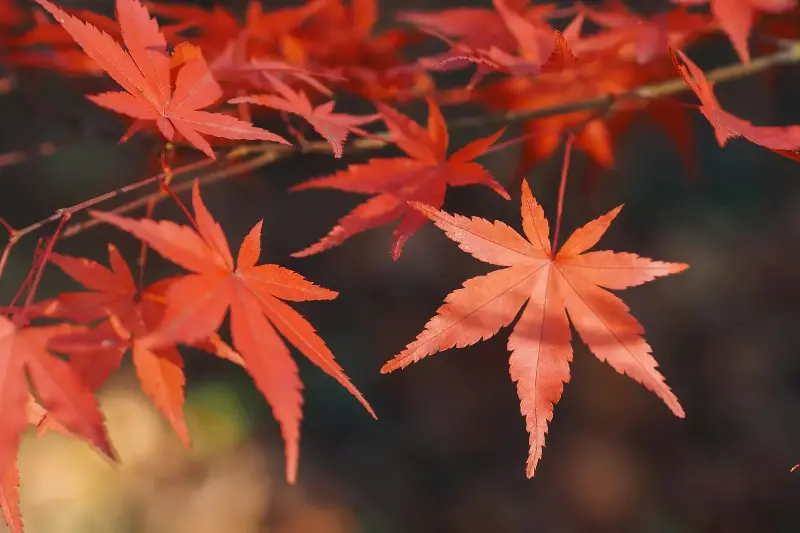
Not all trees can create that magical nectar—only a select few species will do, with the sugar maple (Acer saccharum) reigning supreme. Canada, specifically the provinces of Quebec, Ontario, New Brunswick, and Nova Scotia, is blessed with vast sugar maple forests.
Quebec alone produces more than 70% of the world’s maple syrup—so if you’ve tasted real maple syrup, chances are you’ve tasted the flavors of Quebec’s great forests.
The sap flowing in spring is a result of the trees waking up after a long, cold winter. When daytime temperatures rise above freezing and nights stay chilly, pressure inside the trunk changes, pushing sap out through natural channels. Tapping the tree—by drilling a small hole and inserting a spout—lets the precious sap drip into collection buckets or, in modern operations, plastic tubing that brings it straight to the sugar shack.
TURNING SAP INTO LIQUID GOLD
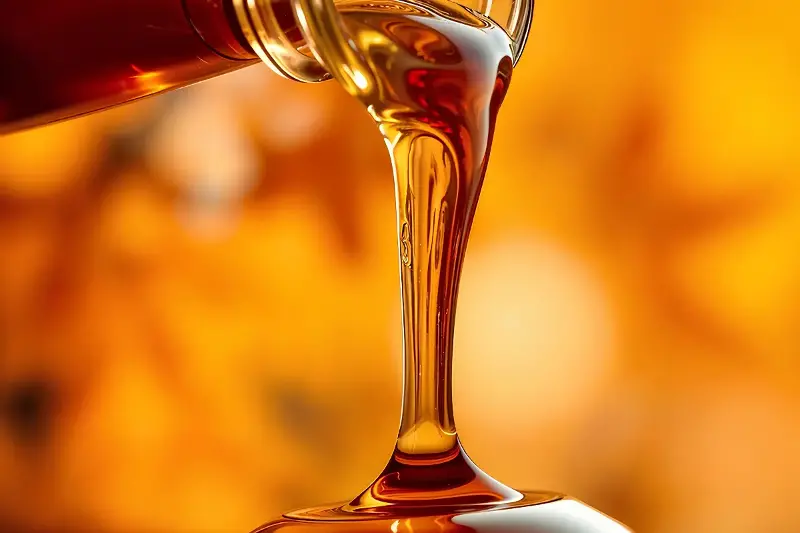
It takes a staggering 40 liters (about 10 gallons) of maple sap to create just 1 liter of maple syrup. Sap is mostly water with about 2-3% sugar, so it requires hours of boiling to evaporate the excess liquid and concentrate the sugars into syrup. Traditionally, this was done in wood-fired evaporators inside cozy sugar shacks, filling the air with sweet steam every spring sugaring season.
Many small producers keep to traditional methods, while larger operations use reverse osmosis to remove much of the water, making boiling more efficient and environmentally friendly. Regardless of the method, pure maple syrup is exactly that—no additives, no flavors, just sap, time, and ancestral know-how.
The finished syrup is filtered and graded according to its color and flavor intensity, which range from golden and delicate to dark and robust. Lighter syrups are often preferred for pancakes, while darker, more intense grades are perfect for recipes and baking.
A CULINARY ICON AT HOME AND ABROAD
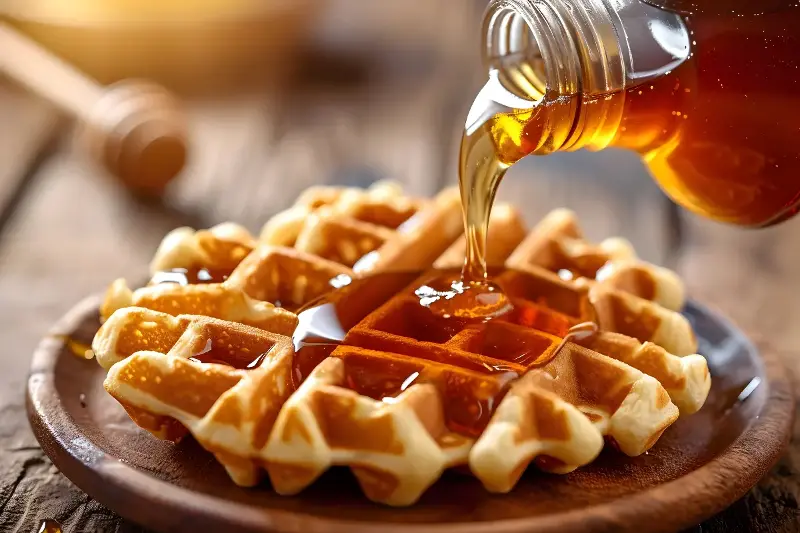
Most of us think of maple syrup only as a topping for pancakes or waffles, but its uses stretch far beyond the breakfast table. Chefs across the world incorporate maple syrup into rich marinades for roasted dishes, glazes for root vegetables, salad dressings, and even desserts like maple crème brûlée.
Canada’s French-speaking Québécois have their own seasonal delicacies:
- Tire d’érable (Maple Taffy): A delightful treat made by pouring hot syrup over fresh snow to create a chewy candy.
- Sugar Shacks: Community hubs that open their doors to families and travelers each spring, serving hearty meals cooked with maple syrup in nearly every dish.
SUSTAINABILITY AND THE SWEET FUTURE OF MAPLING
One of the most fascinating aspects of maple syrup production is its harmony with the environment. Maple trees tapped for syrup are not harmed; a single tree can be tapped for decades. Responsible producers limit taps to keep trees healthy, ensuring forests stay vibrant for future generations.
In recent years, environmental consciousness has driven even more careful management of maple forests. Producers work with foresters and researchers to:
- Protect local forest biodiversity.
- Adapt to shifting climate conditions.
- Ensure the sweet spring season returns year after year.
With global demand for real maple syrup rising, Canada’s commitment to sustainable practices is part of what keeps the industry strong and respected around the world. Next time you taste real maple syrup, remember: you’re savoring not only sweetness, but centuries of craft, care, and Canadian pride.