


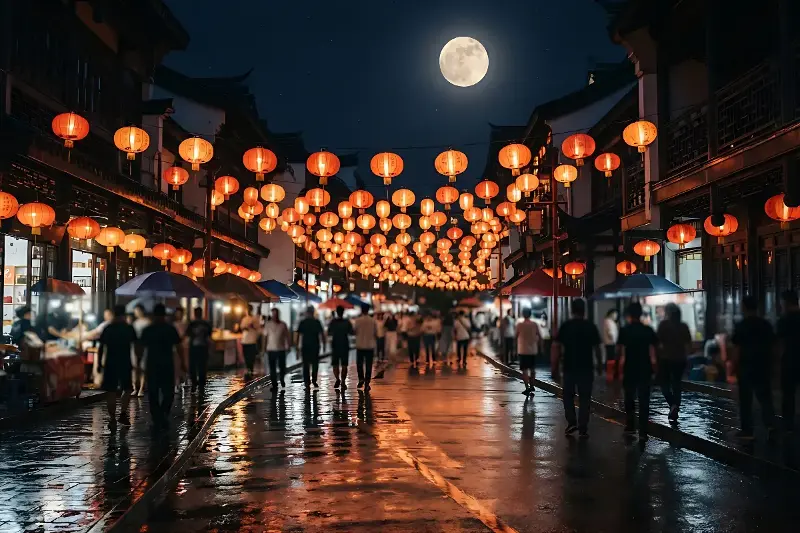
When the full moon rises in early autumn, families across East and Southeast Asia gather for one of the year’s most cherished occasions: the Mid-Autumn Festival. Also known as the Moon Festival, it is a time for reunion, gratitude, storytelling, glowing lanterns, and richly filled mooncakes. Its date changes each year because it follows the lunar calendar, falling on the 15th day of the eighth lunar month, when the moon is traditionally believed to be at its brightest and roundest.
The festival holds immense cultural importance across China, Vietnam, Korea, Singapore, Malaysia, and diaspora communities around the world. While customs differ from place to place, the central idea remains warmly familiar: people look up at the same full moon and think of loved ones, whether sitting nearby or far away.
The Legend of Chang’e and the Jade Rabbit
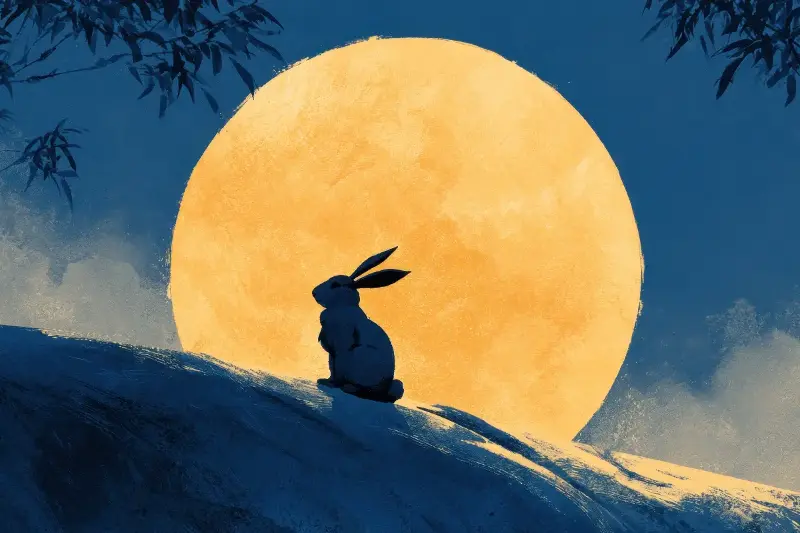
The best-known Mid-Autumn story is the legend of Chang’e, the moon goddess. Long ago, ten suns appeared in the sky, scorching the earth. A skilled archer named Hou Yi shot down nine of them, saving the land. As a reward, he received an elixir of immortality. Wanting to stay with his beloved wife, Chang’e, he chose not to consume it and kept it safe at home. However, when an intruder attempted to steal the potion, Chang’e drank it to protect it, floating upward to become the moon's immortal guardian.
Hou Yi placed her favorite treats beneath the full moon to honor her, giving rise to the tradition of moon-gazing and sweet offerings. Chang’e is often depicted with the Jade Rabbit, another beloved figure in lunar folklore:
- The Mortar and Pestle: According to myth, the rabbit lives on the moon, grinding medicinal herbs with a mortar and pestle.
- Symbol of Selflessness: Ancient tales link the rabbit to kindness and generosity, explaining why deities honored it with a place on the lunar surface.
- Cultural Variations: In Japan, moon markings are often imagined as a rabbit pounding mochi, showing how one moon inspires diverse regional stories.
Mooncakes and the Taste of Reunion
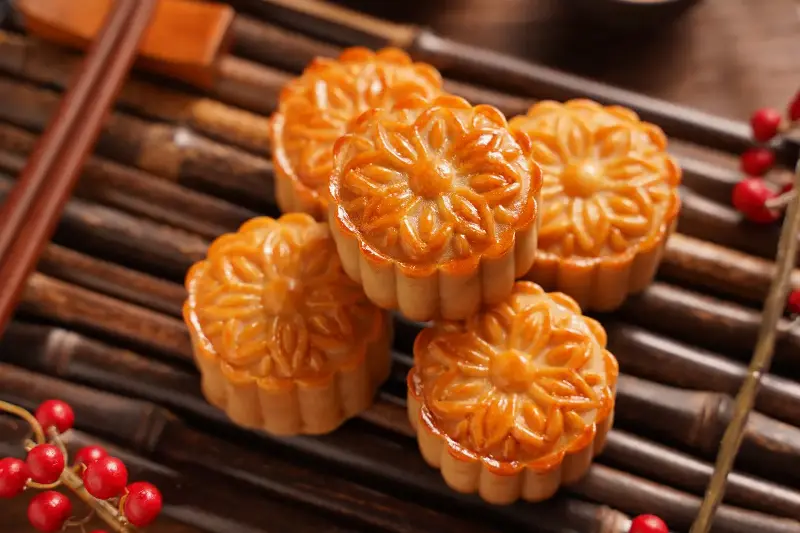
Mooncakes are the undisputed highlight of the season. Their round shape reflects the full moon, symbolizing completeness, unity, and family reunion.
Traditional baked mooncakes feature a golden crust filled with rich lotus seed paste, red bean paste, mixed nuts, or salted egg yolk. The egg yolk is particularly symbolic, mimicking the glowing full moon inside the pastry. Modern bakeries also produce creative variations:
- Snow-Skin Mooncakes: Soft, chilled treats filled with fruit, chocolate, custard, or coffee.
- Vietnamese Bánh Trung Thu: Offered in baked and soft varieties, filled with mung bean, sesame seeds, or salted egg.
- Artisanal Gift Boxes: Beautifully decorated boxes adorned with lanterns, flowers, and rabbits, making them popular seasonal gifts among family and colleagues.
Because mooncakes are rich and filling, they are traditionally sliced into small wedges and shared with hot tea.
Lantern Light and Family Celebrations
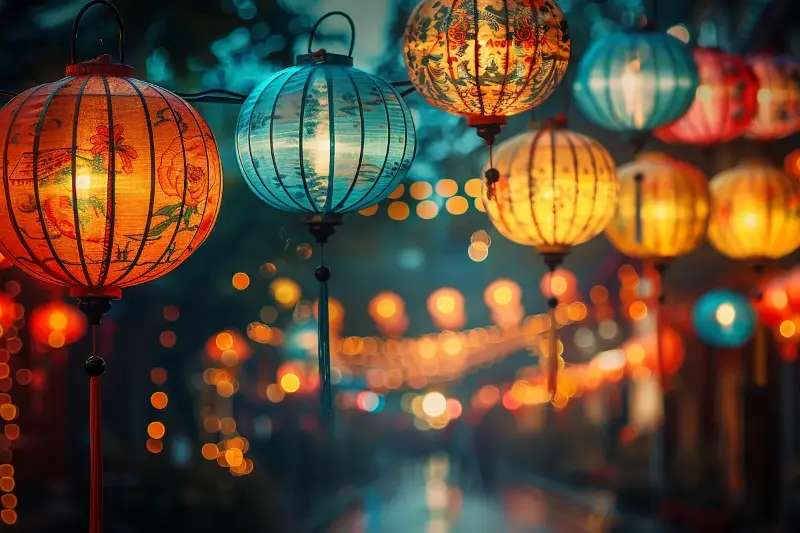
As sunset arrives, glowing lanterns bring vibrant color and energy to the streets. Children carry bright lanterns shaped like rabbits, stars, lotuses, or whimsical characters, while public parks showcase massive illuminated sculptures. In many places, lantern riddles are attached to paper slips for visitors to solve for fun.
Family feasts form another essential part of the evening:
- Seasonal Harvest Fruits: Dining tables feature pomelos, pears, grapes, persimmons, and apples.
- Symbolic Pomelos: Popular in southern China and Vietnam, large round pomelos represent abundance and family togetherness.
- Youth-Focused Traditions: In Vietnam, the Mid-Autumn Festival is warmly celebrated as a children's festival, complete with lively lion dances, drum performances, and colorful masks.
Different Names, Shared Moonlight
Across Asia, harvest traditions highlight a common appreciation for family and nature:
- Korea’s Chuseok: Families gather to celebrate the harvest, honor ancestors, and share songpyeon (half-moon-shaped rice cakes filled with sesame seeds or chestnuts).
- Japan’s Tsukimi: Moon-viewing gatherings feature decorations of pampas grass and offerings of tsukimi dango (soft rice dumplings).
Mid-Autumn traditions continue to evolve across global cities, from vibrant community festivals to quiet tea moments at home. Under the bright full moon, ancient legends feel close, family bonds matter deeply, and the sky feels full of magic.