


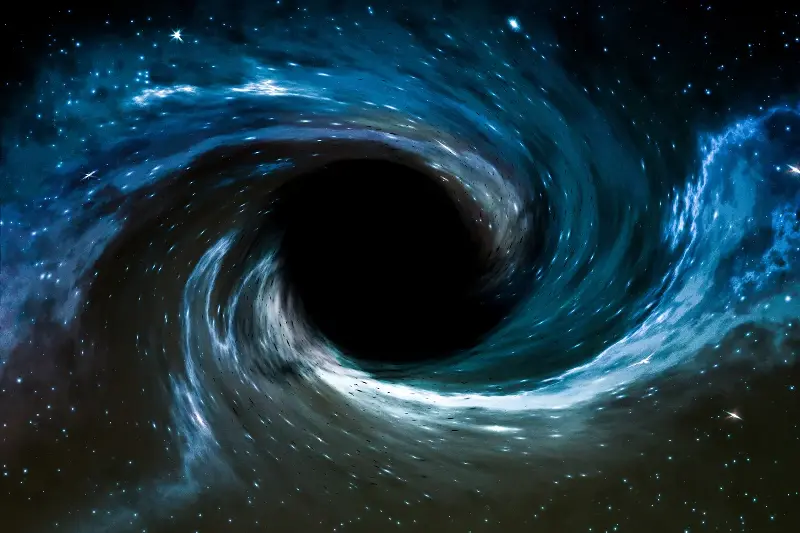
Black holes have long captivated the imagination of scientists and stargazers alike. These cosmic enigmas, found at the very heart of galaxies, are not only powerful but deeply mysterious. They push the boundaries of our understanding of space, time, and the fundamental laws of physics. Today, we journey into the universe’s most powerful black holes—exploring their fascinating origins, enduring secrets, and the way they shape the grand tapestry of the cosmos.
BIRTH OF THE BEHEMOTHS: WHERE DO POWERFUL BLACK HOLES COME FROM?
At the core of nearly every large galaxy lurks a supermassive black hole. Unlike smaller black holes, which form when massive stars collapse, these giants tip the scales with masses ranging from millions to billions of times that of our sun. Scientists are still unraveling how such immense objects come to be:
- Merging Giants: One compelling theory suggests these titans are the result of smaller black holes merging over eons, gradually growing as they consume surrounding gas, stars, and other black holes.
- Direct Collapse: Another hypothesis points to the dawn of the universe, suggesting these monsters formed from massive, primordial gas clouds that collapsed under their own gravity, bypassing the star formation stage entirely.
Future observations from advanced instruments, such as the James Webb Space Telescope, are expected to provide clearer insights into which story the universe prefers to tell.
A TOUR THROUGH THE TITANS: NOTEWORTHY BLACK HOLES
The cosmos is home to several legendary heavyweights:
- Sagittarius A: Located at the center of our own Milky Way, this entity boasts a mass over four million times that of our sun. Recent data provided the first groundbreaking image of its surrounding ring of light.
- TON 618: A true cosmic colossus weighing about 66 billion solar masses. Situated over 10 billion light-years away, it serves as an ancient, massive relic.
- M87: Positioned in the giant elliptical galaxy Messier 87, this was the first supermassive black hole to be directly imaged by humanity, confirming that these objects are far more than just theoretical constructs.
GRAVITY AND THE LIMITS OF PHYSICS: THE EVENT HORIZON PUZZLE
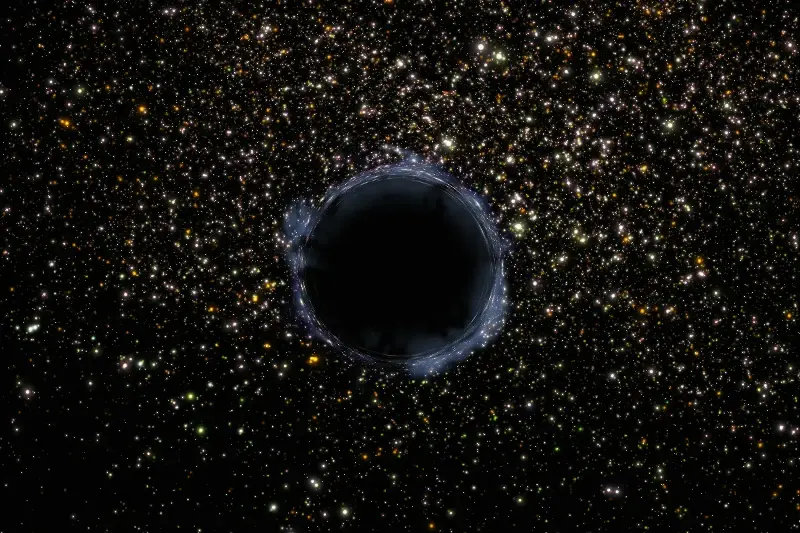
Regardless of their size, all black holes possess an infamous boundary known as the event horizon. It acts as a point of no return—once crossed, not even light can escape the intense gravitational grasp. What lies beyond this edge remains one of science’s greatest challenges.
According to general relativity, the center of a black hole—the singularity—is a region where gravity becomes infinite and our known laws of physics effectively break down. This remains a central focus for researchers attempting to solve the black hole information paradox, which questions whether information swallowed by a black hole is lost forever or preserved in ways we have yet to comprehend.
BLACK HOLES: DESTRUCTIVE OR CREATIVE FORCES?
While it is easy to view these objects as cosmic vacuum cleaners, they act as engines of evolution on a galactic scale. The high-energy jets spewed from active supermassive black holes—known as quasars—are among the brightest phenomena in the universe. These emissions can:
- Regulate galaxy growth by dispersing gas and dust.
- Trigger new waves of star formation across vast distances.
- Recycle matter and energy, influencing the structure of the universe over billions of years.
SURPRISING TWISTS: RECENT DISCOVERIES AND FUTURE MYSTERIES
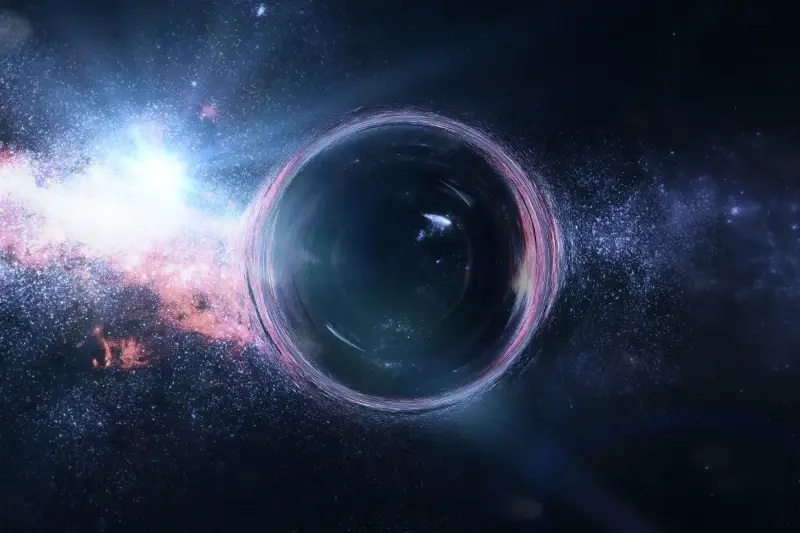
The study of black holes is an ongoing adventure. Astronomers now observe black holes merging via gravitational waves, opening a new window into the invisible universe. Researchers are also hunting for "intermediate-mass" black holes, which could bridge the size gap between stellar-mass and supermassive varieties, and investigating primordial black holes—ancient relics that may have formed in the moments following the Big Bang.
Even the concept of time is challenged; as an object approaches the event horizon, time appears to slow down, a phenomenon confirmed by Einstein’s theories. Each new discovery brings us closer to unraveling the secrets of the cosmic void, proving that these phenomena remain the ultimate keys to understanding the history of our universe.