



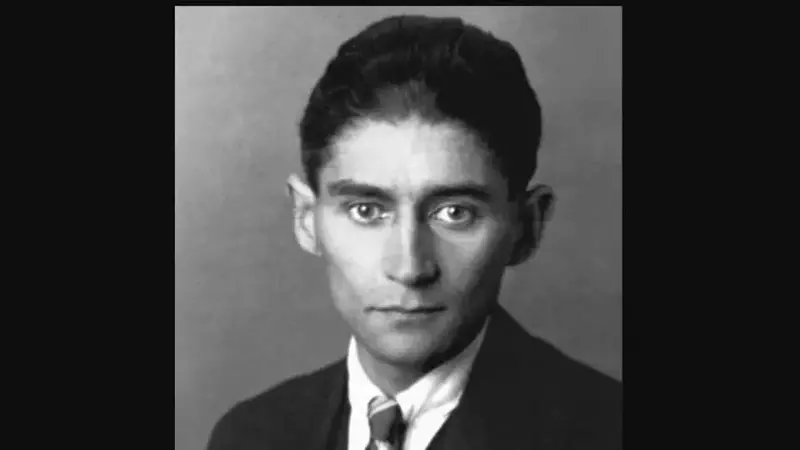
Franz Kafka, one of the most influential writers of the 20th century, is often remembered for his haunting explorations of alienation, anxiety, bureaucracy and the absurdity of modern life. Yet, beneath the darkness of Kafka’s fiction, there also exists a quieter philosophical tenderness: the idea that life, even when difficult, still contains hidden grace.
The quote, “Life’s splendour forever lies in wait..,” captures that rare Kafka-like tension between despair and possibility. It does not promise that life will always be beautiful on the surface. It does not say that happiness arrives easily, loudly or on schedule. Instead, it suggests something more subtle: splendour is always present, waiting to be noticed, recovered or approached with the right state of mind.
In a world that often rewards speed, noise and constant achievement, Kafka’s line feels deeply relevant. Many people move through life chasing the next milestone, deadline or validation, forgetting that meaning may already be waiting in ordinary moments: a conversation, a quiet morning, an unfinished dream, a book, a memory or a sudden act of kindness.
Quote of the Day: “It is entirely conceivable that life's splendour forever lies in wait about each one of us in all its fullness, but veiled from our view, deep down, invisible, far off. It is there, though, not hostile, not reluctant, not deaf. If you summon it by the right word, by its right name, it will come. This is the essence of magic, which does not create but summons” — Franz Kafka.
Meaning of the quote
Kafka’s quote suggests that life’s beauty is not always immediately visible. Sometimes, it stays hidden behind routine, struggle, uncertainty or emotional exhaustion. But that does not mean it has disappeared.
The phrase “forever lies in wait” is important. It implies patience. Splendour is not something that vanishes simply because we are unable to see it today. It waits for awareness. It waits for stillness. It waits for us to return to ourselves.
This is a powerful lesson for modern readers. Life may not always offer dramatic happiness, but it often offers quiet signs of meaning. The challenge is to slow down enough to recognise them.
Why this quote still resonates today
Kafka’s words resonate because many people today live with pressure, overthinking and emotional fatigue. The constant need to perform, compare and keep moving can make life feel mechanical. In such a state, even good things may start appearing ordinary.
This quote reminds us that splendour is not always outside us. It may be in the way we look at the world. A life that feels dull may not be empty; it may simply be asking for deeper attention.
Kafka’s line also carries hope without sounding unrealistic. It does not deny suffering. Instead, it says that even amid difficulty, beauty remains possible.
Life lesson from Franz Kafka’s quote
The biggest lesson is this: do not assume that a difficult phase is the full truth of life.
There are moments when life feels delayed, unclear or disappointing. But Kafka’s quote asks us to remain open. What feels invisible today may reveal itself tomorrow. What feels ordinary now may later become meaningful.
Splendour may lie in ambition, love, solitude, art, friendship, healing or self-discovery. But it often arrives quietly, not as a grand announcement but as a gradual awakening.
How to apply this quote in daily life
Start by paying more attention to small moments. Do not wait only for major achievements to feel alive. Notice what gives you calm, curiosity or warmth.
When life feels heavy, remind yourself that beauty may not be absent; it may simply be hidden. Take breaks from comparison. Spend time with people who make you feel present. Read, walk, listen, reflect and allow yourself to experience life without constantly measuring it.
Most importantly, do not rush your own unfolding. Some of life’s best meanings are not found by force. They are discovered through patience.
Final thought
Franz Kafka’s quote, “Life’s splendour forever lies in wait,” is a gentle reminder that life is never completely exhausted of beauty. Even in uncertainty, something meaningful may be waiting to be seen.
Kafka teaches us that splendour does not always shout. Sometimes, it waits quietly — in time, in memory, in hope and in the ordinary corners of everyday life.
Disclaimer: The first draft of this copy was generated by AI.