



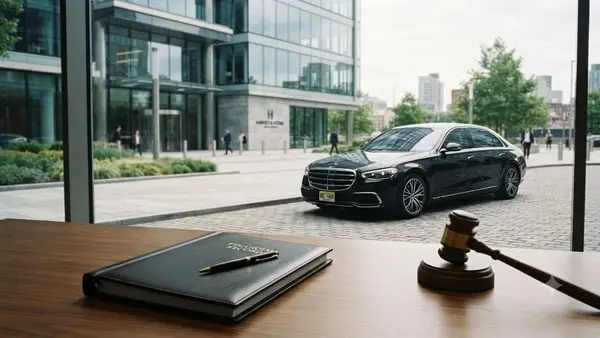
A taxpayer cannot automatically claim a capital loss on selling a car merely because it is recorded as a fixed asset in the balance sheet. The actual use of the vehicle and how its expenses were treated for tax purposes matter, the Income Tax Appellate Tribunal (ITAT), Jaipur, has ruled while rejecting a ₹20.67 lakh long-term capital loss claimed by a taxpayer on the sale of her Mercedes.
In the case of Rajkumari Agarwal vs ACIT, Central Circle-02, Jaipur, the tribunal held that a car used for personal purposes qualifies as a personal effect and is excluded from the definition of a capital asset under Section 2(14) of the Income-tax Act, 1961. Consequently, neither capital gains nor capital losses can arise from its sale.
The ruling was pronounced on 28 September 2026 in ITA No. 312/JPR/2026 for assessment year 2023-24.
Why did the income tax department reject the ₹20.67 lakh loss claim?
The taxpayer had claimed a long-term capital loss of ₹20,67,120 on the sale of a Mercedes in her income-tax return. She argued that the vehicle was a capital asset because it was reflected under fixed assets in her balance sheet. She also maintained that she had never claimed depreciation on the car.
However, the assessing officer (AO) found that the taxpayer had treated the vehicle as a personal asset in her own tax computations.
She had not claimed depreciation on the car. Further, car loan interest of ₹32,614 and repairs and maintenance expenses of ₹68,404, which were debited to the profit and loss account, had been disallowed by her as personal expenditure.
In her response to the tax department, she had also confirmed that these expenses were personal.
The AO consequently rejected the capital loss claim and added ₹20.67 lakh to her taxable income. The Commissioner of Income Tax (Appeals) upheld the decision, following which the taxpayer approached ITAT.
Why did ITAT classify the Mercedes as a personal asset?
Before the tribunal, the taxpayer reiterated that the car was recorded as a fixed asset in her books and that no depreciation or car-related expenses had been claimed for tax purposes. She argued that the loss should therefore qualify as a long-term capital loss.
The tribunal, however, held that accounting classification alone could not determine whether an asset qualified as a capital asset under income-tax law.
Section 2(14) excludes personal effects, including movable property held for personal use, from the definition of a capital asset. The exceptions include jewellery, archaeological collections, paintings, sculptures and other works of art. A motor car does not fall within these exceptions.
The tribunal relied on the Supreme Court's ruling in H.H. Maharaja Rana Hemant Singhji vs CIT, which explained that personal effects are articles intimately and commonly used by the taxpayer.
Applying this principle, ITAT observed that the taxpayer's own conduct established that the Mercedes was held for personal use. The fact that it appeared under fixed assets in the balance sheet did not change its character.
"Accounting treatment cannot prevail over the admitted user of the asset," the tribunal observed.
Can taxpayers claim capital losses on personally used cars?
The ruling draws an important distinction between business assets and personal assets.
The tribunal distinguished earlier judicial decisions concerning the sale of business assets where depreciation had not been claimed. Those cases dealt with the computation of capital gains or losses on assets that were already established as business or capital assets.
In Agarwal's case, the more fundamental question was whether the Mercedes qualified as a capital asset in the first place.
The tribunal held that since the vehicle was a personal effect, its sale could not generate an allowable capital loss. It also pointed out that the same principle would apply if the car had been sold at a profit. Such a gain would not be taxable as capital gains either.
ITAT accordingly upheld the disallowance of ₹20.67 lakh and dismissed the taxpayer's appeal.