



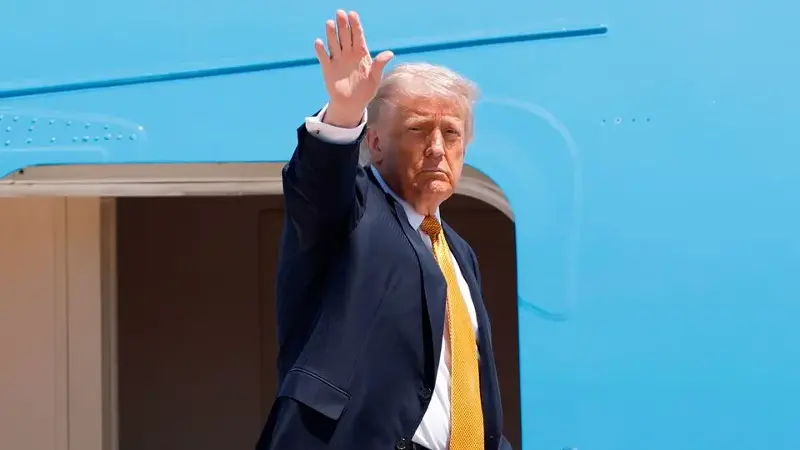
United States President Donald Trump is on his way to attend a Summit with his Chinese counterpart, Xi Jinping, becoming the first US president in a decade to visit the country. The Summit, to be held in March, was moved to May due to the US-Israel war with Iran. In two days of talks between the US and China, the key issues likely to dominate are the Iran war, trade and tariffs.
According to the reports, Trump is scheduled to arrive in Beijing on the evening of 13 May (morning in the US). Over the next two days, Trump will participate in bilateral meetings with Xi. A state banquet and a working lunch are also planned during Trump's visit. The US president will leave China on 15 May.
What's on agenda?
Iran war
The US-Israeli conflict with Iran is a new focus of tension between Washington and Beijing. Since China gets nearly 60% of its crude through the Strait of Hormuz, and with peace talks at a stalemate, the Iran war and disruptions to oil trade are likely to come up for talks between Trump and Xi.
China is Iran’s biggest oil buyer and provides a measure of diplomatic support for the country on the world stage. The US has sanctioned several Chinese firms for purchasing oil from and for providing satellite imagery to Iran’s government. Trump made cryptic comments on 21 April, suggesting China possibly provided weapons or other potentially lethal war supplies to Iran, saying the US caught a ship with a “gift” from China. A Chinese foreign ministry spokesperson rejected the “false association” linking the foreign-flagged container ship with China.
Trump downplayed any negative impact of the war on US-China relations, saying he has a “great relationship” with Xi. Nevertheless, US officials have said the revenue China provides to Iran, as well as potential weapons exports, will be discussed at the summit.
Tariffs
When Trump came to power in 2025, both countries imposed reciprocal tariffs on each other. Since the October truce, import tariffs levied by the US and China on each other’s goods have remained in place.
Xi and Trump are both expected to seek an extension of the détente, which dialled back the tariffs and suspended some proposed export controls on shipments of products, including Chinese rare earths.
The levies remain a source of tension in the relationship. China’s government has long complained about US tariffs, but the Trump administration is proceeding with investigations into China’s trade practices that could give it the option to impose new import duties after the US Supreme Court struck down the president’s earlier tariffs in February.
Two days ahead of Trump’s arrival, China said it had dismantled a cross-border drug trafficking network in a joint operation with the US, signalling progress on the issue.
Trade
Before he departed for China, Trump emphasised that trade would be one of the agendas he would raise with Xi.
“We’re going to be talking to President Xi about a lot of things. I would say, more than anything, trade,” Trump told reporters.
When asked if the Iran war would also be discussed with China, he said, “We have a lot of things to discuss. I wouldn’t say Iran is one of them, to be honest with you, because we have Iran very much under control. We’re either going to make a deal or they’re going to be decimated one way or the other.”
Trump is eager to secure business deals and hammer out details of a new board of trade to manage ties between the world’s two largest economies when he meets Xi, even as the Iran war has cast a shadow over the summit. The two sides are expected to discuss an extension of the trade truce they reached in October.
(With Bloomberg inputs)