



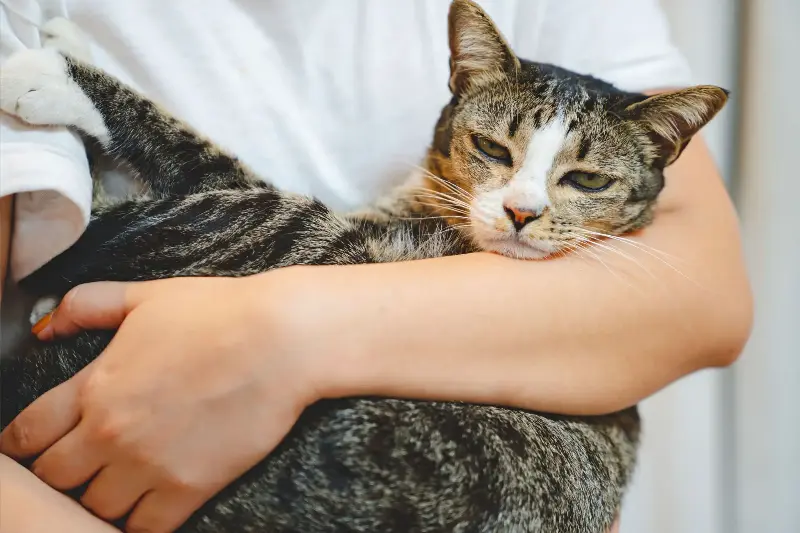
Hugs, cuddles and kisses are almost inevitable in pet ownership, but that affection may not always be received by cats the way people intend.
While people often see hugs as a comforting way to bond, cats may experience being wrapped up in someone’s arms as something entirely different—a restriction that prevents them from escaping.
“Things that are signs of affection for humans, like hugs, can be overwhelming or perceived as aggression by animals as sensitive as cats,” Dr. W. Chris Hummel, a veterinarian at Lovet Pet Health Care, told Newsweek. “Hugs in particular are mostly a primate thing and can feel restricting and overwhelming to other animals.”
Although cats form strong bonds with their owners, they often communicate affection differently than humans do. Some may enjoy being held or happily curled up in their owner’s arms, while others show love by sitting nearby, rubbing against their legs or simply choosing to share the same space.
Why Cats May Dislike Being Hugged
Cats are animals that value having control over their surroundings. Being held tightly can make them feel trapped, especially if they cannot easily move away.
“Cats don’t like being hugged because it feels very restricting, entrapping them,” Hummel explained. “They prefer to be able to escape danger.”
Because felines rely on their ability to flee when they feel threatened, being held in a hug, even by someone they trust, can trigger discomfort or stress.
Signs Your Cat Doesn’t Enjoy Hugs
Some cats will make their feelings clear when they are uncomfortable, while others may show more subtle signs that owners overlook.
According to Hummel, signs that a cat may not be enjoying a hug include:
- Wiggling or squirming to get away
- Hissing
- Swatting
- Tail thrashing
- Biting
These behaviors are not necessarily signs that a cat dislikes its owner. Instead, they may be attempts to communicate that they want more space.
Forcing Hugs Can Hurt Your Bond
A quick cuddle may seem harmless, but repeatedly holding a cat that wants to leave can damage the trust between an owner and their pet.
“Forcing hugs on anyone, human or cat, is a very stressful thing for the recipient, especially if they cannot escape the hug,” Hummel said.
A cat that feels its boundaries are not being respected may begin avoiding interactions, hiding when approached or reacting defensively.
How to Show Your Cat Love Instead
Owners can strengthen their bond with their cats by showing affection in ways that align with feline behavior.
Hummel said a 2019 study by Cell Press found kittens display similar behaviors toward their human caregivers as they do toward their biological parents, suggesting cats use body language to communicate their relationships with people.
Since grooming is a social bonding activity between felines, gentle brushing may be a positive way for owners to connect with their cats. Hummel also recommends gentle scratches around the neck and ears, along with playtime, as ways to build trust.
For some cats, a purring headbutt may be the closest thing to a hug.
However, owners should continue paying attention to their cat’s body language to make sure the affection is welcomed.
A Cat That Doesn’t Like Hugs Still Loves You
One of the biggest misconceptions among cat owners is that a cat’s dislike of hugs means they don’t love their human.
While some cats enjoy being held or cuddled, others express affection in quieter ways.
“Just because some cats aren’t ‘velcro kittens,’ they still love their owners the same,” Hummel said.
A cat choosing to sit on the other side of the room, nap nearby or relax in the same space as their owner can still be a sign of trust and connection.
Understanding how your cat communicates affection can help owners return that love in ways their feline companions actually appreciate.
Some Cats Do Enjoy Being Hugged
Not every cat dislikes physical affection. Like people, cats have individual personalities and preferences.
“Some cats definitely enjoy hugs more than others, and it is largely based on their personality and temperament,” Hummel said.
Certain breeds, including ragdoll cats, are often known for being more relaxed and comfortable with handling, though every cat is different.
A cat that willingly seeks out cuddles, remains relaxed while being held and chooses to stay close is likely showing that it enjoys the interaction.