



NASA may already have evidence that ancient life once existed on Mars, but retrieving that potentially transformative data millions of miles from Earth remains another question altogether.
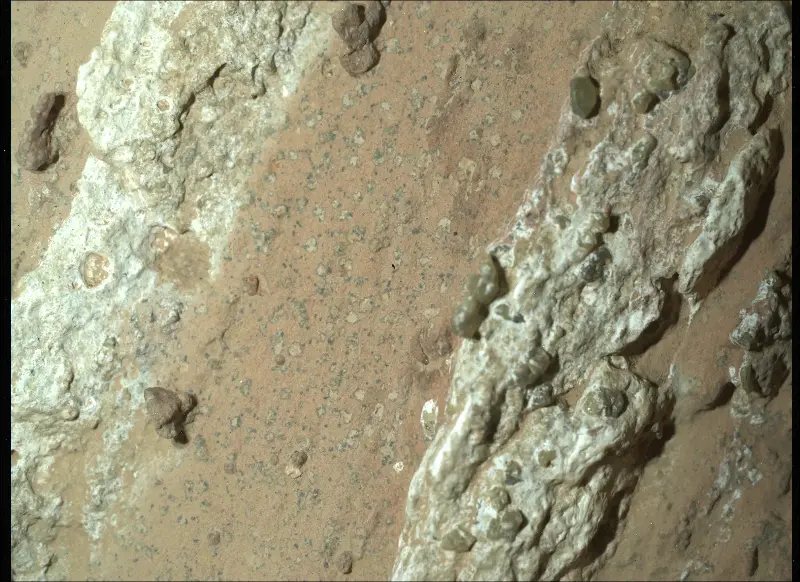
The space agency touted the July 2024 discovery by NASA’s Perseverance rover in an announcement last September, extolling a sample culled from an ancient dry riverbed in the 28-mile-wide Jezero Crater as possible evidence of prior microbial life on the Red Planet.
“This finding by Perseverance, launched under President Trump in his first term, is the closest we have ever come to discovering life on Mars,” NASA’s then-acting administrator, Sean Duffy, said at the time.
Duffy said last year that NASA remained committed to “putting American boots” on Mars, but the agency’s plan to retrieve an arrow-shaped Martian rock known as Cheyava Falls was later scuttled in January as Congress enacted broad federal budget cuts.
The arduous joint campaign by NASA and the European Space Agency to return Perseverance’s haul, known as Mars Sample Return (MSR), is now described as a “future mission” on NASA’s website, with no detailed projected dates.
“Returning Mars samples would fulfill one of the highest priority solar system exploration goals from the science community,” NASA’s site reads. “Returned samples would revolutionize our understanding of Mars and our solar system, and prepare for human explorers to the Red Planet.”
Dr. Lindsay Hays, NASA’s senior scientist for Mars Exploration, participated in last year’s news briefing that detailed how Perseverance discovered Cheyava Falls in 2024 while exploring the so-called Bright Angel region of Jezero Crater. The series of rocky outcrops lies on the edges of Neretva Vallis, a river channel that flowed with water more than 3.5 billion years ago.
“There was a rock that was identified by the Perseverance team in the Bright Angel Formation that had what we call textures, which is basically like features that we can see that had chemical characteristics, mineral characteristics and organic signatures,” Hays told Newsweek during a recent interview.
“So, all of these things together, at the resolution that we’re able to get with the Perseverance rover, that look like they could have been caused by some type of microbial system basically performing a chemical reaction to basically eat material in that surface.”
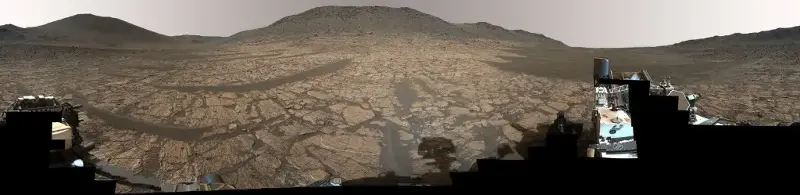
Put plainly, Hays says evidence indicates that “something was there and ate there” while referring to the sedimentary rocks composed of clay and silt, which preserve evidence of microbial life on Earth and contain high levels of organic carbon, sulfur, oxidized iron and phosphorus, among other compounds.
Analyzing the samples in terrestrial laboratories could answer whether Mars once supported life, although a definitive answer isn’t guaranteed. Researchers would, however, immediately benefit in other ways with the Martian rocks in hand, Hays said.
“Return samples can also help us do things like geochronology,” Hays said. “Right now when we look at Mars, we think about ages based on crater-counting and geological relationships that say this happened before that, but getting a sample back would allow us to do an absolute dating. So, a look at some of the, you know, deeper-time dating and allow us to say this rock here is precisely this age and that allows us to sort of add dates all up and down that geological range.”
Securing the samples back on Earth would also give scientists a much greater understanding of dust on Mars, bits of rock or carbon-rich grains that can damage spacecraft, scientific instruments and potential habitats alike, Hays said.
“Dust is a really big question if we want to think about sending people to Mars and having them stay healthy,” Hays said. “The dust as we know is globally distributed.”
Dust found in Mars’ Jezero Crater is extremely similar to fine particles from its Gale Crater, which NASA’s Curiosity rover began exploring in 2012, decades after the Viking 1 lander transmitted the first image from the surface of Mars in 1976.
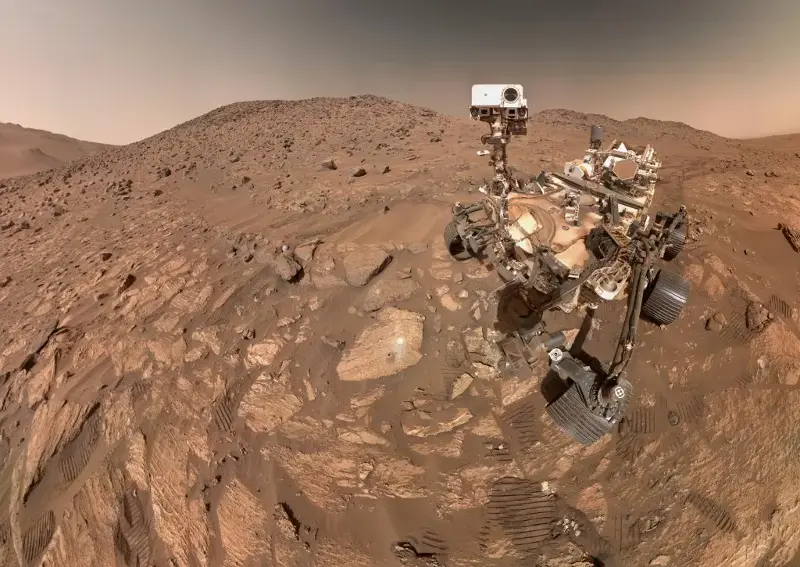
“This is actually one of the first things and one of the biggest things that the Viking landers showed us,” Hays said. “The two landers showed us that the regolith and the dust at the two very different places that those Viking landers were very, very similar.”
But the size distribution and exact chemistry of dust on Mars remains a mystery, Hays said.
“In a lab on Earth, we could do some of that chemical resolution,” she said. “We can’t really do that remotely.”
Hays acknowledged that the potential biosignatures of two iron-rich minerals on Cheyava Falls, vivianite and greigite, may not definitively prove whether life existed on Mars.
“There is absolutely the chance that when introduced to the broader science community, there will be other explanations that better fit the data that we see that are not consistent with life,” she said. “That’s the point of science; that’s why it’s exciting.”
While MSR remains canceled, the samples represent a massive possible scientific bounty for NASA if they’re ultimately returned as the agency tries to maintain a “balanced portfolio” moving forward, Hays said.
“We are somewhat agnostic in exactly how those Perseverance samples will be returned,” she said flatly. “We acknowledge the importance of bringing those samples back and the value to the global science community, and we are still in the process of trying to figure out the best way to do that.”
Hays said she was “hopeful” NASA will accomplish the mission, but other observers aren’t so sure.
Chris Impey, a professor of astronomy at the University of Arizona, said Congress balked at MSR’s price tag after independent reviews projected total costs would eclipse $11 billion, with samples not delivered back to Earth until 2040. A revised plan might include commercial partners or usage of ESA orbiters, he said.
“No one has ever launched a rocket from the surface of another planet. That’s the biggest technical hurdle,” Impey said, adding that technical requirements for the lightweight rocket would be formidable.
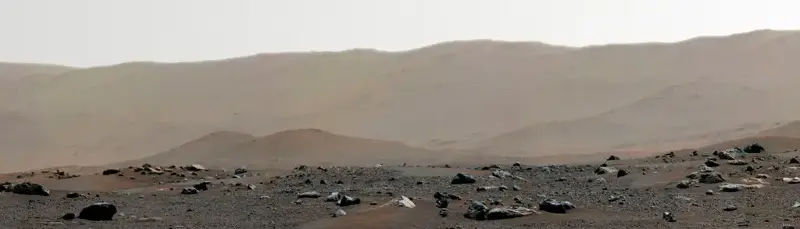
NASA could theoretically aim to return just a portion of the 33 total samples collected from Jezero Crater to dramatically decrease overall mission costs, Impey said.
“Reducing payload mass slashes launcher, lander, and ascent vehicle requirements,” he said. “It’s remarkable that each tube only contains about 10 grams, but leaving 150 grams behind could save billions of dollars.”
Not being able to retrieve the samples would represent a significant loss for researchers, Impey said.
“Losing MSR sacrifices all that has been learned by years of Perseverance rover investigations of the Jezero Crater region,” he said. “Rovers alone can never return the amount of science that sample analysis on Earth can.”
Researchers on Earth can analyze samples or specimens down to single molecules or cells and can definitively conclude whether the organic material in Jezero Crater is biological or abiotic, according to Impey, who urged NASA to consider downsizing the number of samples to be retrieved if the mission is revived.
“Most astronomers and planetary scientists would say that MSR is not worth doing if other important science has to be sacrificed, like a Uranus orbiter, operations of the Europa Clipper, and several probes to Venus,” Impey said.
NASA had spent $2.5 billion on MSR before shelving the campaign, spokeswoman Alana Johnson told Newsweek.
“We feel it’s important to note that NASA is reaping the benefit of lessons learned from MSR for things like the SkyFall Mars helicopter mission,” Johnson said in a statement. “SkyFall very consciously makes use of agency investments in developing the Mars sample retrieval helicopters — relying on that heritage and experience is part of how we can turn the SkyFall mission around so quickly.”
NASA plans to send three rotorcraft to study Mars’ geology and climate history in late 2028 as part of the SkyFall mission.
But without NASA resuscitating MSR, there’s no realistic path to bring the samples back to Earth until humans go to Mars, according to Derrick Pitts, chief astronomer at Philadelphia’s Franklin Institute. ESA administrators could choose to revamp the mission, but they’d have to foot the ever-increasing bill, he said.
Pitts said he’s certain the samples will ultimately be retrieved and could confirm that Mars was once warmer and wetter than today and once hosted microbiological life. His most “optimistic” return date estimate is 2036.
“Greenlight the funding, rebuild an engineering team, design, build, test a system, fly it out there, retrieve the samples, return to Earth, collect successfully,” Pitts explained. “That’s if the current administration does an immediate about-face, changes its priorities, and re-funds the mission. Not likely.”
Pitts suggested reenvisioning MSR through a private company like SpaceX or Blue Origin, perhaps as a gateway for a human mission to Mars.
“The commercial entities are developing incredible capability without the politics that hobble NASA,” Pitts told Newsweek. “NASA is not hobbled by lack of funds, it’s cut off at the knees by politics.”
For Pitts and many others who devote their lives to exploring the cosmos, cost shouldn’t play a central role.
“Knowledge is priceless,” he said. “We can do anything we want to regardless of price. It’s always just a question of what we value. Not going through with MSR just tells you what our values are.”
China, meanwhile, announced plans last week to complete the world’s first Mars sample return mission, with its Tianwen-3 robot launching in 2028 to collect 500 grams of samples before returning to Earth by 2031.
“Ample evidence has shown that early Mars had liquid water, a denser atmosphere, and a global magnetic field—key conditions for forming a habitable environment,” chief mission scientist Zengqian Hou told reporters during the International Deep Space Exploration Conference in Hefei. “That is why the mission takes searching for potential signs of past Martian life as its primary objective. Through detailed analysis of returned samples, scientists hope to find reliable biosignatures.”