


The plus-size woman has suffered an indignity: after years of being invited into fashion‘s grand celebration of body positivity, she has discovered that the dress no longer comes in her size.
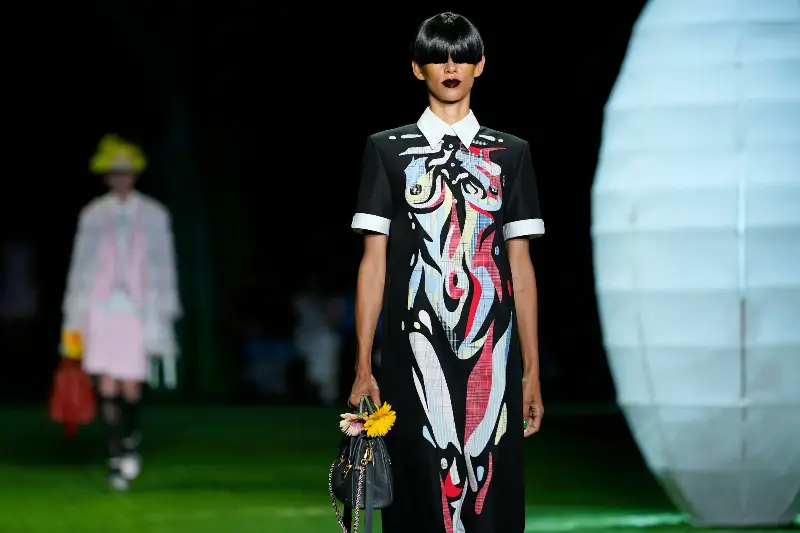
At H&M, sizes 3XL and 4XL have been discontinued. Meanwhile, the Spring/Summer 2027 runways have delivered their own verdict on the fashionable female form. A report by Vogue Business found that, of 9,283 looks shown across the four major fashion capitals, a magnificent 0.5 percent featured plus-size models.
Fashion, it seems, has rediscovered its affection for thinness. Are you surprised?
Think of the timing of the reappearing devotion to skinny: as Ozempic and other GLP-1 drugs alter American waistlines and clothing purchases, an industry that spent years presenting size inclusivity as a moral obligation is reconsidering how much room it wishes to make.
What we should ask ourselves is whether body positivity was ever a principle fashion intended to keep, or simply another trend that could be retired when the market moved on.
The Disappearing Dress Size
In 2023, H&M enlisted plus-size model Tess Holliday to help improve its approach to inclusive sizing. Three years later, the retailer confirmed it had dropped its two largest sizes.
The company’s explanation was commercial, claiming it had observed lower demand for 3XL and 4XL garments. It makes sense: why spend the money to create clothes in sizes that won’t be purchased?
There is more evidence that shopping habits are changing. An October analysis by LSEG and Centric Market Intelligence found that online searches for plus-size dresses had fallen 19 percent over two years. The share of women’s plus-size clothing offered at a discount rose from 38 percent in 2023 to 49 percent in 2026 through the period studied.
The researchers cautioned that the figures do not establish weight-loss drugs as the cause, and we’d like to make that clear, especially since demand has also remained resilient in some categories, including plus-size activewear.
Still, the commercial explanation creates an awkward problem for brands that once described inclusivity as something more enduring than a sales strategy and morally important to the very essence of their companies.
Quan Xie, an associate professor of digital advertising at Southern Methodist University who researches brand hypocrisy, told Newsweek that the difference between a marketing position and a genuine commitment becomes apparent when circumstances change.
“It says the inclusion was a marketing position, not a business commitment,” Xie said of brands that promote inclusion before reducing their larger sizes. “The brand invited a group of customers in, built expectations, and then quietly showed them out.”
Lauren Downing Peters, an associate professor of fashion studies and director of the Fashion Study Collection at Columbia College Chicago, draws a distinction between making larger bodies visible and making the clothes those bodies need.
“We simply didn’t see that gesture toward size inclusivity trickle down to real fashion design and marketing practices,” she told Newsweek.
The Runway’s Very Short Memory
Shifting consumer demand is only part of the picture. High-end runways tell a similar story.
Vogue Business‘s October size-inclusivity report found that 97.5 percent of Spring/Summer 2027 looks were shown on straight-size models, defined as U.S. sizes 0 to 4.
Two years earlier, mid-size and plus-size models together accounted for 5.1 percent of runway looks. Their combined share has since fallen to 2.5 percent.
Even at its most inclusive, high fashion was hardly suffering from an excess of generously proportioned models.
Renee Engeln, a psychology professor at Northwestern University who studies body image, questions whether fashion’s commitment was ever as substantial as its publicity suggested.
“The fashion industry never really celebrated larger bodies,” Engeln told Newsweek. “The changes they made were tiny, temporary and mostly performative.”
Her criticism points toward a distinction that the industry’s body-positive campaigns often blurred.
As Engeln explained, body positivity began as a movement against discrimination toward plus-size people. Fashion managed to turn that demand for equal treatment into a demand that women feel beautiful, conveniently leaving the industry free to decide what beauty should look like.
It was a rather ingenious arrangement: brands could congratulate themselves for celebrating larger bodies without having to make clothes for them. A plus-size model in an advertising campaign was proof of enlightenment; a full size range would have required actual investment.
And when the mood changed, the photographs could just disappear. The women who had been promised a place in fashion’s future were left to discover just how little that promise had cost.
Peters put the problem rather more plainly: “This is a travesty for plus-size women because their bodies are not trends. They have to live in and inhabit these bodies, and they have to clothe them.”
And yet, as Peters herself observed, “Body positivity is just not as trendy as it once was.”
When Inclusion Meets the Balance Sheet
Of course, let’s be honest: at the end of the day, fashion is a business. And businesses are in the business of making money.
Expanding sizes requires additional pattern development, fittings and inventory. As designers interviewed by Vogue Business explained, smaller labels face particular financial constraints. Some cannot afford to manufacture every design across an extensive size range.
Add to it all GLP-1 medications, which are generating demand for new wardrobes, and you’ve got yourself a rather convenient business case for fashion’s sudden change of heart. Circana research reported in March found that 55 percent of households using the medications had already bought clothing or footwear primarily because their size had changed.
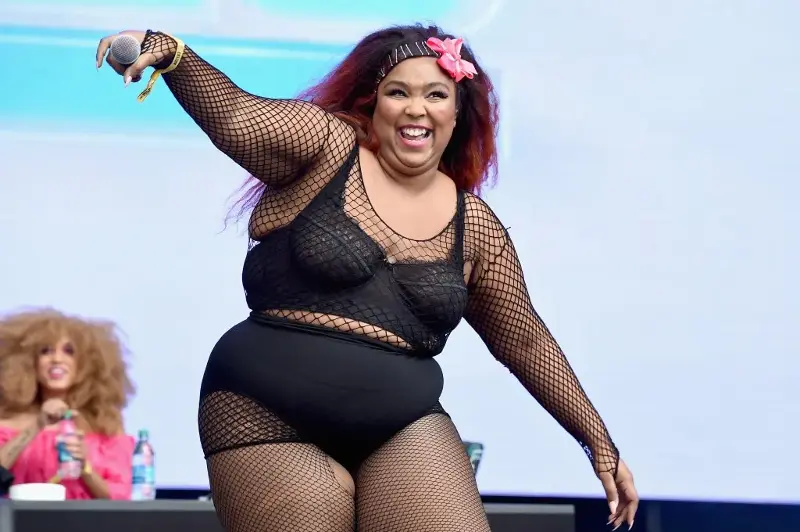
The change is visible among celebrities, too. Meghan Trainor, whose All About That Bass became an anthem of body acceptance, acknowledged using Mounjaro. Lizzo, perhaps the most-recognizable celebrity associated with body positivity, admitted trying GLP-1 medications, although she said she stopped taking them. And This Is Us actress Chrissy Metz, whose career helped bring larger bodies into mainstream television, revealed in August that she had begun using a GLP-1. There is nothing contradictory about embracing body positivity and choosing to lose weight but when even some of the movement’s most-famous faces are getting thinner, it’s easy to see why fashion might decide that curves have had their moment.
Of course, celebrities changing their bodies is one thing. Fashion brands changing their principles is quite another. If extending sizes was always conditional on sufficient sales, why present it as a moral awakening?
Xie’s research suggests that consumers judge brands especially harshly when their behavior contradicts their public commitments.
“A real commitment is still there after the campaign ends and when body-size trends shift,” she said. “You find out what a brand believes when inclusion stops being fashionable.”
There are exceptions to the retreat: Ester Manas, whose Spring/Summer 2027 runway included 36.4 percent plus-size looks, reported that larger sizes were among its bestsellers.
The example complicates any suggestion that inclusivity is inherently incompatible with profitability. It also suggests that a designer’s choices about whom to dress can help determine the market a brand develops.
The Price of Being Fashionable
Let us then all (virtually) agree that fashion has every right to follow consumer demand. Nobody expects a clothing company to operate as a charity. But the industry made a rather grand affair of its commitment to body positivity, and grand declarations tend to become embarrassing when circumstances change.
The question now is what happens to the women who were told they belonged when dressing them becomes less profitable.
Xie believes brands can survive a retreat from body-positive advertising, provided they maintain the actual commitment to inclusive sizing.
“Consumers forgive a brand for speaking more quietly. They don’t forgive a broken promise,” she told Newsweek.
And there may be money to be made in keeping that promise: brands that continue offering larger sizes could find themselves with customers their competitors have decided are no longer worth courting. There will simply be less competition.
Perhaps the most-embarrassing possibility for fashion is that Ozempic has done what years of body-positive advertising never could: reveal what the industry actually believes.
If the arrival of a drug that helps people become thinner is enough to make larger sizes disappear, one has to wonder whether fashion ever really embraced larger bodies at all. Or whether it simply loved their money until there was more to be made elsewhere.