



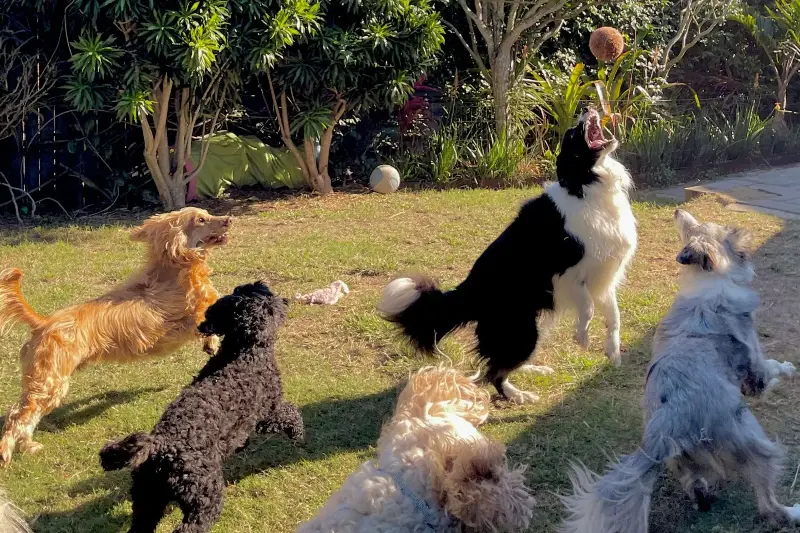
Leaving a dog at daycare can feel like giving them a day of fun with friends, but while some canines thrive in the social setting, others may find it overwhelming, and their behavior can reveal the difference.
Like humans, dogs have different personalities and comfort levels when it comes to socializing. Staff members at doggy daycares see the full range of personalities, from dogs eagerly racing through the doors to greet everyone to those who prefer to stay on the sidelines.
But how can owners tell whether their dog is actually enjoying daycare or simply tolerating the experience?
Lora Shaw, Vice President of Operations at Pet Palace, told Newsweek that paying attention to a dog’s behavior before, during and after daycare can reveal whether it is a positive or stressful experience. She recommends owners look out for three telltale signs.
1. They’re Excited to Arrive
A dog’s enthusiasm may start before they even walk through the door.
Shaw said many dogs recognize where they are going as soon as their owner pulls into the parking lot and can become visibly excited.
“It’s fun to see them eager to get in the door, excited to be there and see the team,” she said.
Body language is especially important. A happy, confident dog may wag their tail, pull gently toward the entrance or seek out employees they recognize. However, owners should also be aware of signs that their dog may be uncomfortable, including a tucked tail, hiding behind their owner or reluctance to enter the building.
“Reading that body language and recognizing it is important,” Shaw said. “Some dogs simply prefer being with their people, and that doesn’t mean they’re not a great dog.”
2. They Jump Right Into Play
Once inside, dogs that enjoy daycare typically settle in quickly and engage with their surroundings.
Shaw said these canines enthusiastically jump into group play, interact with other dogs and seek attention from employees. Whether they are chasing toys, playing with friends or participating in activities such as swimming, their willingness to engage can be a strong sign they feel comfortable at daycare
Over time, dogs may even develop friendships with other daycare attendees.
“You certainly can see when a friendship has started,” Shaw said. “We see certain dogs playing with the same dog day after day—just what you would expect at school.”
Those repeated interactions can show that a dog feels safe and has built positive relationships at daycare.
3. They Come Home Tired and Relaxed
A successful daycare day doesn’t usually end with an overstimulated dog bouncing off the walls.
Instead, Shaw said most dogs who enjoy daycare return home relaxed and pleasantly tired after a full day of physical activity, mental stimulation and social interaction.
“If they’re relaxed and calm at home, just like we are after a workday, and then the next morning they’re eager to go again, that’s a really good sign,” she said.
While tiredness alone does not prove a dog enjoyed themselves, it can be a positive indicator when paired with enthusiasm about returning.
Signs Daycare May Not Be the Right Fit
While many dogs thrive in a daycare environment, group play is not the best option for every canine.
Owners should pay attention to the full picture. A dog who comes home tired and calm may simply have had a busy day, but one who is consistently stressed, withdrawn or avoids returning may be communicating that the environment is not the right fit.
“If they’re not participating or playing with other dogs and they’re staying around the exterior or going into corners, they may be extremely nervous,” she said.
In those situations, Shaw said a daycare may recommend switching to one-on-one time or individualized activities instead of group play.
A dog’s age, activity level and personality can all influence whether daycare is the right choice. Some love the social aspect of spending the day with other pets, while others are happier with more personalized attention.
“There are some dogs who prefer to be with their people,” Shaw said. “It’s important for owners to recognize that.”
Ultimately, Shaw encourages owners to communicate with daycare staff and pay close attention to how their dog behaves both at the facility and at home. A combination of positive body language, excitement about returning and calm contentment afterward are often the strongest indicators that daycare is a place your dog truly enjoys.
Contact Newsweek editors on this story: Rebecca Flood and Sam Wilson.