



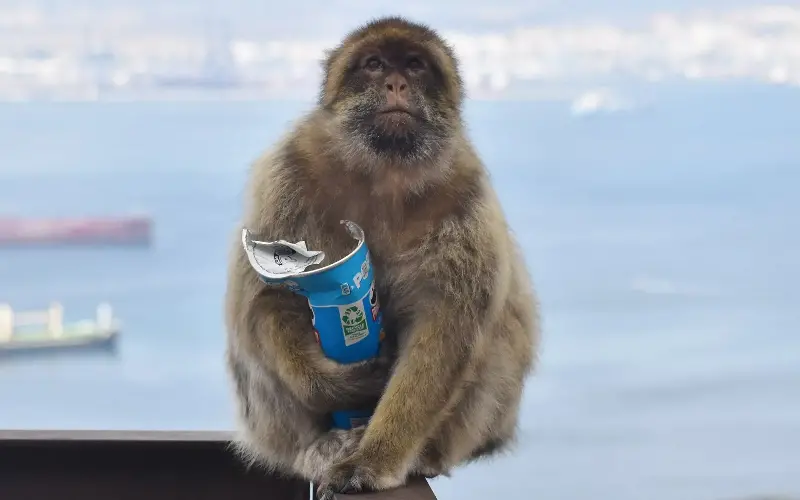
Monkeys on the Rock of Gibraltar are snaffling so much junk food from tourists that they are forced to eat soil to quell their upset stomachs, scientists have discovered.
Gibraltar macaques are regularly seen munching on ice-creams, chocolate, biscuits and crisps, with one even photographed clutching an entire tube of Pringles.
But their digestive systems cannot cope with the salty, fatty and sugary foods from holidaymakers, meaning they have had to resort to novel means to counter the nauseating effects.
The animals have started intentionally swallowing dirt – a practice known as geophagy – often directly after eating ice-cream or other unhealthy snacks.
Geophagy is practised by many animals, particularly during pregnancy or when they are deficient in minerals or nutrients that can be found in earth.
Experts believe that eating soil may be helping to rebalance the monkeys’ stomachs by providing bacteria and minerals absent from junk food, as well as helping to line the gut and soothe or prevent irritation caused by too much sugar and fat.
“We think the macaques started eating soil to buffer their digestive system against the high energy, low fibre nature of these snacks and junk foods, which have been shown to cause gastric upsets in some primates,” said Dr Sylvain Lemoine, a biological anthropologist from Cambridge’s department of archaeology.
“Our findings are more supportive of this protection hypothesis. The consumed soil acts as a barrier in the digestive tract, limiting absorption of harmful compounds.
“This could alleviate gastrointestinal symptoms from nausea to diarrhoea. Soil may also provide friendly bacteria that helps with the gut microbiome.”
There are about 230 Barbary macaques living on the Rock of Gibraltar, and it is thought they arrived during Moorish medieval times when Berber soldiers brought them from North Africa to keep as pets.
Their numbers began to dwindle in the early 20th century, so Winston Churchill ordered monkey replacements to be shipped in during the Second World War.
As the only free-ranging monkey population in Europe, they are a major tourist draw.
The natural diet of macaques is herbs, leaves, seeds and insects and the local authority also provides fruit, vegetables and water, with visitors forbidden from feeding the monkeys.
Yet many still do, and the animals crave calorific human foods, so they seek out the snacks, begging or pilfering items brought by tourists.
Cambridge researchers found that almost one fifth of food consumed by the macaques is now junk food from tourists, which they believed was driving the soil-eating behaviour.
They found the monkeys were eating soil around 12 times per week, and those troops living at the top of the Rock – where the most tourists congregate – accounted for more than 72 per cent of all dirt-eating.
One group which had no contact with tourists or access to human food was the only troop in which researchers observed no soil consumption.
Commenting on the findings, Amanda Ferguson, diet management officer at the Zoological Society of London, said many animals had evolved the practice of geophagy as a survival strategy to increase intakes of essential nutrients, such as sodium, calcium, and iron.
“Consuming unnatural junk food can cause an imbalance in the delicate microbiota species mix throughout the animals’ gastrointestinal tract – leading to bloating, pain and diarrhoea.”
“Eating soil can act like an antacid – helping to bind toxins and irritants, create a protective layer over the gut lining, and absorb water to slow down food transit time.”
Scientists believe the behaviour is transmitted socially, as different troops have preferences for certain types of soil.
Although most macaques sought out the “terra rossa” or red clay earth found across Gibraltar, which made up 83 per cent of all incidents, the Ape’s Den group, which roam the Rock’s lower western slopes, had a taste for tar-clogged soil collected from potholes in asphalt roads.
The research was published in the journal Scientific Reports.