



Neanderthals were killing each other with spears 75,000 years ago, archaeologists believe, after finding evidence of murder.
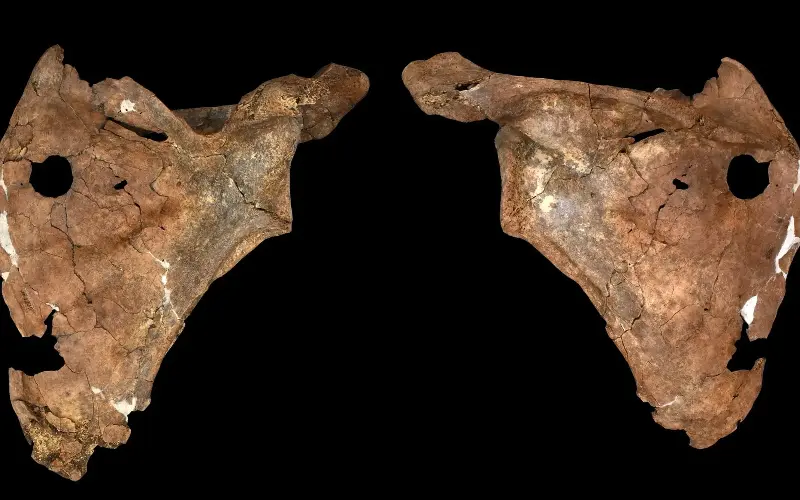
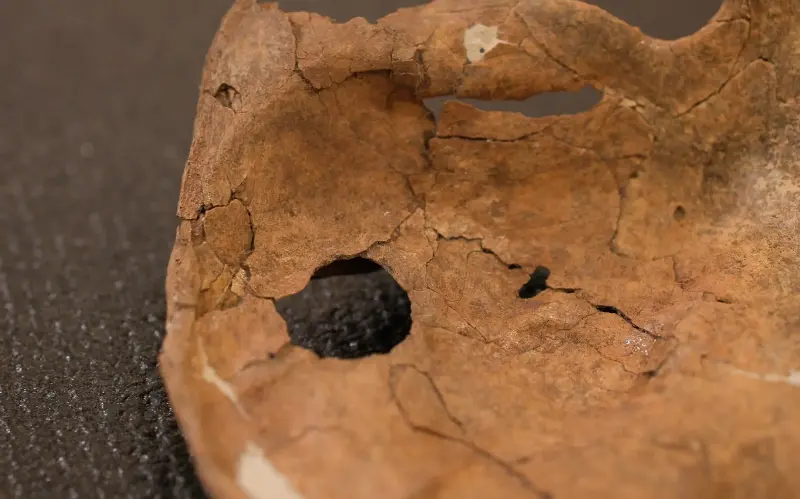
Cambridge University researchers discovered a fossilised Neanderthal shoulder blade in a Kurdistani cave which had a round hole that fitted perfectly with the shape of early wooden spears.
It is thought the victim was skewered with the weapon, which penetrated the left chest cavity from the front and travelled through the body – including the lung and probably also major arteries – before punching a hole in the left scapula, causing rapid death.
The attacker may have been aiming for the heart, in the earliest incidence of an assault with a wooden spear in the hominid fossil record.
“All we can ever know about the end of this Neanderthal’s life is that it was violent, and came at the end of a wooden spear,” said Prof Graeme Barker, fellow of St John’s College, Cambridge, who leads the cave excavations.
“Evidence of systematic violence is extremely rare in deep prehistory. The vast majority comes from periods of settled farming communities thousands of years after hunter-gather societies like our Neanderthals.”
Neanderthals were a separate species of humans that became extinct some 40,000 years ago. They lived across a large expanse of Europe and western and central Asia, and sometimes overlapped with our species, Homo sapiens.
The research team considered that the injury could have been caused by a hunting accident, such as when targeting mammoths in groups using thrusting spears.
But the position of the wound led experts to conclude that “interpersonal violence” was the most probable explanation. The individual may even have been attacked by a Homo sapiens.
“The position of the wound and the force required to push it right through the Neanderthal’s body bear the hallmarks of an intended kill shot directed towards the heart,” said Dr Emma Pomeroy, study lead author from Cambridge’s department of archaeology.
The Neanderthal remains were found in a vast cave known as Shanidar, in the Zagros mountains of Iraqi Kurdistan.
Excavations in the 1950s found 10 individuals, including a group of four located in the same spot despite dying at different times, suggesting that the Neanderthals had returned to the cave specifically to inter their dead.
The murder victim, named “Shanidar A” after the cave, was unearthed in 2020, and is one of three further Neanderthals found in the burial cluster by the Cambridge-led team since 2015.
Shanidar A, who was around 45 years old and could be male or female, is the deepest yet found in the cluster.
It is thought they may have been the first to have been laid to rest in the space and were positioned on their back, head facing east.

Although no spears were found alongside the remains, archaeologists have previously discovered early examples of spears from the period in waterlogged sites such as Schöningen, Germany and Clacton-on-Sea on the east coast of England.
These preserved spears – some more than 2m long – were manufactured from carefully selected timber to have weight distribution optimised for throwing, like modern javelins, and were probably used for hunting large game.
The 1.3cm-wide hole in Shanidar A’s shoulder is thought to be an exit wound, and matches the diameter of the ancient spears.
“Holes left by recreations of spears from this time are an excellent fit for the one we found in the Neanderthal scapula,” added Dr Pomeroy.
“That early technology absolutely works for this wound.
“What evidence we have suggests that Neanderthals and their ancestors developed woodworking and weapon-making skills many thousands of years before the death of Shanidar A.”
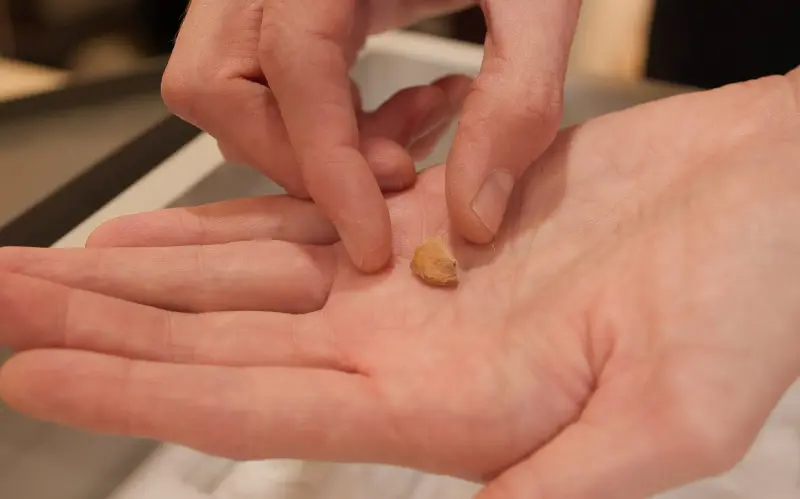
The shoulder blade was excavated alongside a mostly complete right hand, two left ribs as well as a right-rib fragment, and seven teeth.
One tooth was severely damaged, suggesting a “blunt force trauma” to the face. Experts said that surviving with such an injury would have required care and support from other Neanderthals.
Prof Barker added: “It is fascinating to have evidence for both compassion and violence amongst Neanderthals, our closest evolutionary cousins, embodied in this one individual.
“On the one hand, we have evidence of a terribly violent end. On the other hand, this was clearly an individual who was cared for during their lifetime.”
The research was published in the journal Scientific Reports.