



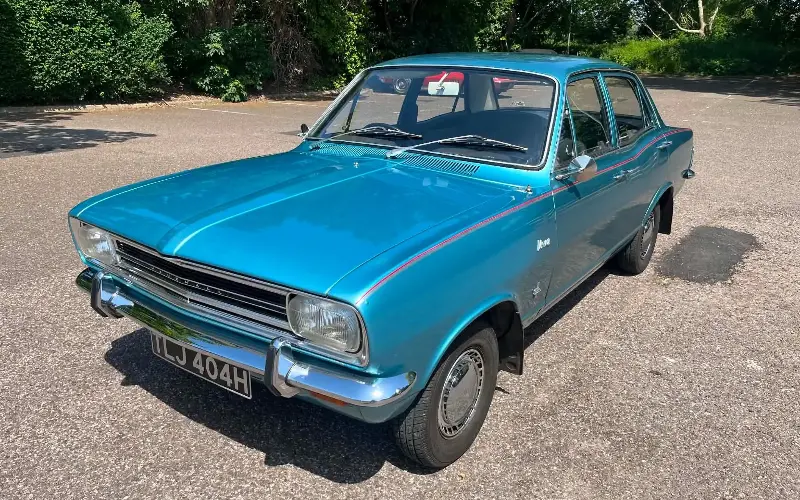
A Vauxhall Viva HB was once as much a part of the UK roadscape as AA or RAC telephone boxes and petrol stations with pump attendants. Today, you would have more of a chance of seeing an HB on repeats of Whatever Happened to the Likely Lads than on the road; Chris Dunster’s 1970 SL four-door is one of a handful left.
Vauxhall launched the Viva HB on Sept 21 1966, with an elaborate cinema advertisement: “Jet smooth, whisper quiet,” intoned the voice-over king Patrick Allen. Compared with its HA predecessor, the Viva HB featured improved suspension and a 1,159cc engine developing 56bhp, with a 90bhp option for those craving more power.
Perhaps the new Viva’s major sales asset was its very appealing “Coke bottle” styling. The HB was the second Vauxhall to adopt this stylistic trope after the 1965 Cresta PC. The “youthful, zestful” Viva made the rival Ford Anglia 105E look as though it belonged to the previous decade. Meanwhile, the launch brochure hinted that, with an HB, you would enter the world of glamour, mystery and intrigue.
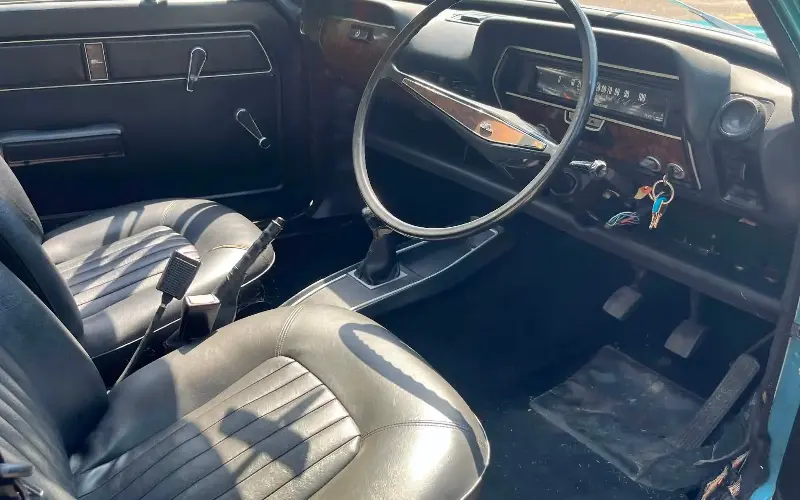
The original line-up consisted of the base model for “the man who wants new era 1.0-litre motoring at the lowest price”, and the De Luxe with the luxuries of a heater, windscreen washers and opening front quarter lights. “To suit the most fastidious”, there was the flagship SL (standing for Super Luxury) with its wheel embellishers, “individual” rear seat backrests, illuminated boot and Ambla upholstery. Naturally, the HB version aimed at the would-be jet-setter also boasted the finest woodgrain interior trim available to humanity.
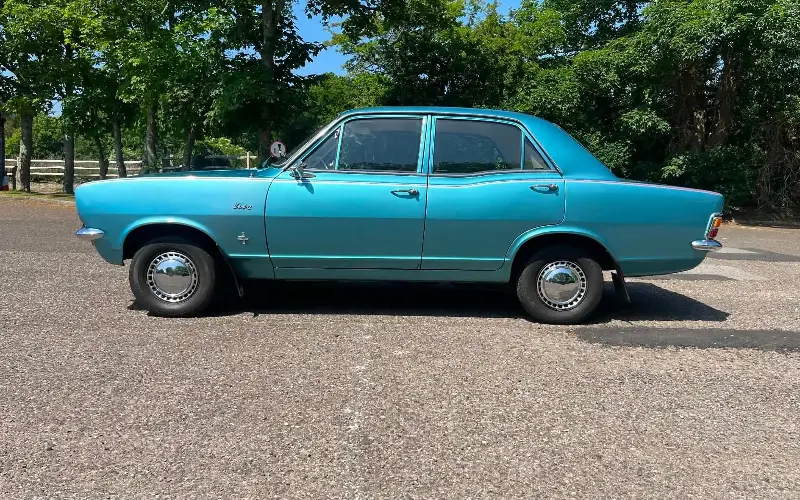
The Telegraph’s motoring correspondent regarded the HB as “certainly the best car Vauxhall have yet produced” and Motor thought: “If good Press notices sell cars, then no model ever had a better start than the Vauxhall Viva HB.” It was also made in New Zealand and Australia (as the Holden Torana), while Canadian Chevrolet-Oldsmobile dealers sold the HB as the Envoy Epic.
The range expanded to include an estate and automatic versions in 1967, along with the 1600, the 2.0-litre GT and a four-door option in 1968. The SL four-door cost £807 and Vauxhall could claim there was no other UK rear-wheel-drive car in its class. There would be no Ford Escort Mk1 four-door until 1969, while the £899 Triumph 1300 and the £775 Austin/Morris 1300 Super De Luxe were both front-wheel drive.
The third-generation HC replaced the HB in August 1970 after 566,391 units. Dunster points out that there are few left “as they rotted away”, for Vauxhall’s “careful anti-corrosion treatment” was not infallible. Only 24 examples of the 1,159cc-engined Viva HB are believed to be on the road (there are no separate figures for the very rare four-door HB).
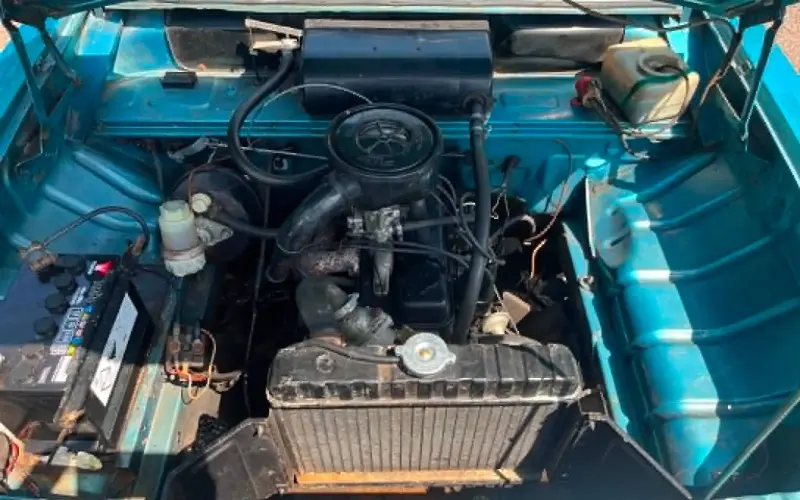
Family tradition inspired Dunster to buy his last-of-the-line 1970 SL. “My grandmother owned a four-door HB SL90 and from a very young age I liked the look of the Viva. They are very easy to work on, as there is plenty of space in the engine compartment and everything is easily accessible. The HB Viva is surprisingly easy to drive, the all-round visibility is great, the driving position is good, with ample leg room, while the seats are comfortable.”
Dunster adds: “The accelerator pedal is a little heavy, but when pushed hard the car is surprisingly nippy for its age. The Viva’s cable-operated clutch is very smooth and light, as good as a modern-day car’s. My Viva has the servo-assisted disc brakes, which stop it with ease, a very worthy upgrade from the non-servo-assisted drum brakes, which require a fair amount of effort.”
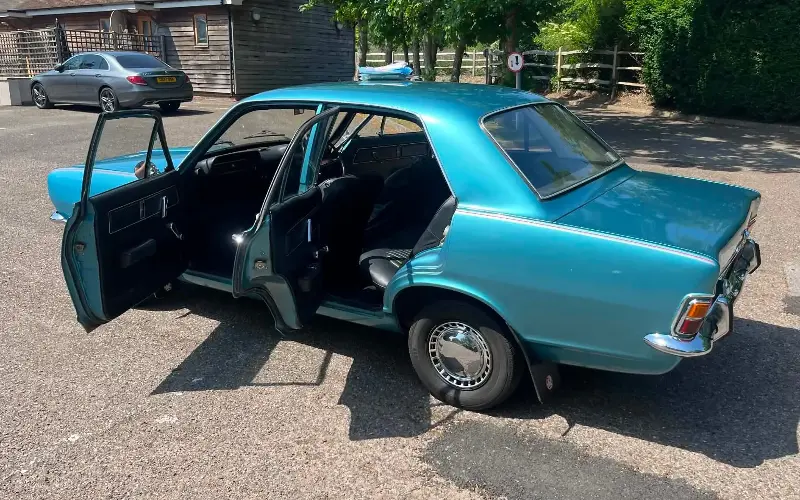
Other plus points to the Viva include “steering that is very light and precise, as it uses rack and pinion. The suspension is very soft and easily absorbs all the smaller bumps and undulations in the road. The cabin noise is OK at slower speeds, but at 60-plus the car is crying out for a fifth gear”.
As for the public reaction: “When I am out and about, I get many people pointing and smiling. Even when the Viva is on the drive at home, people will stop and look – ‘I had one of those years back’. It always attracts interest at a car show, as there are so few left. Overall, the Viva HB is a very pretty car that’s practical, easy to drive and very cheap to maintain mechanically.”
Not to mention “Jet smooth, whisper quiet”.
Thanks to: Chris Dunster and the Vauxhall Viva Owners’ Club.
We use the fascinating howmanyleft.co.uk for figures of surviving examples but some cars present more of a challenge than others, so the figures are rarely authoritative. Some pre-1974 records were lost before the DVLA centralised the process, while some cars have their model type misnamed on the V5 registration documents. A further issue is the omission of the exact model name or generation, or distinction between saloon and estate bodystyles.