



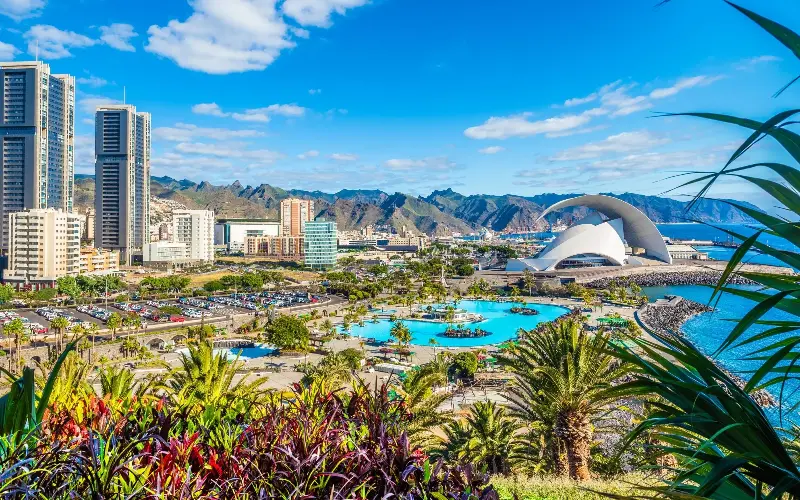
Like Mallorca and Ibiza before it, Tenerife is finally succeeding in shedding its tacky chrysalis, and morphing into a sophisticated destination happy to hold its own in the company of high spenders, gastronomes and choosy golfers.
That’s not to say the “old Tenerife” has met its maker, it just self-perpetuates in the background while Michelin muscles into the restaurant scene, chic beach clubs claim bucket-and-spade territory, and boutique boltholes provide windows to the previously bypassed and greener side of the island.
If you’ve not been for a while, certainly take in the usual suspects of beaches, pools and party venues, but also make sure you allow time to journey from the resort areas to picnic in pine-infused forests, soak up the art, culture and iconic architecture of Santa Cruz, and find peace and solace along the paved coastal pathways on the quieter west coast.
In this guide:
How to spend your holiday
Day one: morning
Start the day with a glass of brain-jolting barraquito coffee at the bohemian Veinte 04 Surf Cafe overlooking the main square in El Médano.
Then take off your flip-flops and put soles to the sand. Plod past the morning yogis and third-age beach joggers all the way to Café Flashpoint. Reward yourself with a healthy breakfast of yoghurt, muesli and fresh fruit and spend the morning watching the windsurfers rig their boards for battle with the waves.
If you get the itch to be active yourself, rent a surfboard from next door, or scramble up Montaña Roja (Red Mountain) for mind-blowing views of the south-east shoreline.
Afternoon
Head around the coast to the fishing village of La Caleta for a long, lazy seafood lunch at the elegant – though pricey – La Vieja. Saunter down the road and grab a glass of something chilled while listening to an excellent live band at the laid-back Coqueluche beach bar. There’s nothing but blue ocean as the backdrop, but keep one eye on the sky; paragliders land literally right next to the tables and chairs.
Evening
When hunger strikes again, wander along the “Golden Mile” of Playa de las Américas, a nearly one-mile strip of bars, restaurants, and fashion and jewellery shops. After watching the fountains dance to classical music, aperitif in hand at Harry’s Bar, take a seat at the neighbouring chic rooftop Bianco Restaurant for a spot of contemporary Italian. Everything here is good-looking, especially the carbonara tossed in a pecorino wheel at the table.
Day two: morning
Avoiding the midday sun makes mornings the busiest time for golfing in Tenerife, so make sure you’ve booked a tee-time for an early nine holes on the Los Lagos course at Golf Costa Adeje. Liven up with a stroll north along the prom and a dip in the rock pools just past La Jaquita beach.
From here, jump in your rental car to enjoy an early al-fresco Italian lunch at the fabulous Restaurante Saúco on the Alcala promenade. Grab a terrace table, order the creamy spinach and ricotta tortellini, and watch the waves pounding the black volcanic rocks below.
Alternatively, set the GPS for Teide National Park visitors’ centre, and head to the hills. Break up the journey with a quick tapas-on-the-terrace at the Restaurante las Estrellas. Its décor might be uninspiring but the same can’t be said of its dizzying views.
Afternoon
After lunch, drive through the pine forests into Teide National Park, stopping to tilt your phone lens up at the colossal Mount Teide, the world’s third-tallest volcano. If you have time, and the weather permits, you can take the cable car to within 200 metres of the 3,718m peak. If not, a snapshot from the visitors’ centre car park will do, then drive across the lunar landscape and wind your way down through sugar-cube pueblos spanning the TF-21 road.
Motor on to the historical quarter of La Orotava to see the Tenerife of old. At the Casa de Los Balcones you’ll find traditional Canarian crafts, and the typical carved wooden balconies adorning 17th-century mansions.
Evening
Before it gets dark, take the TF-5 motorway past the north coast clifftop towns of La Victoria and La Matanza and into the island’s capital, Santa Cruz. Indulge in some late night shopping along the Calle del Castillo, take in an exhibition at the contemporary, low-slung Tenerife Espacio de las Artes (open until 8pm), or catch a musical performance at the iconic Auditorio de Tenerife Adán Martín.
Work up an appetite ambling the cobbled streets around Calle Nuria, then bag some late-night eats at the creaky-floored Restaurant La Hierbita. Call ahead and try to book an upstairs table by the window for the best people-watching. This is the place to deep dive into traditional Canarian dishes such as honeyed aubergine, roast octopus and black pig sirloin.
When to go
As Tenerife has a spring/summer climate all year round, there is no bad time to visit, though the most rain falls in October. There are two high seasons, one catering to families during July and August, the other for those looking for winter sunshine in December and January. Late February or early March is when the world’s second-largest carnival takes place in Santa Cruz. Prices and crowds start to reduce in September but the ocean temps reach their max, making it one of the nicest months to visit the island.
Where to stay
Luxury living
Royal Hideaway Corales Suites, a slick all-suite hotel, has a cavernous James Bond-type lobby and innovative volcanic-chic styling. The contemporary quarters have fully equipped kitchens, plus living rooms, and monster ocean-view terraces, many with private pools and sundecks. The food is equally favourable: themed buffets include top-shelf options such as cracked lobster and cooked-to-order steaks, as well as a pizza and pasta station and fresh fish aplenty.
Boutique bolthole
Sun, solitude and sub-tropical surroundings are on offer at Jardin de la Paz on Tenerife’s rugged north coast. It sits high on the slopes of Tenerife’s most-verdant area, near the vineyards of Tacoronte and beaches at Puerto de la Cruz. Individually styled studios and apartments afford privacy by neatly positioned shrubbery and resplendent sea views. A sauna facing the sea can be booked for private use at no charge, plus there are two outdoor pools with surrounding sundecks, and massages and beauty treatments are available on request.
Budget beauty
Hotel Rural Finca Salamanca has a tranquil, secluded and rural setting on an avocado plantation – formerly used for cotton, coffee, tobacco and banana production – with extensive botanical gardens in Tenerife’s unspoilt Guimar Valley. It has been built in hacienda style using locally sourced volcanic stone and teak wood, and features patios, terraces, an elegant swimming pool, and quiet nooks aplenty dotted around the bounteous grounds and gardens. With nightlife not running to anything more than stargazing and a game of bridge, this is the perfect de-stress getaway.
Rooms from €103 (£88). Crta El Puertito N 2; 00 34 922 514 530.
Need to know
Can you drink tap water in Tenerife?
No, most locals and holidaymakers don’t drink the tap water in Tenerife. Not because it’s unhygienic, but because it’s highly treated and can upset your stomach if you’re not used to it. Best to stick to bottled drinking water.
Do I need a visa for Tenerife?
At the moment, no, British passport holders don’t need a visa to visit Tenerife for stays of up to 90 days within any 180-day period. However, ETIAS travel authorisation requirements are expected to be implemented in autumn 2026.
Do you pay tourist tax in Tenerife?
No, you don’t pay a tourist tax in Tenerife, but eco-charges now apply to a few walking trails and protected areas.
How long is the flight to Tenerife from the UK?
Flights from the UK to Tenerife generally take between four, and four-and-three-quarter hours depending on weather conditions and departure airport.
Is Tenerife expensive?
Tenerife can be both cheap and expensive depending on where you sleep, shop and eat. If you stay and eat in the main resorts, it’s comparable to mainland Spain and the Balearics, but venture further afield, and you can still get a beer for €1 (£0.86) and a decent, three-course menu del día for under €10 (£8.60).