



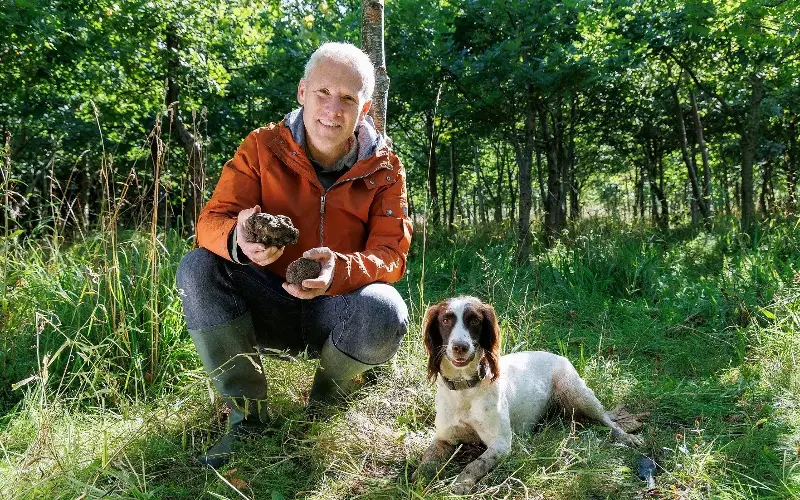
They are a delicacy famed for their unique taste and the difficulty of finding them, with specially trained dogs often required to sniff them out.
But the long, hot spell across much of Britain and Europe means that truffles are now even harder to find.
Truffles, buried just beneath the ground’s surface, need regular rain to grow. With a dry summer this year, those who forage and grow truffles have predicted that there will be 500 to 700kg fewer cultivated truffles than usual, as well as wild truffles.
Some of the country’s top chefs have warned that they could be forced to raise prices on their truffle dishes as wholesale prices for the product rise dramatically because of the shortage.
Prof Paul Thomas, an expert in fungus cultivation at the University of Stirling, who forages for truffles with his dogs Rue and Tweed, has noticed that there are far fewer truffles to be found.
He said: “Above ground mushrooms grow quickly and don’t consume as much moisture. But truffles grow slowly and are dependent on a large amount of moisture. Because we’ve had a long, dry spell it will really impact yields in England, though Scotland and Wales will probably fare better.”
Prof Thomas added: “Harvesters say they are getting only a few truffles per site, where previously they would fill baskets.
“That will mean wholesale prices going up, which might mean the price of dishes with truffles going up.”
It may come as a surprise to those who assume truffles – parasites that grow among tree roots – traditionally come from Italy, Spain and France.
Before the advent of industrialised farming reduced our woodland cover truffles thrived in Britain, especially in counties such as Wiltshire.
The past 20 years have seen a revival, with people such as Prof Thomas setting up commercial truffle growers and, in his case, a consultancy to advise on their cultivation.
The amount of truffles grown and gathered in the UK still pales in comparison with Italy, where 30 tons are grown each year, and this year there will be even fewer, leading to a predicted rise in the wholesale prices paid by restaurants.
Chefs have warned of price rises as a result. Giorgio Locatelli, a Michelin-starred chef who runs Locanda Locatelli in London, is hosting a dinner at the National Gallery in November that will feature raviolo with white truffle and veal cutlet with truffle.
But he warned: “We sell truffles by the gram for each dish, so because of the late crop as a result of the dry season we expect that per gram prices will go up a bit. We’re looking at £5,000 to £6,000 per kilo for the Italian white truffles, up from £1,800 to £2,000.”
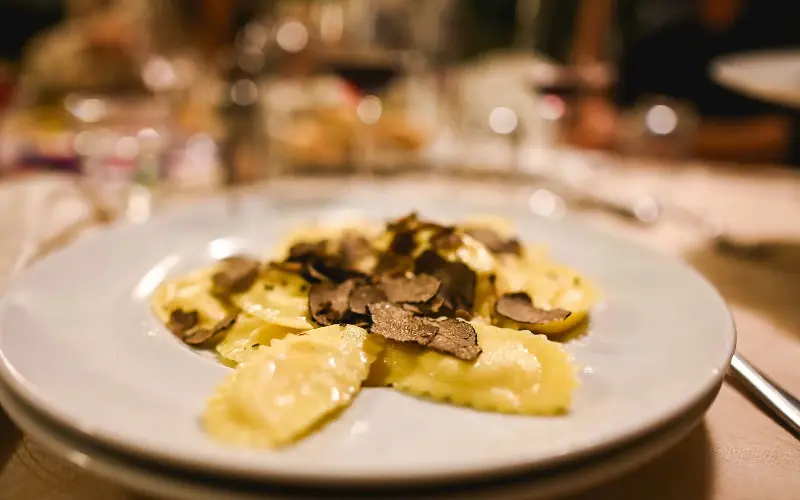
Alzo Zilli, a chef, told The Telegraph: “This year they will be very expensive and very short because of the weather. Porcini are not as good because of the drought. We’re not finding enough of them.
“It’s the same with truffles. It will mean fewer. The best Italian truffles, the Alba white truffles, which are top end, normally fetch £3,500 a kilo. I think they will now go up to £5,000 a kilo. British black truffles will also go up in price.
“It’s been a terrible summer for their growth all over Europe because of climate change.”
But the Abruzzo-born chef said there would always be diners prepared to pay the price for the increasingly rare ingredient.
“Truffles bring everything to the dish,” he said. “Flavour, smell, even an aphrodisiac quality. They are just the best.”
Prof Thomas said growers would have to adapt to the changing climate by adopting techniques to reduce moisture loss and introducing species of truffles that were less reliant on damp conditions.
Last year he successfully cultivated a black truffle on the Isle of Bute, in what is thought to be the first case of a truffle being grown on a UK island.
The cultivated species, Tuber Aestivum, commonly known as the summer or burgundy truffle, is highly prized by chefs and can command up to £900 per kg.
There are also environmental benefits to its cultivation, with truffle orchards providing a low-maintenance crop that supports biodiversity and soil health while offering economic return.
James Feaver, of the English Truffle Company, said: “Sadly, this year is not the best by quite a long way because of the heat and drought. Truffles are 70 per cent moisture and they need regular amounts of rain. The problem is right across Europe.
“One site in Dorset we’ve used for a decade would normally give us truffles the size of a cricket ball, weighing around 100 grams. The biggest this year has been just 30 grams.
“If the truffle wholesalers put their prices up to restaurants, many will have to pass it on to their customers.”