



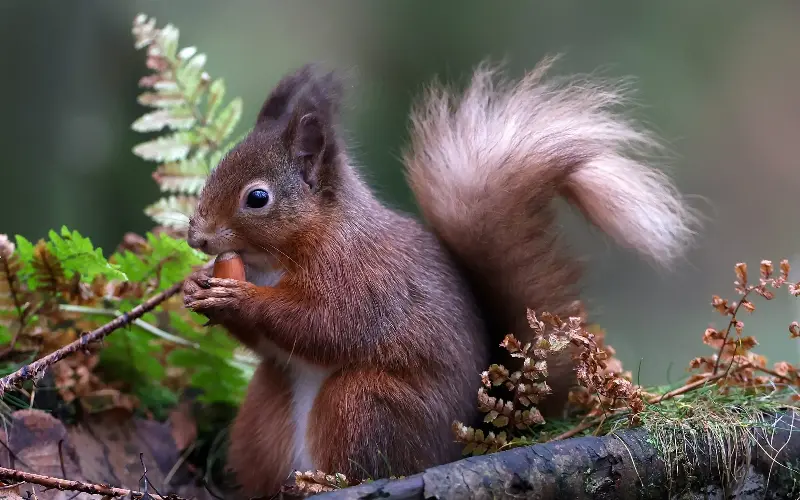
Red squirrels risk becoming extinct in England within the next 25 years, a new government report has warned.
Ministers have been told that “doing nothing” to curb the rise of grey squirrels would probably result in the native species being wiped out by 2051.
The native red squirrel population has plummeted over the previous decades with the species under pressure from the larger and more aggressive grey type.
In the past 50 years, the population of red squirrels has declined from three million to under 40,000 in England.
The non-native grey squirrel, of which there are an estimated 2.7 million in the UK, outcompete the reds for food and habitat as well as carrying squirrel pox.
The species, which was introduced to England by Victorian aristocrats in the late 19th century, is immune to squirrel pox, which kills the reds.
A new government report, compiled by non-departmental body Natural England, said that there was a “high probability” that red squirrels would disappear from England without any measures to suppress the greys.
It suggested that the most effective way to allow reds to flourish would be to kill greys.
However, the report warned that an England-wide approach to suppress the population of grey squirrels would be the “most expensive” solution. It would also “have the greatest welfare impacts, and the lowest predicted public support”.
Its estimates suggest that more than 50pc of the public might find shooting grey squirrels “highly unacceptable” or “unacceptable”.
Alternative methods to control the population would include an oral contraceptive for squirrels, which is still under development.
How to save the red squirrel
Tim Bonner, the chief executive of the Countryside Alliance, said: “We need to make conservation decisions on the basis of what works for threatened species, not just because of public opinion.”
Mr Bonner added: “The only way of securing the survival of the red squirrel is by reducing or eliminating grey squirrels in those areas where reds still thrive.
“There are gamekeepers and wildlife managers putting a huge amount of work into the survival of the iconic red squirrel.”
As well as devastating the native red squirrel population, grey squirrels also strip tree bark, which is estimated by the Government to cost up to £37m a year, and also eat songbird eggs.
A spokesman for Defra said: “Our iconic red squirrels are an important part of our native wildlife but are now classed as endangered in this country.
“To help address this we’re stepping up action to tackle the threat non-native grey squirrels pose to them along with the significant damage they cause to trees and woodlands. This includes working with landowners and conservation partners to better manage grey squirrel populations.”