


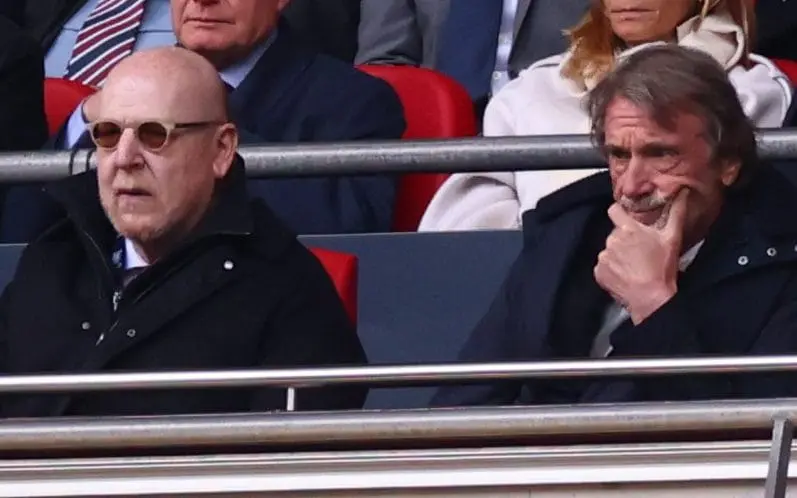
Two days after Manchester United’s defeat by Manchester City from a goal that should never have stood, Avram Glazer took part in the rarest of speaking engagements.
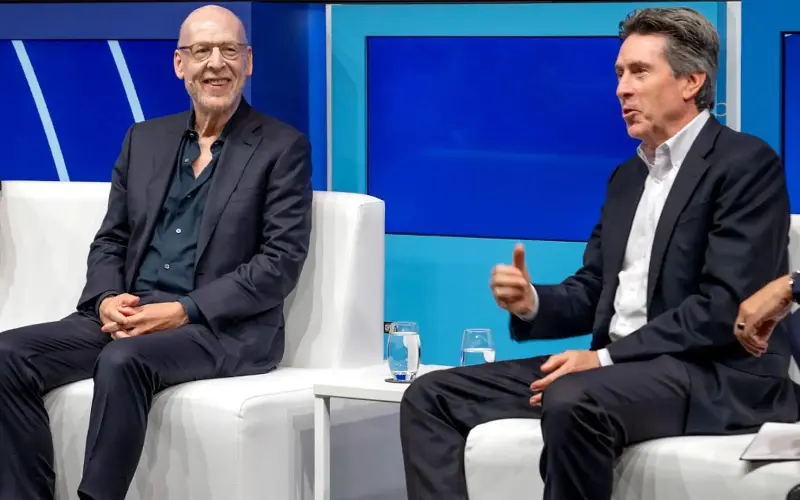
Holding court at Deutsche Bank’s London headquarters during its inaugural Sports Investment Conference in September, the reclusive billionaire told an audience of financiers that the commercial power of titans such as United was not dependent on success on the pitch.
The next evening, the club crashed out of the Carabao Cup to Brighton and Hove Albion, blowing a two-goal lead in a home defeat for the first time in more than half a century. They have since recorded their worst start to a domestic season for four decades, plunging into the Premier League drop zone and sacking their seventh manager since Sir Alex Ferguson retired 13 years ago.
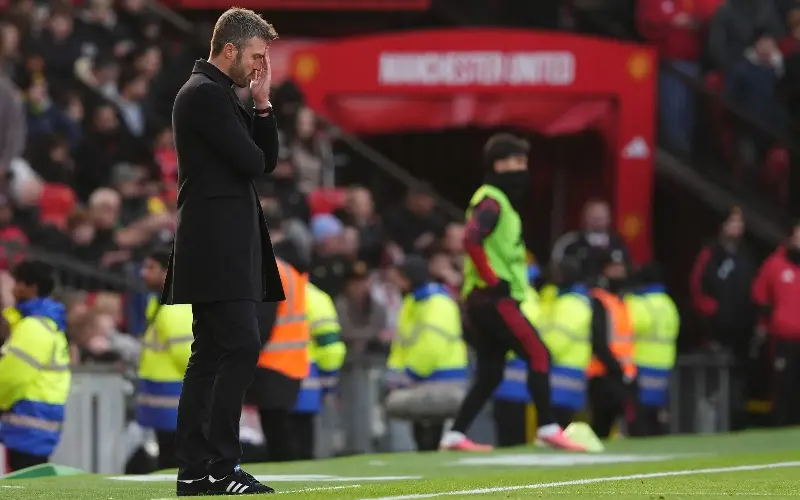
To say United are threatening to put Glazer’s bullish comments to the test would be the mother of all understatements.
Their co-owner’s remarks only emerged last week from a conference appearance publicised by Deutsche Bank back in September, minus any detail of what was said.
News of his response to a question about the correlation between results on the pitch and a club’s commercial pull duly prompted predictable opprobrium from those for whom it summed up the “Glazernomics” that have underpinned his family’s 21-year ownership of United.
During Sunday’s high-octane 4-4 draw with Aston Villa, fans stepped up angry protests against the ownership, a campaign in which green and gold balloons, scarves and shirts have been brought to matches and tennis balls thrown on to the pitch. Treble-winning legend Teddy Sheringham has since described Glazer’s comments as “disgusting”, adding: “This is what a great football club like Manchester United has been reduced to.”
Why Glazer chose to speak at a sports investment conference in the first place is unclear. His appearance fuelled the never-ending rumour mill that United’s majority owners, who in 2024 sold more than a quarter of the club to Sir Jim Ratcliffe, could offload more of their shares or even sell up altogether. The latter has for years been the dream for many of United’s most devoted fans – some from the moment the Glazers first took charge – and it has become increasingly easy to see why.
A week after the Deutsche Bank conference, the club published their accounts for last season. As if to back up their co-owner’s comments, their announcement led with the claim that they had achieved a “record full-year revenue of £677.6m, despite not participating in Uefa competition”.
But deeper scrutiny of those accounts – the first released by a Premier League team for 2025-26 – shows that United still made less last term than Liverpool, Manchester City and Arsenal had generated a year earlier. The gap to those three clubs, each of whom were in the Champions League last season, will only have grown by the summer.
Also not highlighted in the figures was that the club’s overall debt had swelled to £1.15bn following seven straight years of annual losses totalling almost £450m. After publishing their annual accounts, United confirmed in a filing to the New York Stock Exchange that they had borrowed another £90m since June 30.
The vast majority of their debt is a legacy of the leveraged buyout in 2005, which has forced the club to cough up more than £1bn in interest payments alone. They have continued to haemorrhage money despite a wave of job cuts and other penny-pinching measures imposed since the arrival of Ineos scion Ratcliffe.
Telegraph Sport reported this week that their compensation bill for hiring and firing managers and sporting directors alone was poised to exceed £100m since Ferguson’s retirement, tipped over the mark by the arrival of Mauricio Pochettino.
No one can accuse the ownership of not investing heavily in their squad following the departure of their most successful manager. Their £1.76bn net spend on players was the highest in England between 2013 and 2025. At the end of last season, they owed £375m in outstanding transfer fees, almost £220m of which was due within 12 months.
Yet, much of that outlay is a damning indictment of a recruitment strategy that has saddled them with expensive flops whose purchase price they have been unable to recoup. According to transfermarkt.com, since Ratcliffe was given control of football operations and Omar Berrada and Jason Wilcox were respectively appointed chief executive and technical director, they have spent less on players than almost all their “big six” rivals in both gross and net terms.
Their backing of manager Michael Carrick this summer, after he led them to a third-placed finish last season, was also estimated at £145m, lower than half of all Premier League clubs, including promoted Hull City and Ipswich Town.
United said in September’s New York Stock Exchange filing that they had spent £191.7m on the likes of Andrey Santos from Chelsea, Youri Tielemans from Aston Villa and Carlos Baleba from Brighton – plus costs associated with the deals. The lack of major investment compared with their rivals lay behind last month’s astonishing public attack on the United hierarchy – most notably Wilcox – by defender Lisandro Martínez.
All this raises questions about how much their new manager will be allowed to spend in the January transfer window and beyond. The scrapping of the Premier League’s much-criticised profitability and sustainability rules could give United greater purchasing power. Under the league’s new squad-cost-ratio regulations, their annual on-pitch spending, including amortised transfer costs and player wages, can total as much as 85 per cent of their football-related revenue. Last season, that figure would have been £576m. They must, however, still comply with Uefa rules under which the proportion they can spend drops to 70 per cent (£474m).
But with Berrada and Wilcox still overseeing recruitment, Ratcliffe running football operations and the Glazers ultimately in charge at Old Trafford, it brings to mind the quote wrongly attributed to Albert Einstein: “Insanity is doing the same thing over and over again and expecting different results.”
There are plenty of reasons why the Glazers – who have received millions in dividends down the years for owning United – and Ratcliffe – whose Ineos businesses have lost more than £5bn in three years – may be hesitant to sanction a major squad overhaul.
Not least the plan to build a £2bn stadium that will only load more short-term and medium-term debt on to the club. It is also barely a year since Ratcliffe claimed United would have been “bust by Christmas” had he not implemented a sweeping redundancy and cost-cutting plan. That felt like self-serving hyperbole, but equally did not speak to the club being one whose commercial power was not dependent on success on the pitch.

When Carrick was finally put out of his misery on Thursday, the Manchester United Supporters Trust (MUST) issued a scathing statement about the ownership. Citing how fans had “continued to support” the club’s former midfielder, MUST said: “They know that responsibility for United’s problems do not primarily rest with him or indeed his predecessors as manager. They lie with the ownership. The Glazers’ debt-funded takeover continues to burden the club. When Ineos came in they promised sporting excellence, yet with repeated changes in football leadership we have seen anything but. It is time for the owners to explain themselves and show some accountability.
“But the discontent at United is not just about matters on the pitch. Far from it. Aggressive ticketing policies have further damaged relations with supporters. Treating loyal fans principally as a source of revenue undermines their identity and the bond with the team that sustains support through difficult times. Supporters are being asked to pay the price for the owners’ mismanagement as well as their stadium ambitions through higher charges and diminished rights.
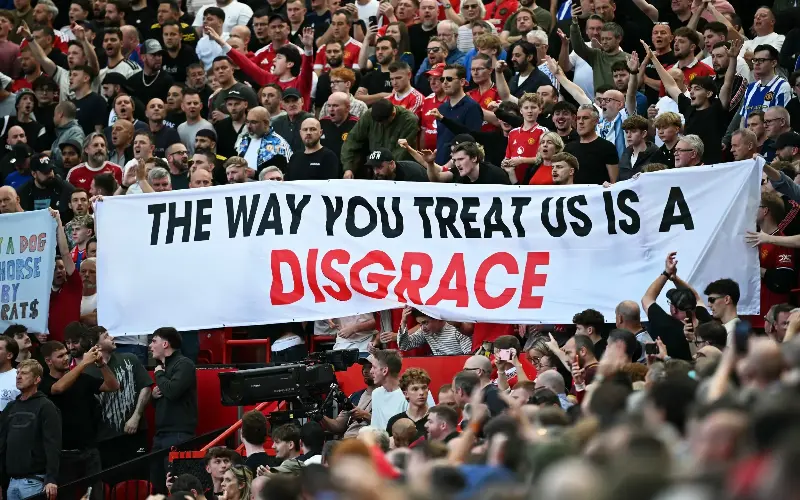
“The earlier Stretford End banner declaring ‘The way you treat us is a disgrace’ was a warning. The unprecedented scale of the booing at Old Trafford, alongside public criticism from senior players in recent weeks, now points to a deeper deterioration. These are signs of a club becoming more divided, with the bond between supporters, players and those running Manchester United under increasing strain.
“MUST warned publicly in January 2025 that alienating supporters risked a downward spiral of worsening atmosphere, performances and financial outcomes. Our subsequent Telegraph article urged Sir Jim Ratcliffe to break that ‘doom loop’ by bringing supporters with him. Those warnings remain painfully relevant.
“The owners must allow senior club management to change direction: show accountability, rebuild trust, listen to supporters and recognise that their loyalty is fundamental to football success. Another change of head coach cannot repair what the ownership continues to undermine.”
What happens now could depend on whether United manage to haul themselves out of the Premier League relegation zone before the end of this season’s festive fixture list. If not, then what constitutes success will start to look very different indeed and the calls for the Glazers to go will only grow louder.