



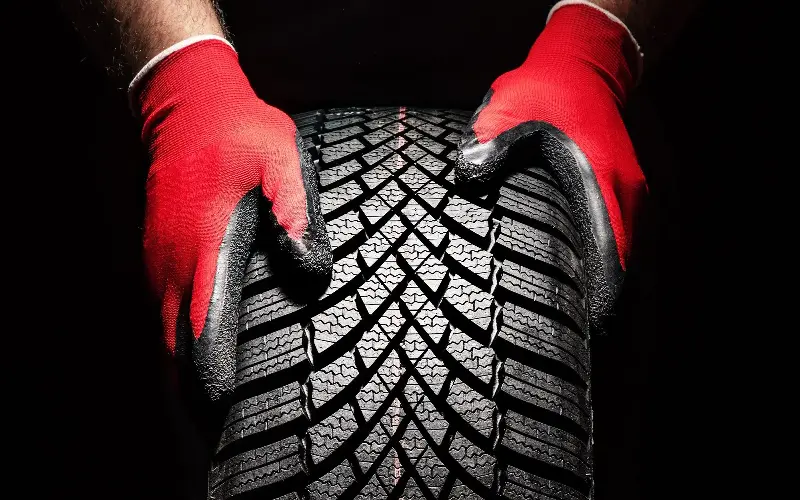
It may be apocryphal, but the only time (if ever) British drivers check their tyres is before embarking on the drive to their summer holiday destination. Yes, we know tyres are boring, but they remain the crucial point of contact between your car and the road – whether it’s tarmac-melting outside or nine below zero.
Yet drivers are not only at risk from poor-quality tyre purchases; Britain’s deteriorating roads can create problems even for relatively new tyres. Research by insurer Confused.com estimated that about 12.8 million motorists required repairs linked to pothole damage during 2025.
Road safety charity TyreSafe explains: “Beyond the immediate risk of a blowout, potholes often cause hidden structural damage – including internal carcass failures or tracking misalignment – which can lead to rapid and uneven tread wear.”
The danger is that such damage may not be immediately visible. TyreSafe stresses that tyre replacement should not be based solely on annual mileage, because tyres naturally deteriorate over time regardless of how much they are used.
But while all tyres are at risk of damage thanks to the preponderance of potholes, cost-cutting drivers who purchase part-worn tyres have been highlighted by Trading Standards as being at particular risk. The consumer protection body’s recent inspections suggest that the risks associated with part-worn tyres are widespread, with a significant proportion found to be not merely illegal but potentially dangerous.
Part-worn tyres are used tyres that have been removed from one vehicle and resold for use on another. While it is legal to sell them, strict rules govern their condition, testing and labelling.
In Norfolk, Trading Standards officers, accompanied by police vehicle examiners, inspected 191 part-worn tyres being offered for sale across seven businesses. Only one tyre met the legal requirements relating to both safety and markings, while 69 were deemed to be in a dangerous condition.
Dangerous faults identified included nails protruding through to the inside of tyres, cuts exposing the strengthening cord, compromised structural integrity and inadequate repairs.
A massive problem
Nor is this an isolated issue. According to the road safety charity TyreSafe, recent inspection sweeps have found that as many as 94 per cent of part-worn tyres failed to meet basic safety or labelling regulations.
A spokesman for TyreSafe says: “Common issues include tyres sold with embedded nails, structural defects, exposed cords, or sidewall damage – faults that are often disguised using tyre shine or ‘blacking’ products prior to sale.”
Under UK law, it is a criminal offence to sell part-worn tyres unless they satisfy strict requirements covering:
• Structural integrity – no large cuts, bulges, exposed cords or ply damage.
• Inflation testing – tyres must pass an inflation pressure test before sale.
• Tread depth – original grooves must be at least 2mm deep across the full breadth of the tyre (the minimum legal tread depth is 1.6mm).
• Markings – tyres must be permanently and clearly marked “PART-WORN” in lettering at least 4mm high.
False economy?
While some drivers may be tempted to cut costs by choosing part-worn tyres, TyreSafe argues that buying them can often prove a false economy. A new tyre typically has between 6mm and 8mm of tread depth, whereas many part-worn tyres are sold with as little as 3mm remaining.
If you compare the cost against the amount of usable tread left before reaching the legal minimum limit of 1.6mm, a part-worn tyre can ultimately work out more expensive than a new budget or mid-range tyre.
The TyreSafe spokesman concluded: “Drivers are therefore paying more for a product that has already used much of its safest lifespan and whose history is usually unknown.”
Age can also be a concern. Jason Addison, managing director of Addison Tyre Centre in the West Midlands, advises drivers who still choose part-worn tyres to check the merchandise extremely carefully.
This includes checking a tyre’s Department of Transportation (DOT) code to find its year of manufacture – revealed by the last two digits of the code. “Many part-worn dealers sell tyres that are 10, 15 or even 20 years old. The rubber goes hard and the tyres can become dangerous to drive on in wet conditions,” he warned.
“They should also inspect inside the tyre for dodgy patches where the shoulder of the tyre has been repaired, which again is unsafe and not to British standards.”
Serious consequences
The consequences of using dangerous part-worn tyres can be severe. Keith Johnson, from the North East, was left paralysed from the chest down after a crash linked to defective part-worn tyres.
Two months earlier he had fitted used tyres to save money before heading out with friends in his Renault Megane Scenic on a cold, damp morning in Cumbria.
His vehicle lost grip on an otherwise unremarkable bend, rolled several times and came to rest in a field. Although his passengers escaped without injury, Johnson was left able to move only his arms and neck.
Subsequent investigation found the tyres were significantly below the legal tread depth requirement and had contributed to the loss of control.
Using illegal tyres can carry serious penalties. A spokesman for the RAC warns that each illegal tyre can attract up to three penalty points and a fine of up to £2,500. If all four tyres are illegal, drivers could face fines of up to £10,000 and potentially enough points to lose their licence.
Any tyre more than five years old should ideally be professionally inspected annually, even if the tread depth remains legal. Other factors affecting tyre life – whether new or part-worn – include driving style, wheel alignment, suspension condition, road quality, climate and vehicle loading.
Addison adds that any cuts to the sidewall, bulges or punctures in the shoulder area of the tyre necessitates immediate replacement. He also advises replacing tyres in pairs across an axle where possible. “Fitting only one tyre can make it pull to one side,” he explains, adding that this was caused by a disparity in tread depth.
Choosing the right tyres
The UK does not require seasonal tyre changes by law, but understanding the differences can improve safety and performance.
Tyres generally fall into three categories: summer, winter and all-season. TyreSafe says that for many UK drivers – particularly those living in relatively moderate climates – quality all-season tyres can provide an effective compromise throughout the year. They remain flexible below about 7C while continuing to perform well during warmer conditions.
For motorists in remote, elevated or rural areas that regularly experience snow and prolonged freezing temperatures, dedicated winter tyres may offer superior cold-weather performance.
Alternatively, summer tyres are available. These perform strongly in warmer weather but can lose grip when temperatures fall below 7C.
Electric vehicle (EV) owners should also note that EVs often place different demands on tyres compared with petrol or diesel cars because of their greater weight and stronger torque delivery.
“We have seen non-EV-approved tyres wear out quickly and we’ve also seen tyre treads distort because the carcass isn’t strong enough to cope with the power of an electric car,” Addison says.
Certainly, drivers need to “tread” carefully when choosing tyres. After all, regardless of what you drive, the tyres are the only part of the car that is in contact with the road. Your life – and that of your family – may depend on them.
How to check your car before a long journey
These checks take only a few minutes and could help prevent breakdowns or accidents.
Tyres
TyreSafe recommends the simple “ACT” check:
A – Air pressure: Check tyre pressures against the manufacturer’s recommendations, usually found inside the door frame or fuel flap. Don’t forget the spare, if fitted.
C – Condition: Inspect for cuts, bulges, embedded objects, cracking or uneven wear over the whole width of the tread.
T – Tread: Use the 20p test. Insert a 20p coin into the main tread grooves, if the outer rim of the coin remains visible, the tyre may be below the legal limit.
Any signs of damage or unusual wear should be professionally inspected.
Lights
Check headlights, brake lights, indicators and hazard warning lights are functioning correctly.
Fluids
Check engine oil, coolant and screenwash levels, topping up where necessary.