



Until I gave my old morning coat to my son, I used to dread summer weddings. I had bought it in a charity shop and a label in the inside pocket said it was made in 1909. The cloth was so heavy it felt as though I was wearing a duvet.
Houses were more draughty in the Edwardian period, so weighty woollen materials were desirable winter wear. Previous generations knew how to handle the heat. They had their share of hot summers to deal with – such as the one that left Britain sweltering before the outbreak of war in August 1914. Homes may not have had comforts such as underfloor heating, but they helped their occupants stay cool.
Before 1700, houses often had pokey dark rooms and small windows. That may sound dingy, but a pokey dark room is my idea of heaven, given the furnace-like conditions outside. Not all were thermally efficient: thin, timber-framed walls covered with plaster were less than ideal when the thermometer touched 100F in old money, but a floor of beaten earth – common in the Middle Ages – must have compensated.
On the other hand, dwellings built with thick masonry walls, whether stone, brick or, in the West Country, cob or rammed earth, naturally moderate the temperature. The insides of castles never seem to heat up. No need for air-conditioning there – and just as well, since the Government wants homeowners to do without, in the interests of net zero.
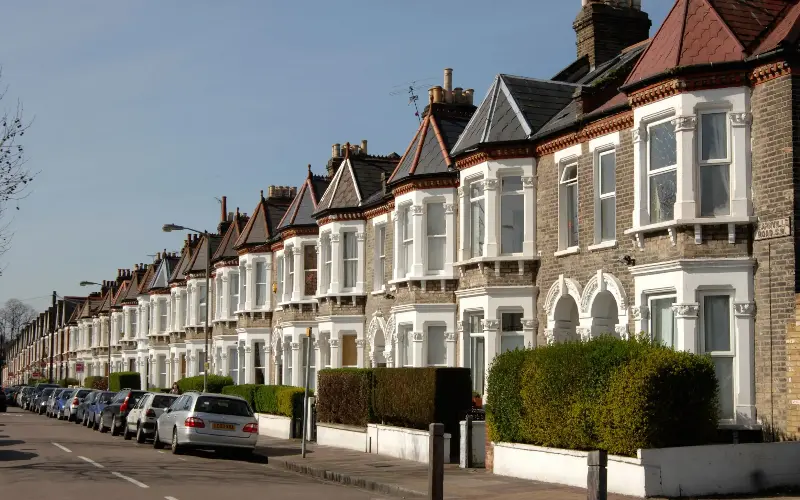
The Georgians hated old manor houses with their crinkum-crankum layouts – they favoured the neat symmetry of a four-square box. But they were greatly enamoured of the sash window, which could be thrown open to provide an instant breeze.
When two sash windows were opposite each other, the breeze was delicious; this was one of the ways they kept houses cool in the American South. That and, as they say over there, piazzas – what we would call verandas – surrounded by columns.
Columns are part of the classical repertoire, also beloved of Georgian England. Since the style originated in ancient Greece, it’s good at providing shade. That’s the point of colonnades and porticos – added to which is the aesthetic bonus of classical mouldings looking their best when casting a shadow. The Duchy of Cornwall has incorporated similar principles of natural temperature control into the King’s developments at Poundbury in Dorset and Nansledan in Cornwall.
Victorian ladies, anxious to preserve a milky complexion, had a variety of defences against the sun. Practically anyone with a claim to respectability owned lace curtains, affordable after the invention of machinery to make the lace. Cheerfully striped awnings stopped unruly sunbeams from entering the drawing room. Country houses sported dozens of them. They were also covered in creepers, which provided another layer of protection against the sun.
Recently we have put our faith in technological solutions. Having panted up the stairs of a London bus earlier in the week, I found there was no window to open: the temperature was supposedly centrally controlled – except that the system couldn’t cope and I nearly expired. It’s the same with hermetically sealed houses.
My old office, occupying the corner of a high-rise building, had enormous windows that, one hot summer, cracked from top to bottom, due to the building’s thermal expansion.
At home, I can open windows in rotation, pull down blinds, let heat escape through a vent at the top of the house, and retreat to the basement, leaving the doors open. People in old houses may not be over-supplied with mod cons but they can count themselves lucky in a scorcher.
Clive Aslet is publisher of Triglyph Books www.triglyphbooks.com and a visiting professor of architecture at the University of Cambridge