


When the cast of Peter Jackson’s The Lord of the Rings (LOTR) were preparing to long-haul it to New Zealand to begin filming in October 1999, the director had one piece of advice: if you haven’t read the books, listen to Brian Sibley’s 1981 radio adaptation instead.
“Everybody from the UK that went out to film in New Zealand, knowing they were going to be on a 36-hour flight, were given the audio version,” recalls Sibley, speaking ahead of a lavish CD and vinyl reissue of the Radio 4 drama, which is widely considered by diehards as the greatest Tolkien adaptation ever made.
One person who didn’t need to do either was Ian Holm, whom Peter Jackson cast as an ageing Bilbo Baggins after encountering him as a young Frodo opposite Bill Nighy’s Sam Gamgee in Sibley’s version.
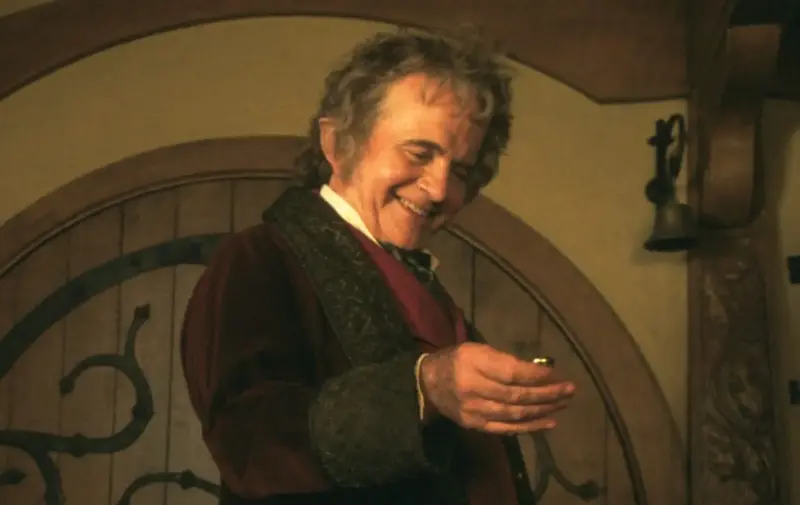
Sibley, 77, remembers Holm, who died in 2020, as a serious Tolkien scholar. He recalls, too, how he had jousted with veteran Peter Woodthorpe, who was playing tortured, depraved Gollum – having previously portrayed the character in Ralph Bakshi’s animated LOTR from 1978.
“There were several people passionate about the book,” says Sibley. “Woodthorpe, who’d already done the voice of Gollum for the Bakshi film, invested himself totally in it. Ian saw him very much as a competitor in the studio.”
Their clashing personalities – and differing opinions on what their portrayals should look like – meant that the Frodo-Gollum relationship “was not easy”.
“Peter wasn’t as well known as he had been – but he was one of the two tramps in the first production of Waiting for Godot that Peter Hall directed when it came to Britain [in 1955]. He was a considerable actor. He was not the most easy man to work with. Once he’d got Gollum in his head and his ‘preciousssss’ and all that stuff… He was unrelenting.”
This did not sit well with Holm, who felt that Woodthorpe was trying to steal the spotlight. “Ian wanted, I think understandably, as the main character, to be able to shine.”
Sibley adds: “Ian and Peter had a really not-good [sic] relationship, because he [Holm] would keep saying to the producer, why does he have to keep hissing away in the background?”
The actor also believed that getting under the skin of Frodo required “umpteen takes” – a source of frustration to the old-school players in the ensemble, in particular Gandalf actor Michael Hordern, best known as the narrator of the Seventies Paddington Bear series.
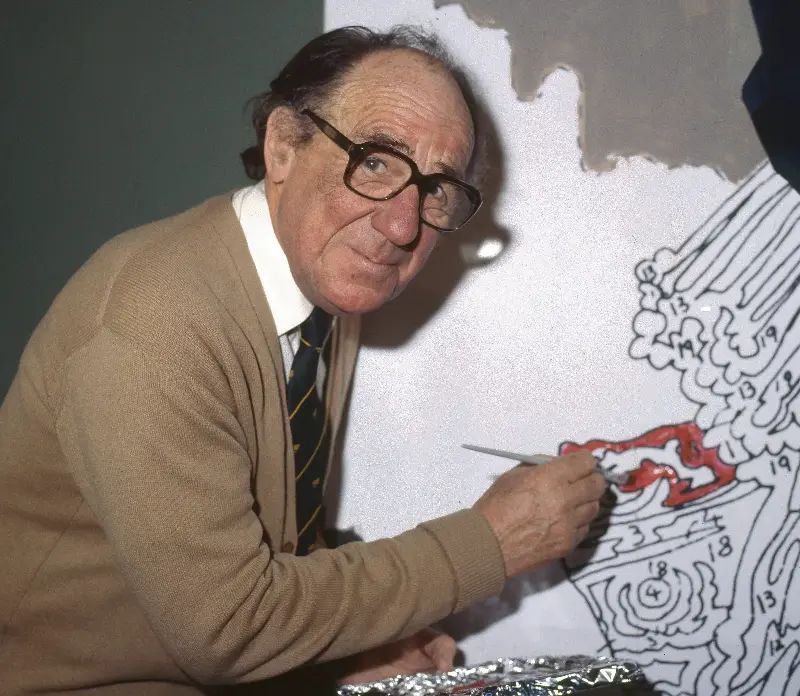
Watching the two thesps spar from the control room at Broadcasting House through the winter of 1980 and the spring of 1981, Sibley didn’t know whether to laugh or weep. He had been “loosely in the business” for five years – having taken the plunge as a full-time writer only after he was made redundant from his office job – and LOTR was his first big drama project.
“It is something that could never, ever happen today,” Sibley says of the BBC entrusting a project with such a profile to a relative newcomer. “Absolutely unbelievable.”
With so much riding on the production, and mindful of his lack of experience, the BBC paired him with the seasoned writer Michael Bakewell – who brought plays by Harold Pinter, Giles Cooper and Ibsen to the BBC – with whom he divvied up the episodes.
Sibley, though, was the driving force. He had already caused a minor panic in the BBC drama department after suggesting they commission a LOTR series while the BBC was secretly negotiating to obtain the radio rights from film producer Saul Zaentz – only to discover that he didn’t hold them.
Having assured his bosses that he hadn’t been party to these hush-hush talks, he was given the gig. It was a gamble by the BBC that more than paid off. Sibley and Bakewell’s masterful take is today regarded by purists as the most faithful retelling of LOTR – so much so that it has completely obscured memories of an earlier radio adaptation in the 1950s (of which no trace remains today).
“I’ve long argued that it is the gold standard for adaptations of The Lord of the Rings, even with the challenge of fitting it into 26 half-hour episodes,” says Alan Sisto, a host of the Tolkien-dedicated podcast Prancing Pony.
“As much as I love the Jackson films – well, the first three at any rate; the less said about The Hobbit films, the better – Sibley’s work on the 1981 BBC drama was ground-breaking. I’d say that it did a fantastic job of capturing the spirit of the books: in particular, the themes of fellowship and hope.”
Many Tolkien fans have a deeply personal relationship with the radio drama – which arrived when LOTR fandom was not the runaway juggernaut it is today and more a secret to be shared among true believers. As a nerdy schoolboy in Ireland, I recall desperately tuning a bashed-up long-wave radio when the drama was rebroadcast in the Nineties.
Because our housing estate sat in a natural hollow, the transmission would fade in and out. One minute you could hear Stephen Oliver’s stirring theme tune and the exasperated Hordern huffing his way through Middle-earth as Gandalf; the next, a ghostly static hiss, like a Nazgûl throwing a strop. When I think of LOTR today, that is one of the first memories that comes to mind.
I was not alone: “The 1981 dramatisation had a profound impact on me. I taped it – illegally – and listened again and again until the tapes broke,” recalls Stuart Lee, professor of English literature at Oxford and a prominent Tolkien scholar, in an email. “When I went to university to read English, I saw an advert for Old and Middle English which said, ‘Do you like Tolkien? If so, you’ll love Beowulf,’ and this in turn led me to study early Medieval English. So those radio shows were critical.”
“The dramatisation is also excellent,” he continues. “Unlike the 1955 BBC version, enough time was given to the books to do justice. Yes, things had to be left out, but on the whole it was an astonishing achievement. The acting was impressive, the cast was amazing, the adaptation wonderful, and the way it turned the narrative into a linear progression was exemplary – especially with The Two Towers.”
One quality that sets apart the 1981 BBC version is its sheer otherworldliness – something that runs through Tolkien’s books but is largely absent from the films. It is the only fully British LOTR adaptation to survive, and the absence of a Hollywood sheen is entirely to its benefit.
Jackson was a fan too – so much so that he invited Sibley to New Zealand when he was making his film to write the official behind-the-scenes book. However, his debt to the audio drama goes beyond mere inspiration. Jackson borrowed the BBC drama’s structure of cutting between Frodo and Sam in Mordor and the rest of the Fellowship. He also leant heavily on Sibley as his trilogy arrived at its weepy denouement.
The problem with the end of LOTR, Sibley explains, is that Frodo and Sam don’t exchange words as Frodo, shell-shocked and hollowed-out, prepares to depart Middle-earth. That works on the page; Tolkien tells us how they feel so they don’t have to articulate their emotions. That was never going to fly in either the radio or big-screen retellings.
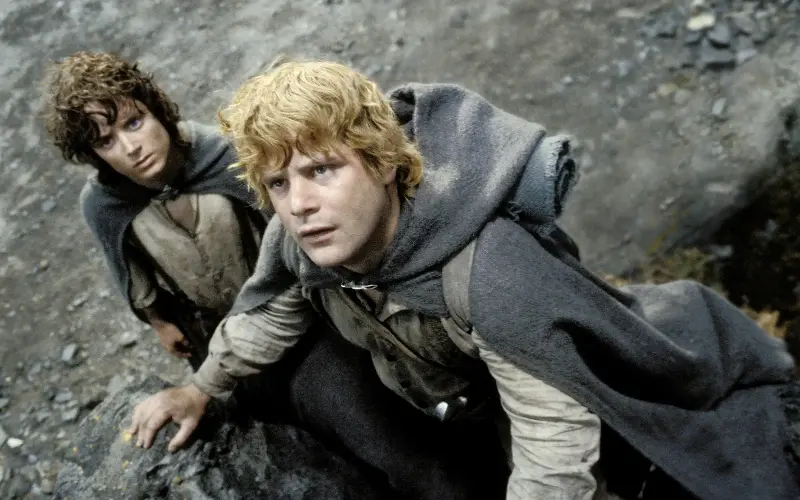
Sibley’s solution was to introduce a previous exchange between Frodo and Sam. “A chapter or two earlier, when they were talking about the fact that Frodo is getting tired and needs to depart, Frodo says to Sam, ‘Don’t be distressed. I’ve done what I did. You’ve got so much else to be and to do’. And basically saying you are the future.”
“I kept that piece of dialogue – and dropped it into the Grey Havens. So they could say goodbye to one another in a moving way. And then as he [Sam] approaches Bag End, before he clicks open the gate and goes in, he replays in his mind that conversation again. So much to be and to do. And he opens the door and goes in and says, ‘Well, I’m back’. I remember Fran Walsh, Peter’s partner, saying to me, ‘We stole your ending by the way.’ And Peter said, ‘Don’t say that, don’t say that – he’ll sue us.’ And she said, ‘Well, it was just perfect.’”
A more surprising champion of the radio drama was Tolkien’s late son Christopher, who was notoriously protective of the books and said Jackson’s films “eviscerated” the material. You can only imagine what he would have made of Amazon’s atrocious prequel series, The Rings of Power.
Sibley remembers Christopher, who became JRR Tolkien’s literary executor following his father’s death in 1973, as supportive of the adaptation and open to his changes – the fast cuts between Mordor and Rohan, and the decision to cut whimsical woodsman Tom Bombadil (likewise expunged by Jackson). Christopher even sent the production a tape of the correct pronunciations of words and names. This was largely for the benefit of Hordern, who was so unfamiliar with the story, and baffled by the script, that he was astonished when Gandalf was killed by a Balrog – and assumed his services were no longer required.
Sibley and Bakewell’s LOTR debuted in March 1981 with considerable fanfare. The Radio Times put it on the cover, reproducing the show’s stunning official artwork by Eric Fraser. Week by week it built a cult following as fans around the UK (and those trying to tune in farther afield) gathered around their radios, ready to walk, if only for half an hour, in Middle-earth.
“I knew how precious it was to people when I was looking in the newsagent’s window – people used to put cards in saying, baby buggy for sale, or whatever,” reflects Sibley. “And there was one which just said, ‘Will trade any episode of Lord of the Rings so far for an episode which I missed.’ There was somebody just saying, ‘I have to hear this.’”
The Lord of the Rings will be reissued as a limited edition CD and vinyl box-set on Dec 4, via Demon Music Group