



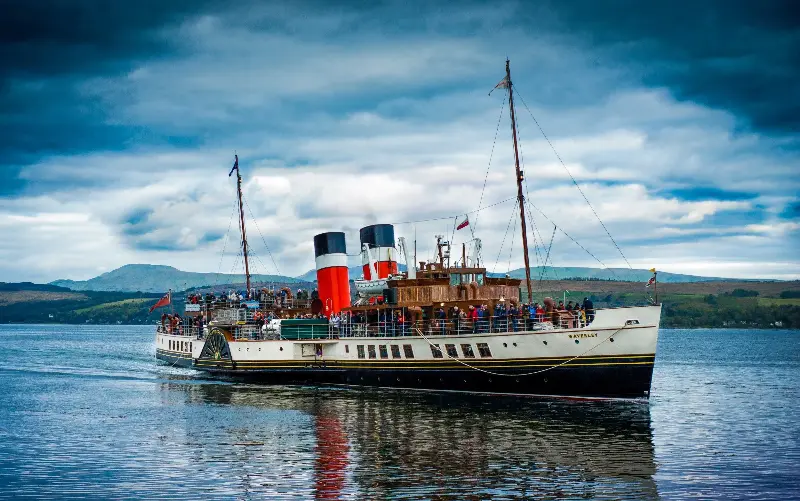
It was a man called Nigel in Clacton-on-Sea who explained to me how important the Waverley paddle steamer is. Not the one you might be thinking of, but Nigel Brown, a rather more stable presence in the Essex resort, who spent a decade on the council and even longer as a newspaper man, and now oversees communications for the famous pier.
Singing the praises of the historic structure with its family-friendly bowling alley, bumper boats, dodgems and lovely old helter-skelter, he added: “And we still have the famous paddle steamer visiting us during the summer, coming up the Thames from London – that’s very special.”
Slow travel in a fast world
What is it about waterborne travel that makes people so nostalgic? Part of it is pure history, and the unceasing tides of time. The PS Waverley – named after Sir Walter Scott’s 1814 novel – is celebrating her 80th anniversary this year. Anything that endures in a world of fads and fashions – and fast travel – stands out.
In Brown’s case, it was also the special connection between the Essex coast and the capital, now perceived as a commuting relationship, but historically all about leisure and pleasure. A paddle steamer is a reminder of more sedate, if not necessarily peaceful, times; an earlier PS Waverley was requisitioned in both world wars to serve as a minesweeper, and was sunk in 1940 while helping to evacuate troops from Dunkirk.
But it’s also because, once upon a time, these scattered and jagged islands of ours were connected by scores of seagoing and river-plying vessels – and nowhere more so than the west coast of Scotland.
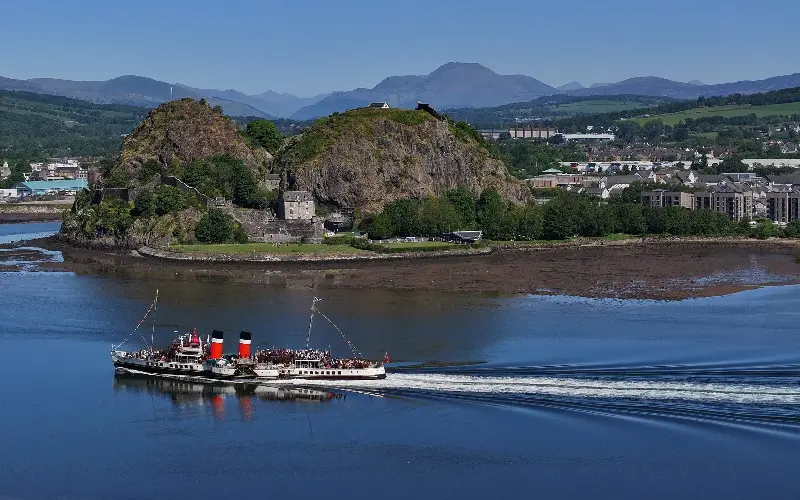
Waverley’s keel was laid on Dec 27, 1945, but due to wartime material shortages, her maiden voyage was delayed until June 16, 1947 following sea trials. She was commissioned by the London and North Eastern Railway (LNER) and built by Glasgow shipbuilders A & J Inglis at their Pointhouse Shipyard at the confluence of the Clyde and Kelvin.
The firm, founded in 1848, had previously built clippers – some powered by both sail and steam – as well as yachts for the British and Egyptian royal families, before producing a number of much-praised paddle steamers, including the Maid of the Loch, still serving as a visitor attraction on Loch Lomond.
Lady Matthews, the wife of the Chairman of the LNER, launched the new 693-ton PS Waverley on Oct 2, 1946. She was towed to Victoria Harbour in Greenock where Rankin & Blackmore fitted the engine and coal-fired boiler. The vessel was built primarily for the route up Loch Goil and Loch Long from the piers at Craigendoran and Arrochar.
The era of steamboat tourism
The era of the Clyde steamer had begun back in August 1812 with the first successful commercial steamboat service in Europe, when pioneering engineer Henry Bell’s 30-ton, three-horsepower Comet began working the route between Glasgow and Greenock.
From the 1860s, paddle steamer services became an increasingly important niche in the coastal passenger and excursion trade. Large fleets served the cities, towns, villages and coastal resorts of the Firth of Clyde, as well as the Bristol Channel, the South Coast of England, London and the Thames Estuary. Paddle steamers linked Liverpool with North Wales and the Isle of Man, and crossed the Bristol Channel, connecting South Wales with Devon and Cornwall.
By 1900, there were more than 300 Clyde steamers in service. From the very beginning, they were aimed at holidaymakers, and the operators were continually finding new excursions and pushing further and further out into the Firth of Clyde, north around Bute and into Loch Long and south to Ayr and Girvan; steamers also occasionally crossed the lively Sea of the Hebrides to call at the Western Isles.
A very genteel retirement
As tourism became more accessible for ordinary people, day rovers were popular and multi-day season tickets meant Scottish families could use the steamers to explore the maze of inlets and lochs on the west coast. As late as 1963, Clyde services were provided by fifteen passenger boats and only four car ferries; all the Western Isles services were provided by passenger and cargo boats. But, as the car became king, car ferries began to operate on sea crossings and the world of the Scottish waterways was changed forever.
PS Waverley is the world’s last seagoing paddle steamer. In 1974, at the end of her working life, she was gifted for £1 to the Paddle Steamer Preservation Society. Waverley Steam Navigation Co Ltd, a charity registered in Scotland, was set up to own and operate the ship. She has since enjoyed a second career as a tourist attraction and is “in operational preservation”, to date carrying more than six million passengers.
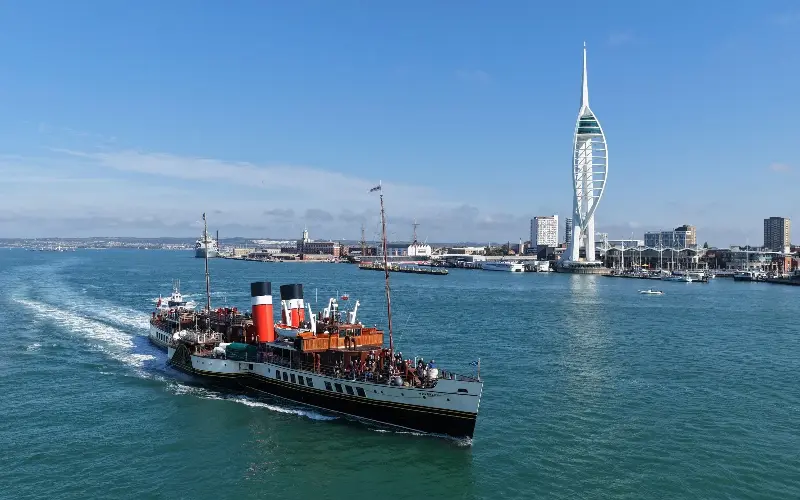
The PS Waverley today doesn’t only revive the Clyde routes, but provides services along the south coast of England, in the Bristol Channel, and between Liverpool and Llandudno. During her 80th summer, she has toured to Northern Ireland, the South Devon coast, Anglesey and, at the end of this month, will be making a rare call at Newhaven before cruising up the Thames and beginning a series of river excursions that take in Whitstable, Tilbury and, of course, Clacton.
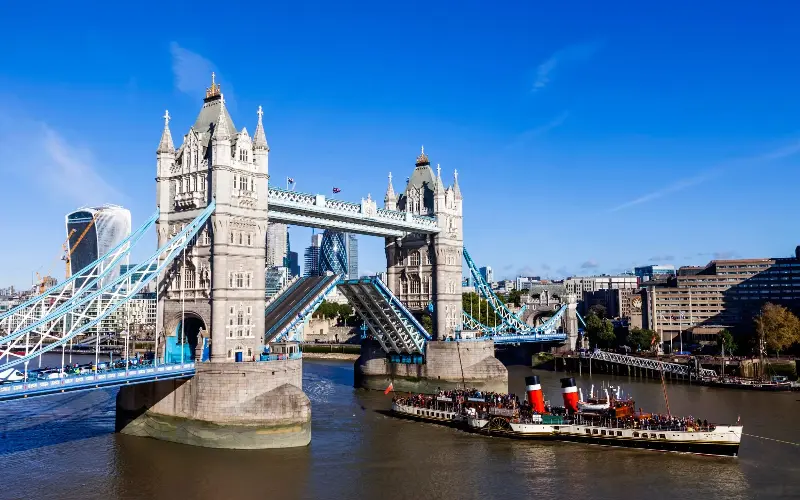
Her official 80th birthday, on Oct 2, will be celebrated with a cruise from London, passing under Tower Bridge, and making calls at Gravesend and Southend before returning after dark – with smooth jazz, swing and a vintage vocal trio entertaining the passengers on board. A very genteel retirement indeed.
Essentials
There are currently tickets for various routes available with, for example, one-way fares from Portsmouth to Yarmouth from £36 per person. See Waverley Excursions to book.