



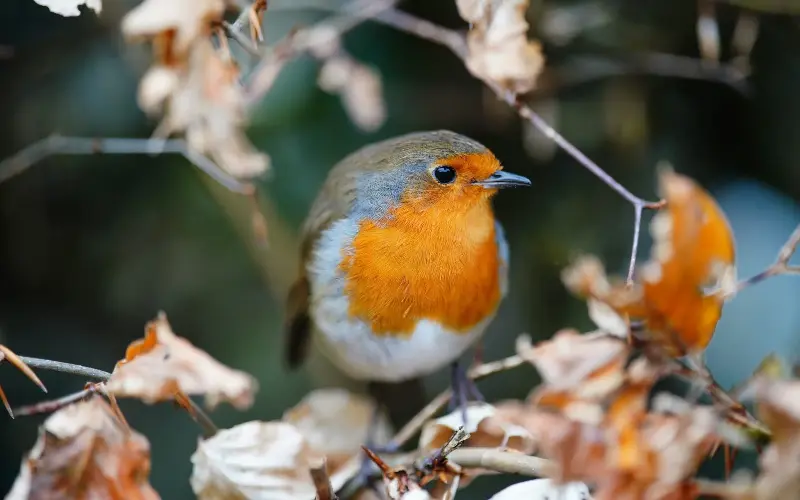
A robin darting across a frosted garden has long been a source of Christmas joy, but this festive season may be short on sightings of the red-breasted bird.
Experts have said that robins will be harder to find this winter following a summer of extreme heat and drought.
The native bird has struggled to cope with record-breaking temperatures as its crucial food sources have become scarce.
Scorching heat and scarce rainfall across the country have made the topsoil rock-hard, locking in the earthworms that robins depend on to survive and feed their young. Month after month of harsh weather has also killed off plants that support insect populations, which robins also rely on.
This summer surpassed that of 1976 as the warmest on record.
Jon Carter, of the British Trust for Ornithology, told The Mail on Sunday: “It is possible that the hot, dry conditions we experienced in many parts of the UK this summer will have had an impact on such familiar garden birds as blackbirds and robins.
“Due to the ground being so hard and compacted during the breeding season, these birds, which often dig into the earth in search of worms and grubs, will likely have struggled to find enough food to feed their chicks, resulting in fewer successful broods.
“Water in some places will have been harder to come by too, depriving the birds of a much-needed resource at this critical time.”
Lucy Taylor, a wildlife expert, said: “I think robins could be harder to spot this winter. The incredibly hot and very dry weather will have impacted them and many other bird species this summer.
“This may be down to reducing brood survival rates (robins can have three broods per year) or them even finding the conditions so harsh they decide not to try for the last brood.”
An RSPB spokesman told The Telegraph: “While high temperatures make things challenging for many species, it is the knock-on consequences of extreme heat and drought that cause the greatest impact. For example, hard ground makes finding food more difficult for birds with an invertebrate diet.”
They added: “As vital areas of vegetation collapse, so do the invertebrate populations which many young birds depend on.
“Butterflies can respond rapidly to weather changes, with some species benefiting from the warmth, but dry vegetation reduces food availability for caterpillars, resulting in poor breeding success and population collapse.”