



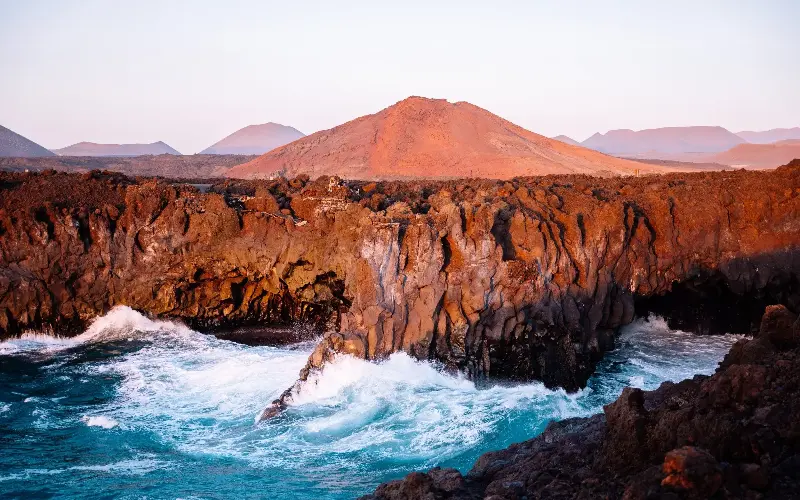
Lanzarote’s history is as turbulent as the sweep of volcanoes that forged it and today still spectacularly dominate the Canary island, the entirety of which is a Unesco Biosphere Reserve. Legends swirl of daring adventurers, marauding pirates and conquering Spaniards.
The story since the 1960s has been one of increasingly affordable flights that have brought waves of new arrivals to the beach resorts of Puerto del Carmen, Costa Teguise and Playa Blanca. However, beyond them, much of the island remains almost untouched, especially the less-visited north.
Largely thanks to the advocacy of visionary local artist César Manrique, development has been kept both pleasantly low key and low rise. Manrique also helped create many of the island’s most impressive cultural attractions, and his legacy can be felt wherever you go, whether you are reclining in a vineyard with a glass of Malvasia, enjoying boat-fresh seafood or just lazing on one of Lanzarote’s shimmering sandy beaches. I’ve been back to Lanzarote most years since my first visit in 1994 and it never fails to dazzle with its elemental scenery and ability to evolve and adapt. It’s an island you could never get bored of.
In this guide:
How to spend the perfect day
Morning
You really need to hire a car on Lanzarote as public transport is limited and not regular enough for easy touring. Drive straight to the island’s volcanic heart and delve into the otherworldly Timanfaya National Park. Hop on a bus tour here, embark on a hike, even head off on a camel or just learn about the landscape at the visitor centre. I’d resist lunch cooked on their geothermal stove though, as you’re soon to savour something much better.
Continue south, seeking out the Atlantic at El Golfo, a strikingly set village that sits between rugged volcanic scenery and the cobalt ocean. It’s easy to see why it is the star of so many postcards, with its trim whitewashed buildings sitting right on the volcanic shores. Pull in at the free car park as you approach the village. Be sure to make the short hike to gaze out over the Charco Verde (Green Lagoon). If it looks familiar, El Golfo starred in Pedro Almodovar’s Broken Embraces, which starred Penelope Cruz.
Afternoon
Handily, the tiny oceanfront village of El Golfo is home to a sprinkling of seafood restaurants. Recline into the terrace table you’ve booked in advance at Costa Azul and choose from the fresh fish display as a waiter pours you a glass of Lanzarote’s finest Malvasia Volcanica. I recommend starting with plump garlic prawns before simply grilled fresh cherne (think cod with more flavour), or a hulking pan of paella. Stick to one glass of vino as you’ll want to appreciate the full wonder of the man who turned Lanzarote into a living work of art at Fundación César Manrique afterwards.
Late
Take a stroll around Arrecife’s picturesque Charco de San Ginés waterfront and stop, if you’ve made good time, at a café by the water. As the sun melts over the Atlantic, ascend to the 17th floor of the only skyscraper in Lanzarote – it’s cocktail time. The Gran Hotel’s Blue 17 restaurant and bar in Arrecife boasts an extensive menu to accompany its sweeping floor-to-ceiling windows, but I usually stick with a bone-dry glass of Malvasia.
Dine late like a local at Orlando Ortega’s Restaurante Lilium, named by Michelin as an “Inspectors’ favourite” – you will be a fan too after seeing Canarian produce and cuisine reinvented so creatively. For a real treat indulge in the tasting menu. Afterwards enjoy a stroll around the rapidly changing Arrecife waterfront.
How to spend a week-long holiday
After spending the perfect day getting acquainted with the island, it’s time to dive even deeper. With so many fine examples it would be a shame to miss spending a day or two enjoying the pleasures of what brought holidaymakers to Lanzarote in the first place – the beach. Actually, why not make it a round half dozen of them? That is what you get down at my favourite beach oasis, Punta Papagayo. Don’t like one stretch of sand? There are five others to choose from. And don’t forget a snorkel or at least a good book. Half the fun is getting here – it’s a bumpy drive, walk, cycle or a spectacular boat ride (my preference).
Make sure you end up at the most famous beach, Playa Papagayo, which boasts the sort of simple chiringuito (beach bar) that all islands should have. We’re talking the smell of salty air and sand in your toes as you dine, rather than white linen and slick waiting staff. The stripped-down menu offers fresh fish with irresistible papas arrugadas (wrinkly potatoes).
Heading slightly north you’ll need a full day to explore La Geria, the epicentre of Lanzarote’s wine production. Every producer has their own charms and you can tick off a few wineries on one leisurely route – Bodegas Vega del Yuco, Bermejos and the oldest winery in Lanzarote, El Grifo, do not disappoint. You can dine very well in some of the wineries these days, too – my favourite is Stratvs, where the gastronomy is no afterthought. For evidence of this look no further than the Iberian “Presa” carpaccio with orange teriyaki sauce and parmesan ice-cream. If you prefer to be driven around on an organised group tour, hook up with Wine Tours Lanzarote.
I’d devote a whole day to exploring César Manrique’s legacy across Lanzarote (see Insider tips, below), including his Cacti Garden, both his houses, the swirling roundabout sculptures and his curated miradores (viewpoints). Then dine out with Manrique (or at least his architectural legacy), at the Jameos del Agua. He brilliantly refashioned the lava tubes here to conjure up a unique space woven around the volcanic caves. Stay late to sip cocktails as the live DJs (in summer) keep things bubbling along.
Another life-affirming experience on a fine evening is savouring the night skies. Lanzarote is famous for its clear skies and the lack of light pollution makes stargazing a joy. The Peñas del Chache – the island’s highest point at 670m – offers the most spectacular, unobstructed views. Handily, there is road access with a car park. Alternatively, drive up to the village of Haría in the quieter north where there are several great stargazing spots on the approach.
For a completely different experience that takes you beneath the island’s tourist veneer, dive 30m in a proper submarine with Submarine Safaris Lanzarote – shipwrecks and teeming marine life wait on the volcanic seabed below. Afterwards a swathe of bars and cafés tempt in Puerto Calero. If you prefer staying above the water, Catlanza runs superb half-day sailings from the marina, with yoga, local snacks, wine and goat’s cheese included. On Sunday morning you should check out the massive market in the charming historic town of Teguise.
When to go
Lanzarote has two high seasons – before and after Christmas for winter sun and then again in the summer school holidays. Its year round warm climate and low rainfall means there is never a bad time to go. Even in summer the Atlantic breezes mitigate the heat in a way you don’t get in the southern Spanish resorts. Lanzarote’s Carnival in February or March (depending when Easter is) is a brilliantly fun time to be on the island with all welcome.
Where to stay
Luxury Living
Right on the beach at the northern fringes of Puerto del Carmen is the excellent, recently revamped, Seaside los Jameos. This elegant whitewashed four star reclines in palm-fringed gardens alive with exotic birdlife. It is a hotel as adept at providing a cocoon for couples as it is at keeping all the family happy. Don’t miss the superb spa. The all-inclusive option brings local fish and meat, and a cocktail bar that shimmies on into the night.
Designer Digs
The Barcelo Playa Blanca opened in 2024, a real breath of fresh air in the eponymous southern resort. This new Lanzarote 720-bedroom landmark looks and feels gorgeous: its stark white lines and design-led spaces make the most of the spectacular location gazing over the Atlantic and the neighbouring isles. Think infinity pools, a high-tech gym better than many commercial gyms and hotel restaurants worth staying in for. Highly recommended.
Budget Beauty
Finca de Arrieta is utterly unique to Lanzarote and easily one of my favourite places to stay in the Canaries. Set up by a British couple fleeing the rat race, it was a real green pioneer. Today, with their son Joshua Braddock at the helm, it still sticks to the same strong sustainable principles, but there is luxury here, too. Alongside budget options like yurts, there are swimming pools, villas and beautifully curated furniture and décor that chimes with the Manrique template, across 21 eclectic places to stay. Everyone has access to the communal pool, kitchen and shop.
What to bring home
Whether dry or sweet, Lanzarote arguably gets more out of the Malvasia grape than anywhere else, so snare a bottle or two. The striking blue bottle of Yaiza makes for a stylish candlestick holder afterwards.
Teguise’s Sunday morning market may offer a serious swathe of tat, but dig in deeply and you will also find quality leather goods, such as bags and belts, on sale at competitive prices. Parking can be a nightmare so it’s better to catch a bus or taxi.
Know before you go
The basics
- Flight time (from UK): Around four hours
- Currency: Euros, €
- International dialling code: 34
Essential contacts
- Tourist board information: 00 34 928 81 17 82, turismolanzarote.com
- Emergency fire and ambulance: 112
- Emergency police: 112
Local laws and etiquette
- Tipping culture: there is no hard requirement to tip, but it’s polite to round bills up. If service has been especially good you can tip 10 per cent.
- Public transport: there are no trains or trams on Lanzarote, but the local bus network is clean, safe and reasonably efficient. The network is not totally comprehensive, though, and routes and timetables are geared more towards locals than tourists.
- Taxis: Uber doesn’t currently operate on Lanzarote, but there are a decent number of safe and fairly reliable taxis in Arrecife, the airport and in the resorts. They are not a cheap way to get around, but fares tend to be slightly lower than the UK equivalents. Make sure to check that the meter is on – it usually is.
- Etiquette when self-driving: drive on the right-hand side of the road in Lanzarote. The road network is in reasonable condition, but some more remote beaches lie down dirt tracks so watch out where you take your hire car. Also watch out for locals on quieter rural roads, who navigate them with a speed and confidence that can be intimidating.
- Note that if you want to explore Lanzarote properly you’ll need your own car. There are myriad companies at the airport, but visitors have reported problems with some of them overcharging for extras and false damage reports. Book online through UK-based Holiday Extras and they can offer telephone support in English.
- Most visits to Lanzarote are trouble free, but one major danger to be aware of is the ocean. This is the Atlantic with serious surf, undercurrents and rip tides. It’s always a good idea to check on conditions locally and just don’t get in if you are in any doubt. Note that the resorts tend to have stretches of sand available that are protected by lifeguards.