



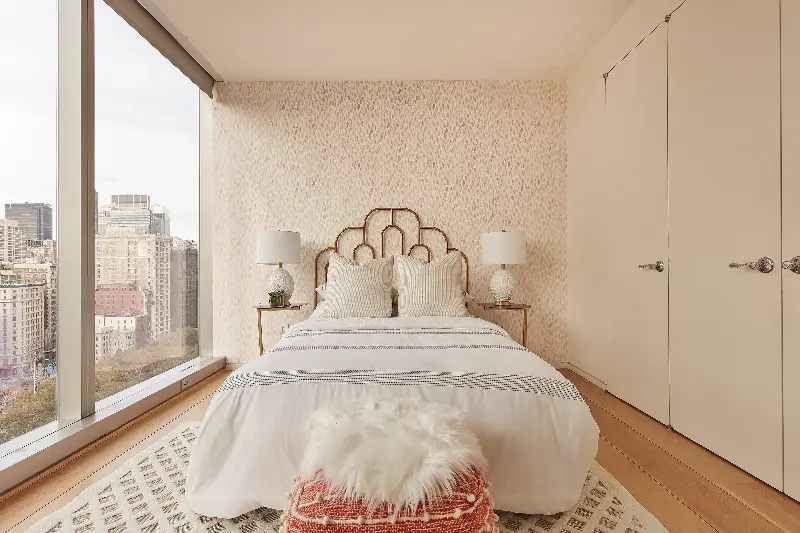
Wallpaper is back, and it looks nothing like the borders and busy florals of the 1970s and '80s. Today's options range from subtle grasscloth to bold murals, and peel and stick varieties have made it easier than ever to try.
Still, wallpaper is a commitment of time and budget, and where you put it matters as much as what you choose. If you are looking for ways to infuse wallpaper into your home, here are some top tips.
DO
DO start with a small space. A powder room, an entry or a small hallway is a wonderful place to try something bold. The scale keeps the cost manageable and the impact is immediate.
DO consider an accent wall. Papering the wall behind a bed or a sofa can give a room a focal point without overwhelming it. Choose the wall your eye naturally lands on when you enter.
DO look up. The ceiling is often called the fifth wall for a reason. A subtle pattern or a soft metallic overhead can add unexpected charm, especially in a dining room or bedroom.
DO use it in unexpected places. The back of a bookcase, the inside of a closet or the risers of a staircase are small surfaces where wallpaper can feel playful and personal.
DO order a sample first. Colors and textures can look very different in your light than they do online or in a showroom. Tape a sample to the wall and view it morning and evening.
Don’t
DON'T ignore the scale of the pattern. A large pattern in a tiny room can feel like too much, while a small pattern in a big room may disappear. Match the pattern size to the wall size.
DON'T paper every wall in a busy pattern. Four walls of a bold print can make a room feel like it is closing in. If you love a dramatic paper, give it one or two walls and keep the rest calm.
DON'T forget moisture. Bathrooms with showers and kitchens near the stove need papers designed for humidity. Ask before you buy.
DON'T skip the prep. Wallpaper shows every bump and crack beneath it. Smooth, primed walls make the difference between a professional finish and one that peels.
DON'T fight the rest of the room. Pull one or two colors from the paper into pillows, art or accessories. The paper should feel like part of the room rather than a separate decision.