


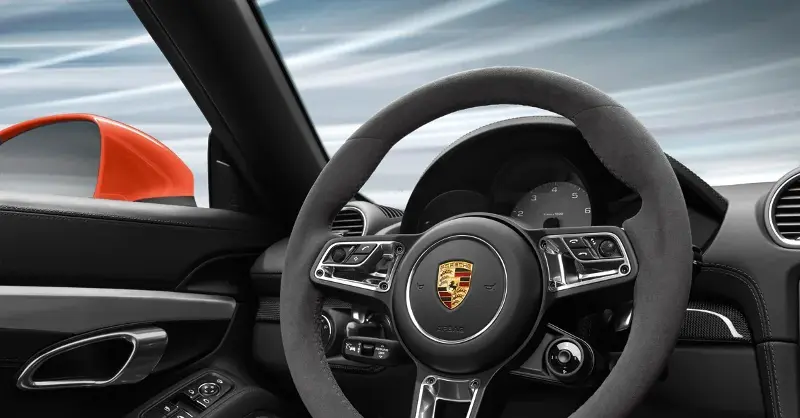
If you've ever sat in the driver's seat of a sports car or supercar, you'll easily notice that the steering wheel is usually wrapped in a dark, soft, velvety material instead of traditional leather. That's Alcantara, often called synthetic suede, which has become a symbol of high-performance vehicles.
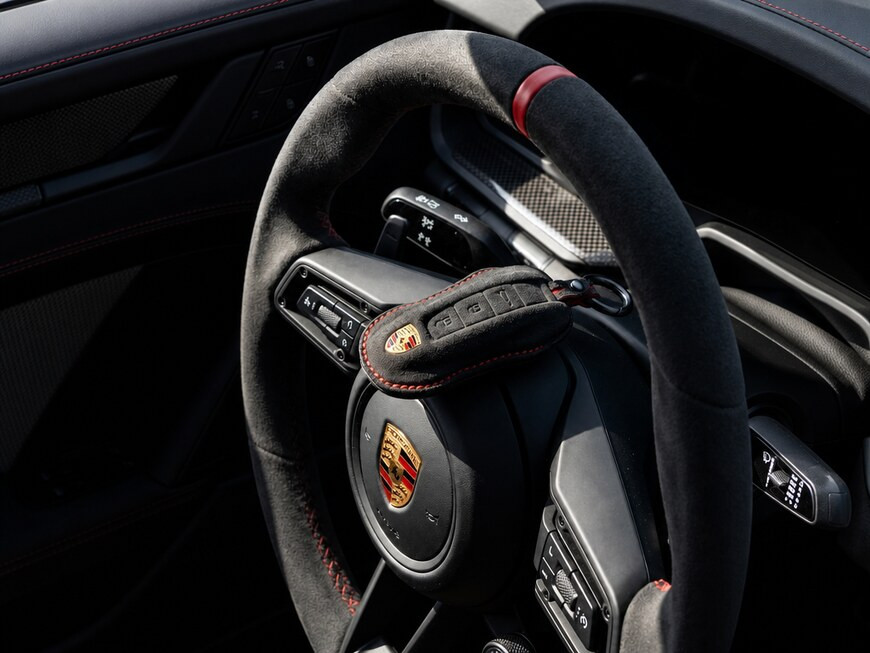
Not only is it beautiful, but it also helps to provide a firmer grip on the handlebars.
Originating in Italy in the 1970s, Alcantara is a composite material made from polyester and polyurethane. This material first appeared on the Lamborghini Bravo concept car in 1974 before being used on the Lancia Stratos HF, one of the most famous racing cars in history.
To this day, Alcantara remains a popular choice on many high-performance models from Porsche, Ferrari, Lamborghini, McLaren, BMW M, and Mercedes-AMG. The biggest reason why Alcantara is favored by engineers lies in its ability to enhance grip.
Unlike real leather, which can become slippery when hands sweat or the driver is wearing gloves, Alcantara's surface provides better grip, helping drivers maintain a firm hold on the steering wheel even when cornering at high speeds or making continuous maneuvers on the racetrack. This is also why most professional race cars use this material on their steering wheels.
In addition to providing a secure grip, Alcantara also helps drivers feel the steering system's feedback more clearly, thereby increasing steering precision.
In addition to its grip, Alcantara is significantly lighter than natural leather. According to the manufacturer, this material can be up to 50% lighter, contributing to a reduction in vehicle weight. This is a factor that sports car manufacturers always prioritize.
Even many performance-oriented cars like the Porsche 911 GT3 RS or BMW M4 CSL use Alcantara in various locations in the cabin, from the steering wheel and seats to the door panels.

The symbol of high-performance cars.
More than just an interior material, Alcantara is gradually becoming a hallmark of vehicles that prioritize the driving experience.
Many car owners even choose to re-cover their steering wheels or other interior details with Alcantara to achieve a feel similar to that of high-end sports cars.
However, advantages also come with disadvantages. After prolonged use, oil and sweat from the hands will compress the microfiber fibers, causing the surface to become shiny, flattened, and lose its original soft and smooth feel. This is also why many older cars with Alcantara steering wheels look more worn out faster than real leather if not cleaned regularly.
According to The Drive 's car care experts, users should regularly wipe down their Alcantara steering wheel with a damp microfiber cloth or a specialized cleaning solution to remove dirt and oil buildup. Proper cleaning will help the material maintain its grip and new appearance for a long time.
Despite requiring more careful maintenance than traditional leather, Alcantara remains almost irreplaceable in high-performance vehicles thanks to its combination of enhanced grip, lightweight properties, and distinctive driving feel. For many speed enthusiasts, it's not just a material, but a symbol of the purest driving experience.
(According to The Drive)
What are your thoughts on the above information? Please leave a comment below or share this article with VietNamNet via email: [email protected]. Suitable content will be published. Thank you!