


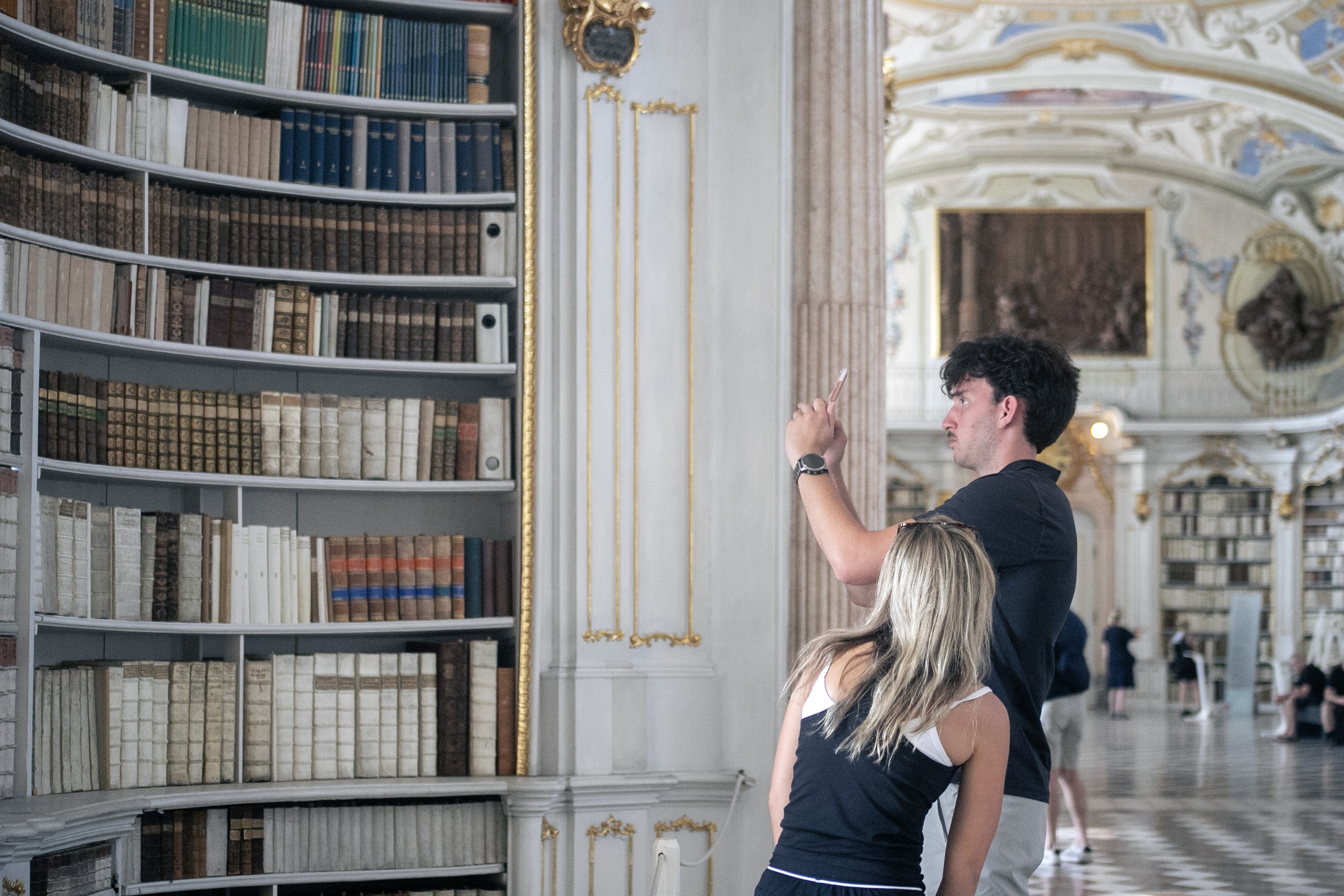
Despite enduring the ravages of time, weather, and fierce wars, some European countries have been fortunate enough to preserve many ancient structures.
These were the mansions, monasteries, and archives of the intellectual class during the monarchical period. As a way of honoring the past, these sites were brought back into the lives of the people and the cities in a different form.
Besides serving the need for document retrieval, libraries also function as cultural destinations attracting visitors from all over the world . This is the concept of a heritage library.
Historical buildings adapt to urban life.
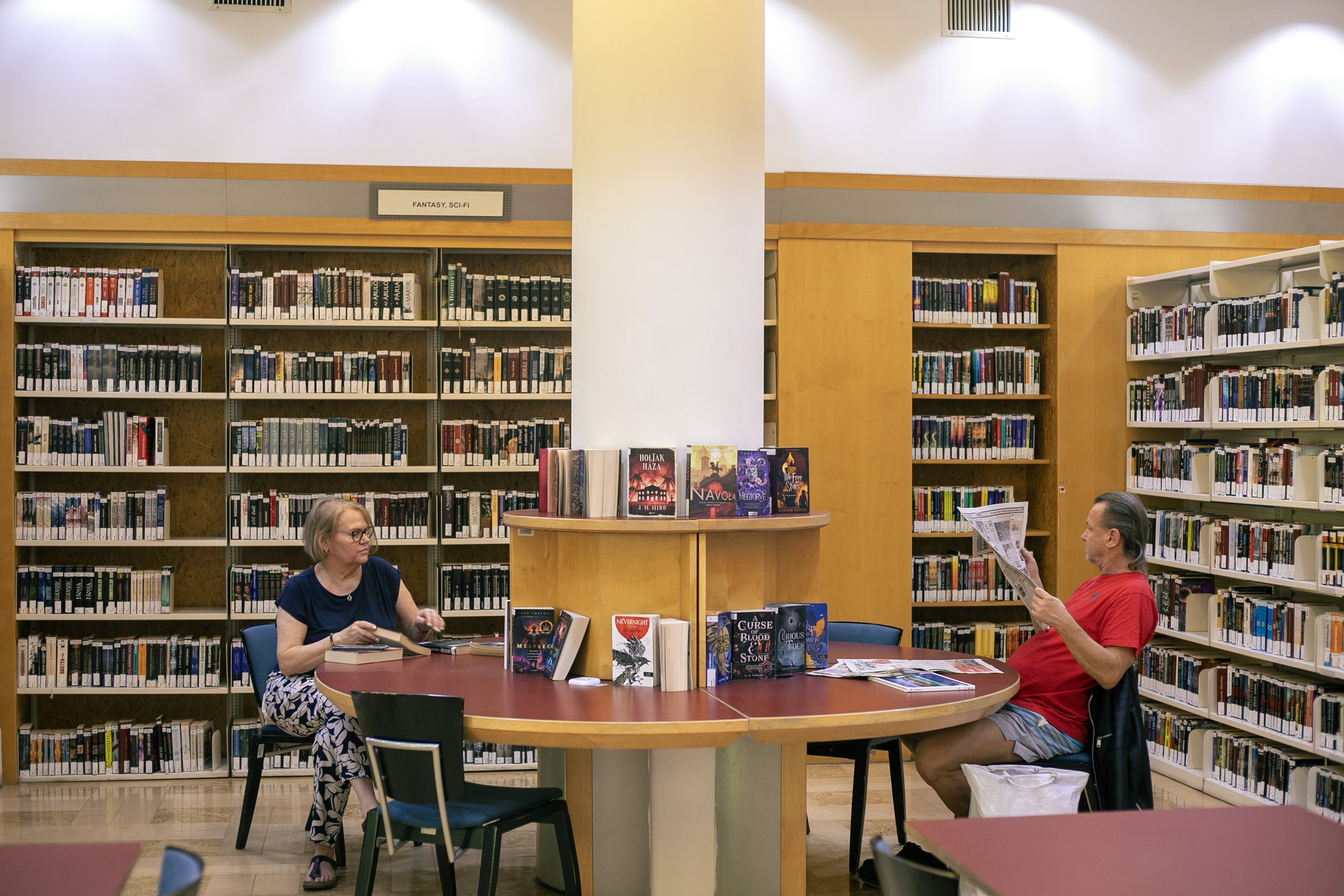
In the heart of Budapest, where rows of shops and high-rise buildings stretch endlessly, Metropolitan Ervin Szabó stands as a unique public space in the city. For Maja Doczi, a resident of Budapest, it's a familiar spot for students during exam season.
"Although there's a library near my house, I still frequently visit Ervin Szabo. The first positive point is its unique architecture and many spaces suitable for group study and essay writing. Because the library is so large, it took me a year and many visits to explore all the rooms," she shared.
|
|
The Metropolitan Ervin Szabo Library is a place where people go to find and read books, newspapers, and magazines. Photo: Duc Huy. |
Every spring, as the entrance exams for high school and university approach, the reading rooms are usually full. Many young people may stay all day because the library has all the necessary facilities for studying, resting, and socializing. Its central location and convenient public transport network also make Ervin Szabo easily accessible from many areas of Budapest.
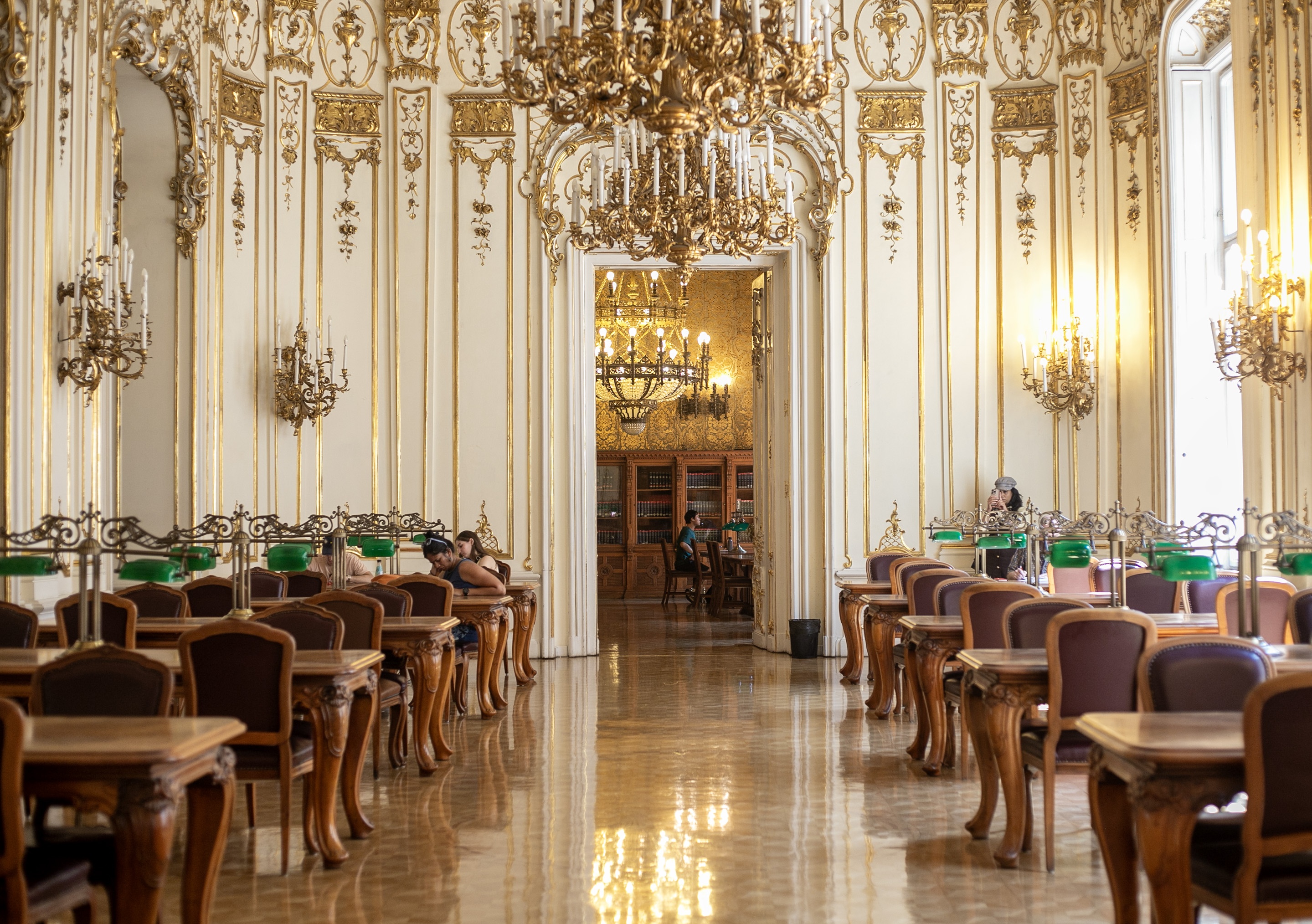
Above all, the library's appeal lies primarily in its unique history. The Wenckheim Palace was built by Count Frigyes Wenckheim between 1886 and 1891 in a Neo-Baroque style. In late 1926, the Budapest government decided to purchase the building from its heirs. From 1927 to 1931, the palace was converted into a library and officially became the headquarters of the central library in 1931.
|
|
The Neo-Baroque style reading room of the Metropolitian Ervin Szabo Library (Hungary). |
Opening a noble residence to the public marked a unique achievement for Ervin Szabo. However, over the decades, the ever-growing collection has made space cramped, access to documents difficult, and many services no longer meet evolving needs. Notably, since moving into Wenckheim Palace in 1931, the palace has never undergone a comprehensive renovation.
Until 1995, the city transferred the Pálffy Palace, located next to the library, to the Metropolitan Szabo Ervin Management Board. The building underwent a six-year renovation. By December 2001, the project was completed, along with the restoration of the palace's historical spaces.
Instead of demolishing and rebuilding, the project chose to connect the three structures into a single whole: Wenckheim Palace, the old building on Reviczky Street, and the new building on Baross Street. The usable area of the complex increased from 7,042 to 12,875 square meters, with the Baross building being a new eight-story structure. The goal was to create a modern library with approximately 1.1 million books, while preserving the historical and architectural values of the palace.
The Ervin Szabo Library is an interesting case, similar to the ancient DePetrus Church Library or the Lochal Library in the Netherlands . They all underwent a transformation through modernization, transcending the traditional function of a library. These places have become repositories of community memory and the lives of the people.
Libraries promote the cultural and intellectual values of the local area.
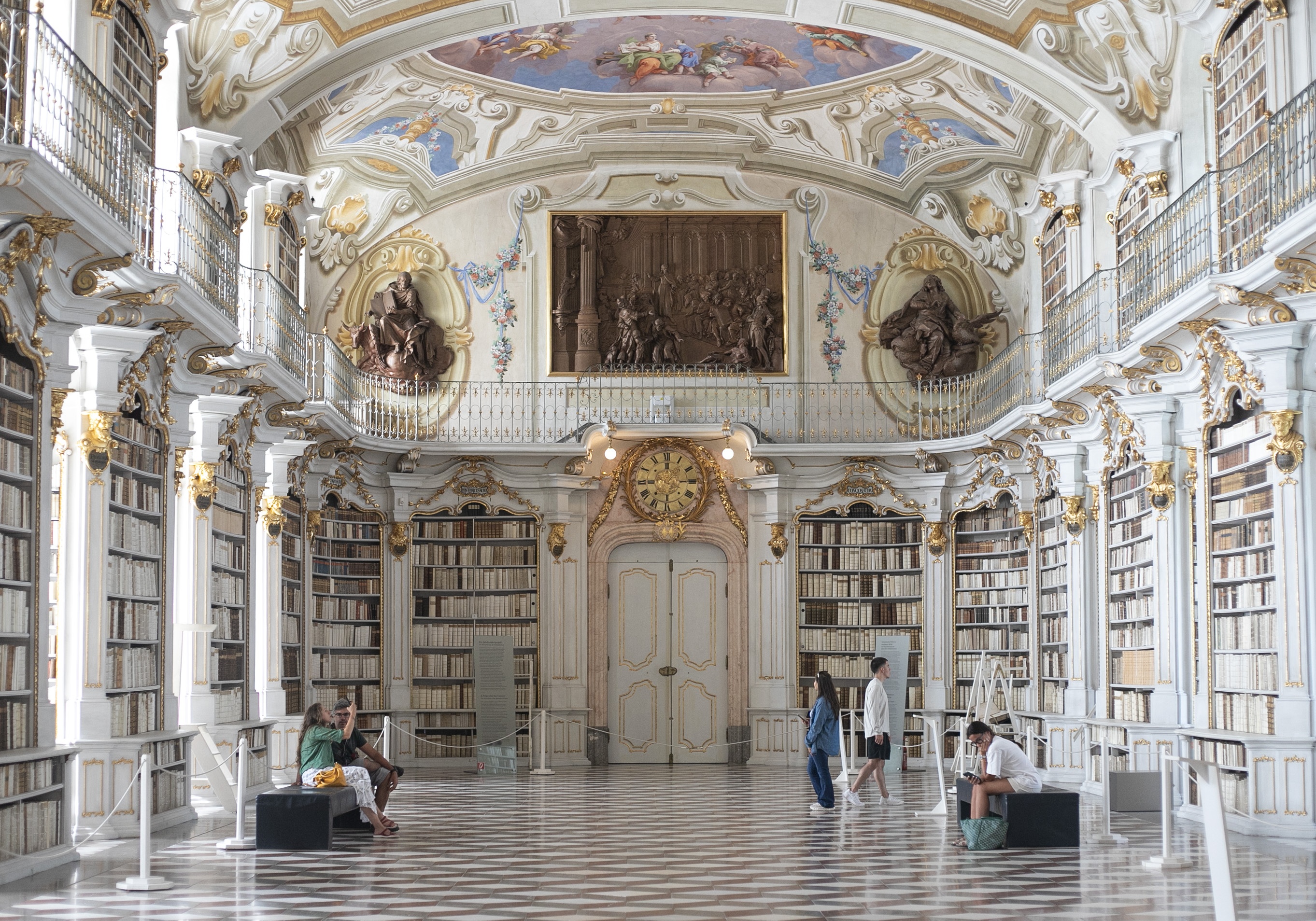
In Austria, Admont Abbey is a prime example of a heritage library model that fulfills the function of preserving, storing, and promoting local cultural and intellectual values. Located within the Admont Benedictine monastery, the library was built in the 18th century under the supervision of architect Josef Hueber.
From its inception, the library transcended its function as a book repository. Beyond its role in preserving Benedictine knowledge, the space was designed as a showcase of Baroque architecture and art. Josef Hueber drew inspiration from the State Hall of the Imperial Library in Vienna, subsequently creating an expansive space with vaulted ceilings and pink and red Untersberg stone columns.
|
|
Admont Abbey library space. Photo: Duc Huy. |
Over time, the library became home to approximately 200,000 books, including valuable documents from the Middle Ages. The building also underwent many vicissitudes. A major fire once destroyed part of the monastery's roof, but the library's interior was preserved almost intact. In the 1930s, some important books had to be sold to maintain the monastery's existence. Between 1939 and 1945, the library continued to suffer confiscations under the Nazi regime. Major restorations took place from 2004 to 2008 and again in 2014.
The Admont Library does not exist as a separate space but is part of the Admont Abbey museum complex. Alongside the famous Baroque book room, visitors can explore collections on the abbey's natural history, art, and history. Specimens of flora and fauna, along with paintings, including portraits of monks by various artists, help to expand the story of the abbey from its books and architecture to the life, people, and nature of the Admont region.
Combining the library with the museum also creates a cultural tourism model that extends beyond the monastery grounds. The influx of visitors to Admont to admire the Baroque library becomes an important source of revenue for service businesses in the area.
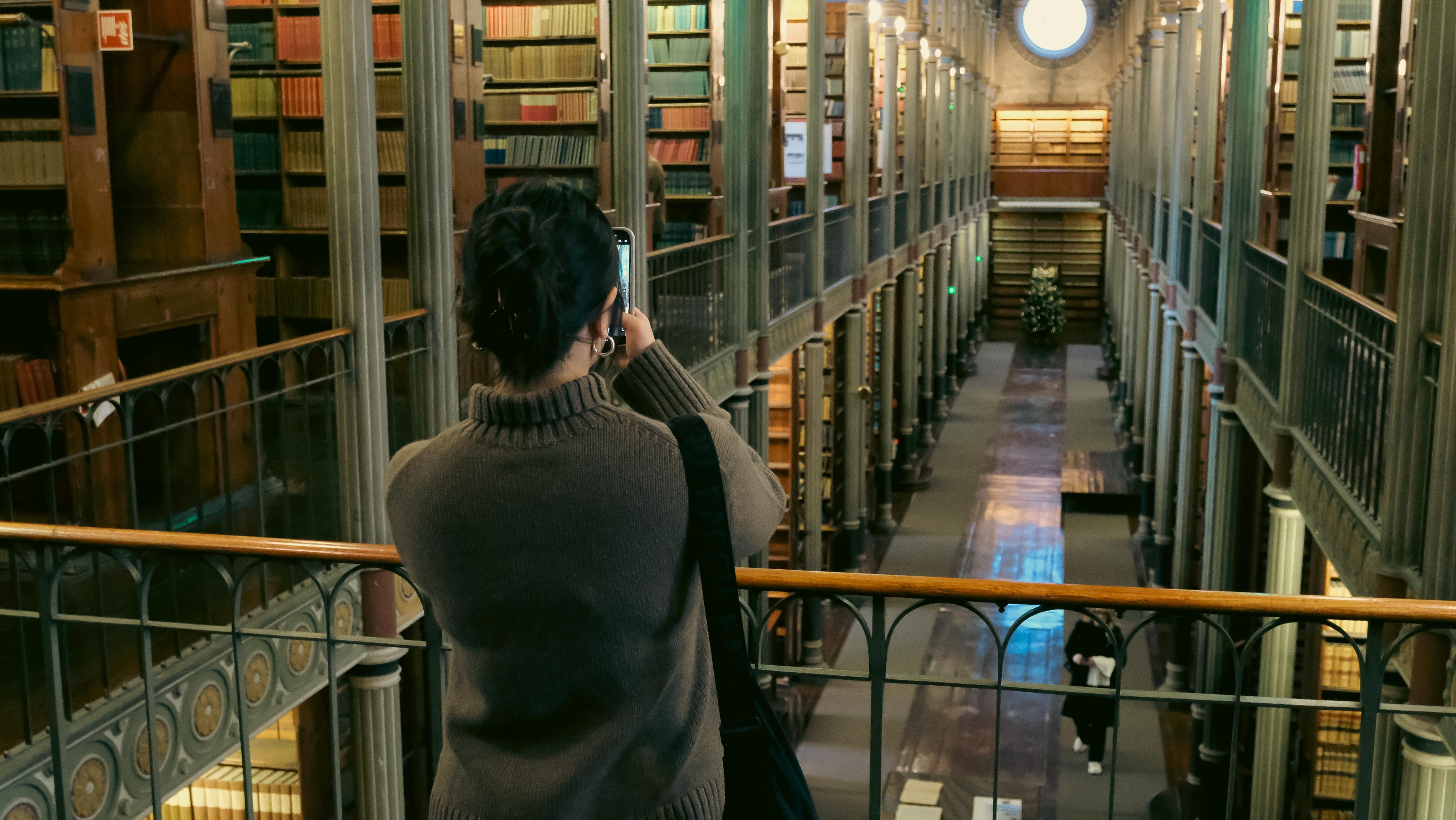
|
|
The University of Copenhagen Library on Fiolstræde Street. |
Another story can be seen in Copenhagen, where the history of libraries is closely intertwined with the history of the University of Copenhagen (Denmark). Just three years after the university was founded in 1479, the first university library opened in 1482. Initially, it was just a modest collection of books and documents. For almost 200 years, from 1652 until the new building at Fiolstræde opened in 1861, the library was located in the attic of the Trinitatis church, right next to the Round Tower.
Today, the value of the Fiolstræde building lies not only in its history of serving the University of Copenhagen, but also in the story of how outstanding individuals contributed to science in Denmark. Many of the exhibition spaces within the building house a library displaying notes from scientists of the past century on anatomical medicine, zoology, botany, as well as records on architecture and urban planning.
Heritage libraries should not be understood as the commercialization of book space. They are a way for libraries to adapt to modern life. Simultaneously, community libraries continue to develop, serving the public, while research libraries continue to fulfill their role of storing and providing in-depth knowledge. When each model undertakes a distinct function, libraries have more opportunities to become a more vibrant part of social life.