



Vietnam is represented by Con Dao National Park, which each year hatches and releases hundreds of thousands of baby turtles into the sea under strict control procedures. This list demonstrates the level of commitment to conservation and the sustainability of tourism activities.
According to a list published by Condé Nast Traveler (CN Traveler) magazine on Earth Day (April 22), the selected destinations have well-structured sea turtle conservation programs, allowing tourists to participate in a controlled and highly educational way.
Vietnam is included in this list thanks to its efforts in conserving sea turtles at Con Dao National Park, considered one of the sea turtle capitals of Southeast Asia. Each year, Con Dao records hundreds of thousands of hatchlings being released into the sea, mainly green turtles.
In Con Dao National Park, visitors can participate in special eco-tours, usually held during the turtle breeding season (from approximately April to October). During these tours, visitors will be guided to observe mother turtles coming ashore to lay eggs at night, as well as participate in releasing baby turtles back into the sea early in the morning. The turtle release is organized according to strict procedures to ensure the survival rate of the hatchlings. Visitors must comply with regulations such as limiting light, avoiding loud noises, and not touching the turtles directly without guidance. According to conservation experts, the survival rate of baby turtles in the wild is very low, possibly only 1 in 1,000 adult individuals. Therefore, assisting baby turtles in accessing the ocean safely is crucial for maintaining the species' population.
Not only in nature reserves, but also some high-end resorts in Con Dao are participating in this activity. A prime example is Six Senses Con Dao, which implements a program of hatching and releasing turtle eggs right on its private beach, combining a resort experience with environmental education.
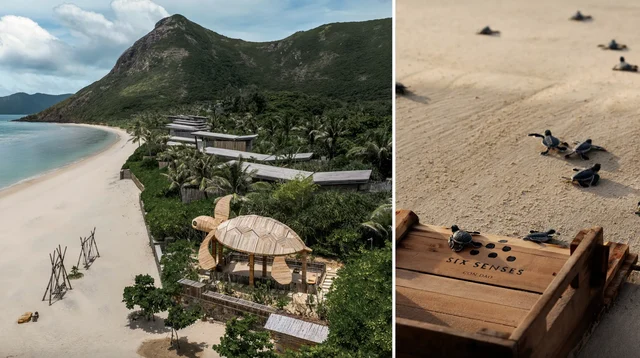
Six Senses Con Dao (Vietnam) offers the experience of "escorting" baby turtles to the ocean.
PHOTO: CNT
Condé Nast Traveler's list includes seven global destinations for sea turtle release experiences. Besides Vietnam (Con Dao), the other six locations span various tropical and subtropical regions where sea turtles frequently come ashore to lay their eggs, including:
Maldives (a stunning coral island nation in the Indian Ocean): Many resorts in the Maldives have conservation programs for green sea turtles and hawksbill turtles. Tourists can participate in releasing baby turtles, monitoring their recovery, and even "adopting" turtles through research programs.
Costa Rica (a Central American country situated between Nicaragua to the north and Panama to the south, with coastlines bordering both the Pacific and Caribbean Seas): One of the world's largest sea turtle conservation centers. Beaches like Ostional are famous for the phenomenon of thousands of mother turtles coming ashore to lay eggs simultaneously (arribada), attracting tourists and scientists alike .
Mexico: Resorts in the Riviera Maya and Cancun organize seasonal turtle releases. This is a popular experience for families, combining beach relaxation with environmental education.
Sri Lanka: This country has many long-established turtle hatcheries. Visitors can witness the hatching and release of turtles into the sea firsthand at locations such as Bentota or Kosgoda.
Seychelles (an island nation located in the Indian Ocean, off the east coast of Africa): This archipelago is an important breeding ground for many rare turtle species. Eco-resorts here are closely integrated with conservation efforts, minimizing the impact of tourism .
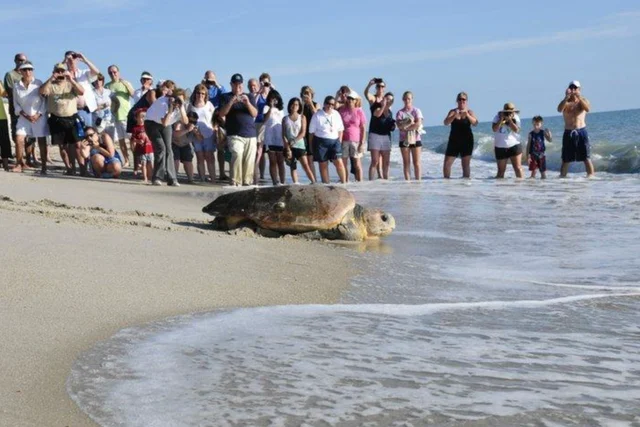
Tourists participate in observing and assisting baby turtles in their return to the sea in Florida.
PHOTO: CNT
Florida (a state located in the southeastern United States, bordered by the Atlantic Ocean and the Gulf of Mexico): The Florida coast is one of the areas with the highest density of sea turtle nesting sites in the US. Many volunteer programs and ecotours allow visitors to participate in observing and assisting baby turtles in their return to the sea.