



Kidney failure doesn't usually happen overnight; it typically progresses through a slow, gradual decline known as chronic kidney disease.
The most dangerous aspect is that kidney failure often develops silently. Patients can lose up to 90% of their kidney function before experiencing any noticeable symptoms. Therefore, early detection can make a huge difference in saving a kidney.
The following is from the experts at Artemis Hospital. (India) points out the symptoms of kidney failure that people need to be aware of.
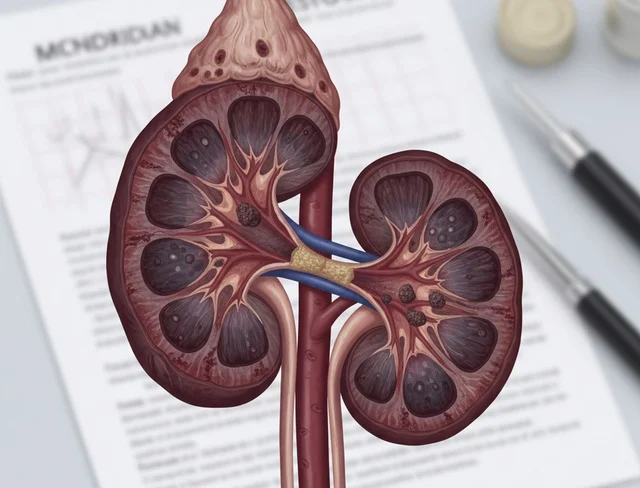
Kidney failure often develops silently. Illustration: AI
Why are early symptoms so difficult to detect?
The kidneys contain millions of tiny filtering units called nephrons. When some nephrons are damaged, the healthy ones overwork to compensate. This "lining" allows the body to function normally even as damage accumulates. Therefore, early-stage kidney disease often has no symptoms, but subtle changes still occur.
Changes in urination habits. When the kidneys begin to malfunction, the first sign is often a change in urination patterns.
Nocturia (frequent urination at night): The kidneys lose their ability to concentrate urine, meaning they produce a larger volume to eliminate the same amount of waste, especially at night.
Foamy urine: Foam that looks like whipped egg white and requires multiple flushes to remove. This is a sign of protein leaking into the urine due to a damaged filter.
Blood in urine: Damaged filters allow blood cells to leak into the urine, causing it to appear pink, red, or cola-colored, according to the health news site Artemis Hospital .
Unexplained fatigue and weakness: Healthy kidneys produce the hormone erythropoietin (EPO) to signal the bone marrow to create red blood cells. When kidney function declines, EPO production decreases, leading to anemia. As a result, the amount of oxygen transported to the muscles and brain is reduced, causing persistent fatigue and weakness.
Dry and itchy skin: This is the most easily overlooked symptom. When the kidneys fail, waste products accumulate in the blood and the balance of minerals such as calcium and phosphorus is disrupted. High phosphorus levels cause intense itching accompanied by dry, flaky skin due to the accumulation of toxins.
Symptoms worsen as kidney function declines.
When kidney disease progresses to stages 4-5, symptoms become more pronounced, including swelling around the eyes upon waking, in the feet and ankles; high blood pressure; ammonia-like breath, a metallic taste in the mouth, and loss of appetite.
Warning signs of the late stage
When kidney function drops below 15%, symptoms become severe: shortness of breath, brain fog, muscle spasms; insomnia and angina, according to Artemis Hospital.