


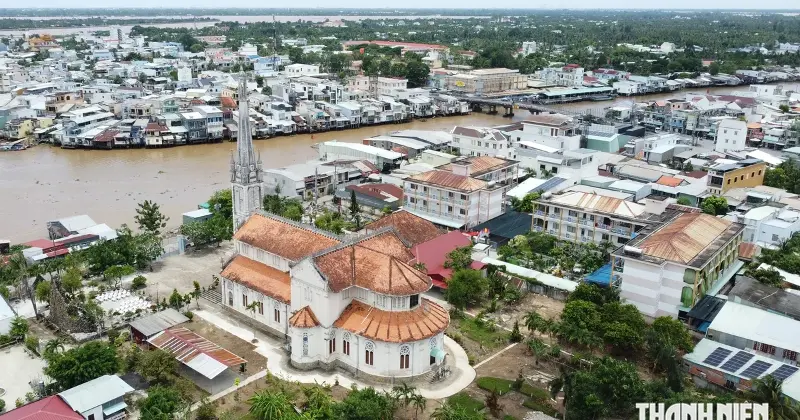
The cries of street vendors echoing along the river in the memories of the river traders.
Mentioning Cai Be floating market (Cai Be commune, Dong Thap province), Ms. Huynh Thi Ngoc Suong (50 years old, a small trader at the market) remembers the nights on the river that were still bustling even after midnight. The cries of "Guava and mangoes here!", "Noodle soup here!" echoed across the river, boats weaving through the water, seeking customers, serving both traders and residents living on the river. At that time, the market wasn't just active in the mornings; it was a continuous rhythm of life flowing along with the water.
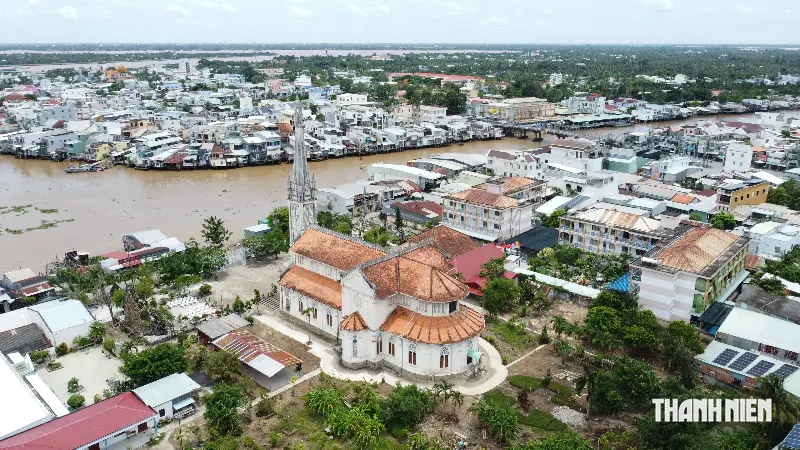
The confluence of the Tien River and the Cai Be River was once the site of the Cai Be floating market.
PHOTO: THANH QUAN
The fruit seasons are also milestones in our memories. During plum season, boats laden with plums arrive at the market. In April and May, boats carrying bright red rambutans line the river, goods stretching one after another. The boats display what they're selling at the front; you can tell what's inside by looking at the sign. This simple method of trade helped buyers identify goods in a vast waterway where boats lacked shops or signs like those on land.
The "cây bẹo" are bamboo poles erected on the bow of boats, used to display fruits, vegetables, or other goods, and were once a distinctive feature of floating markets. Buyers could identify which boat was selling what from afar, select their goods, and trade right on the river. Large boats carrying agricultural products and smaller boats selling food and essential goods created a trading space that was both convenient and unique to the people of the Mekong Delta.