


Why should you avoid storing eggs in the refrigerator door?
The main reason is that the temperature at the door tends to fluctuate more than in the interior areas of the refrigerator. Every time the door is opened, hot air from the outside enters and directly affects the compartments there, according to the health website Healthline (USA).
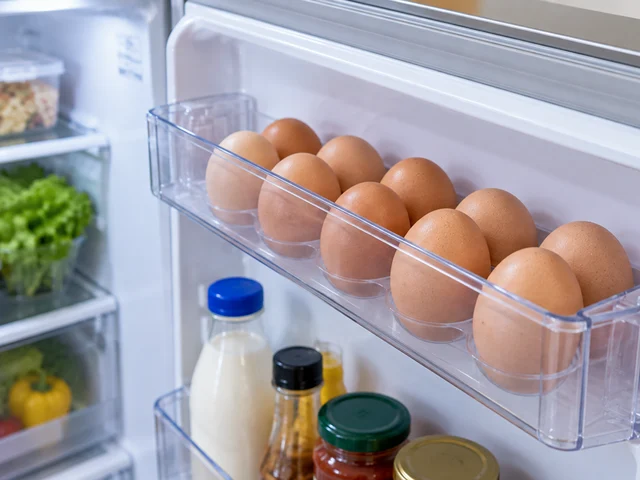
The refrigerator door is not the best place to store eggs.
ILLUSTRATIVE IMAGE: Created by N.Quý from ChatGPT
The U.S. Department of Agriculture (USDA) recommends that eggs be placed in their carton and stored in a compartment inside the refrigerator. The temperature in the refrigerator compartment should be maintained at 4°C or lower.
What is the purpose of keeping eggs in a carton?
Besides preventing eggs from cracking due to impact, the original container also helps protect them during storage. The container also limits direct contact between eggs and other foods in the refrigerator.
Additionally, eggs can absorb odors from strong-smelling foods. Therefore, keeping eggs in their carton instead of taking them out one by one and placing them on the tray in the refrigerator door is a more appropriate way to preserve them.
If you buy a new carton of eggs, you don't necessarily need to take each egg out of the carton. You can keep the whole carton and place it on an inner shelf in the refrigerator. This helps the eggs maintain a more stable temperature and reduces the risk of the shells being damaged or coming into contact with other foods.
Do I need to wash eggs before putting them in the refrigerator?
You should not wash eggs before storing them, especially those that have already been cleaned and processed at the production site. The American Egg Board (AEB) advises against washing eggs at home because, if done incorrectly, water can create conditions for bacteria on the shell to penetrate the inside. Instead, keep eggs in their original carton and refrigerate them properly.
With cracked eggshells, the risk of bacteria entering the inside is higher, especially if the eggs are not stored properly, says food safety education expert Diane Wright Hirsch at the University of Connecticut (USA).
If the egg has just cracked and is still clean, it should be cracked into a clean, lidded container and stored immediately in the refrigerator, then used within a short time, ideally within 1–2 days. If the egg was cracked before purchase, shows signs of a torn inner membrane, leaks egg white, and has an unusual smell, it should be discarded, according to Healthline .