


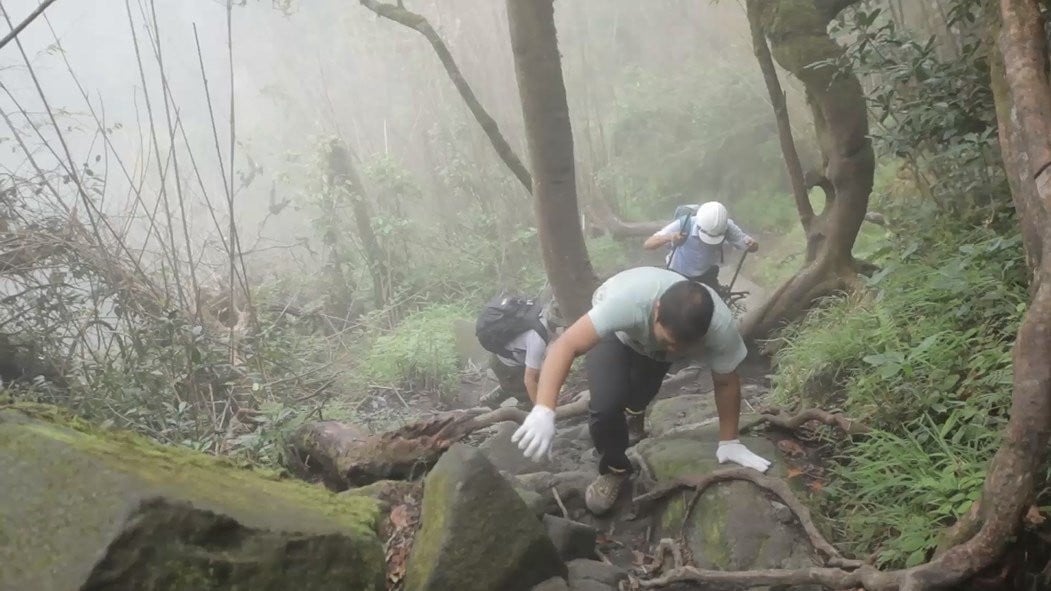
Before any cable or pylons were erected amidst the vast wilderness, the advance teams silently traversed the Hoàng Liên Sơn mountain range, enduring the harsh conditions of forest life, sleeping in the mountains, and braving the mist, starting in the summer of 2013. Without GPS or mobile phones, and with walkie-talkies unusable due to the vast distances, the surveyors on the Fansipan cable car route had to hike up the mountain peaks of the Hoàng Liên Sơn forest. Distances were no longer measured in kilometers, but by counting the number of slopes and forest clearings they had climbed.
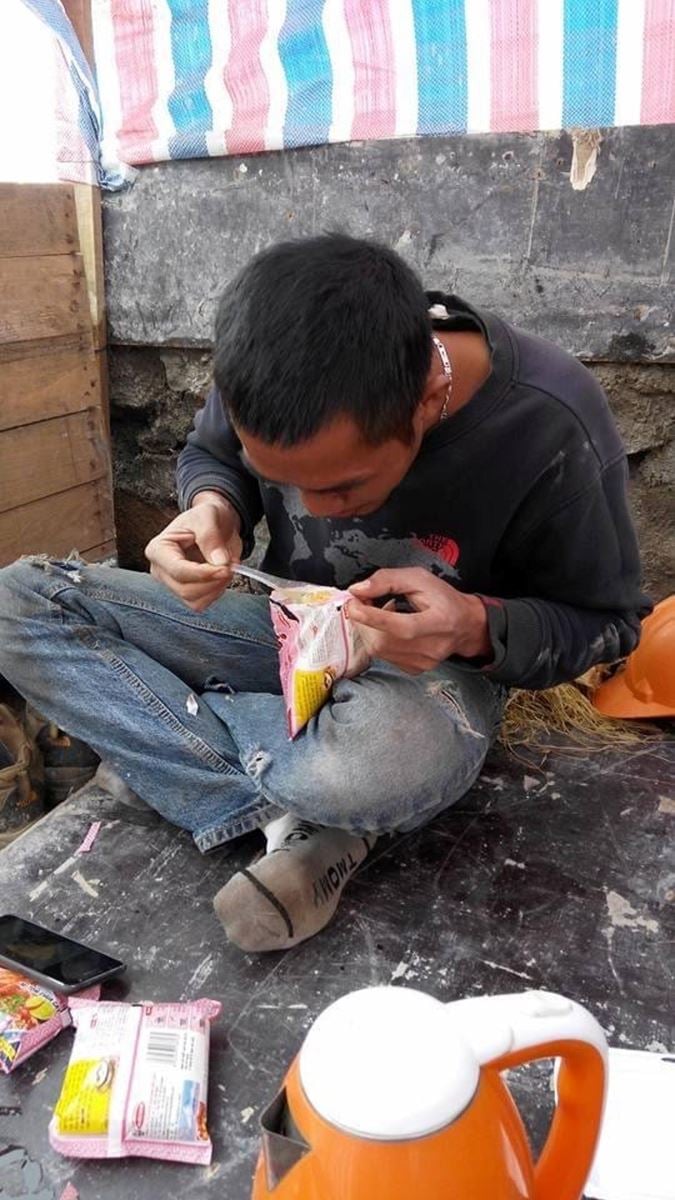
The "living quarters" for the cable car construction team were crudely constructed from bent bamboo, with people crammed inside like mice, constantly fearing the shacks would collapse. Meals mostly consisted of makeshift instant noodles. Each person encouraged the others to overcome their fear by visualizing the future shape of the cable car line.
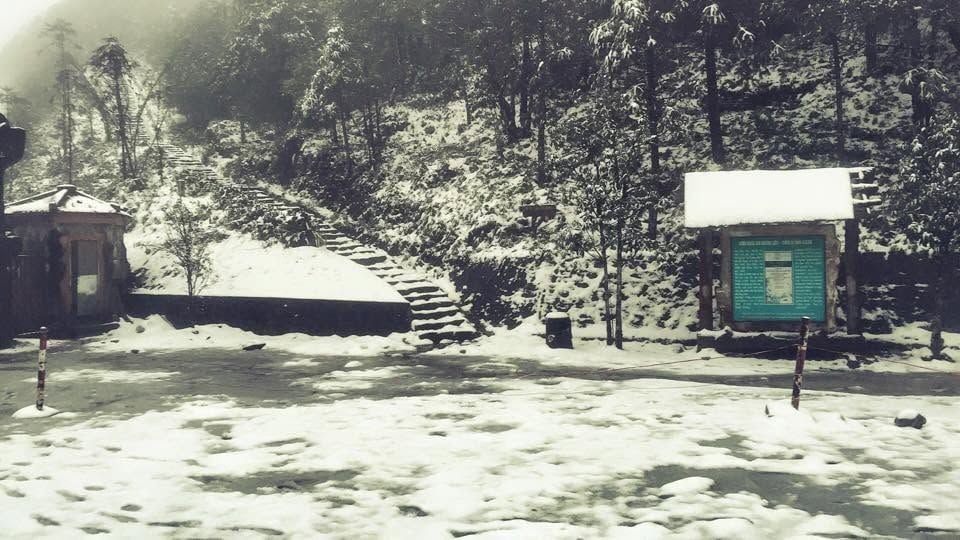
The harsh weather on Fansipan peak, with hailstorms, blizzards, and scorching sun that can peel the skin, is enough to shake even the most resilient individuals. Nguyen Khac Tuong, the team leader of the Cable Maintenance Service Team (LCS) at the Fansipan cable car project, signed permits for over 1,000 people to work in the forest, but ultimately only over 100 managed to persevere.
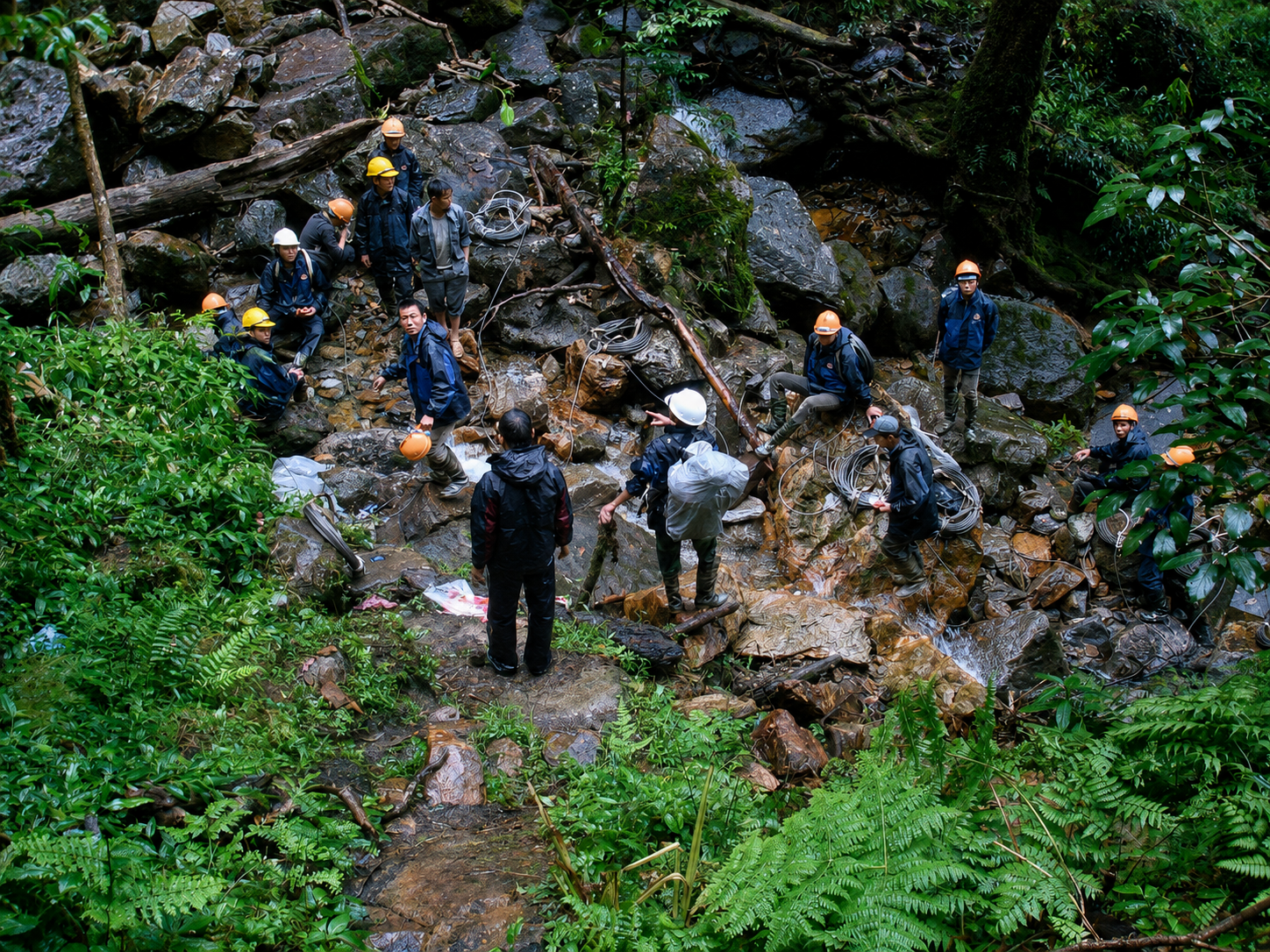
To construct that 6.2 km cable line, thousands of people, including engineers, workers, ethnic minority "collaborators," and even the authorities of Lao Cai province and Sa Pa town, worked continuously for over 800 days and nights under harsh and challenging conditions. The photo shows officials and workers carrying heavy rolls of cable, almost as heavy as their own bodies, over mountain passes, wading through streams, and traversing treacherous terrain to lay the cable using only human strength.
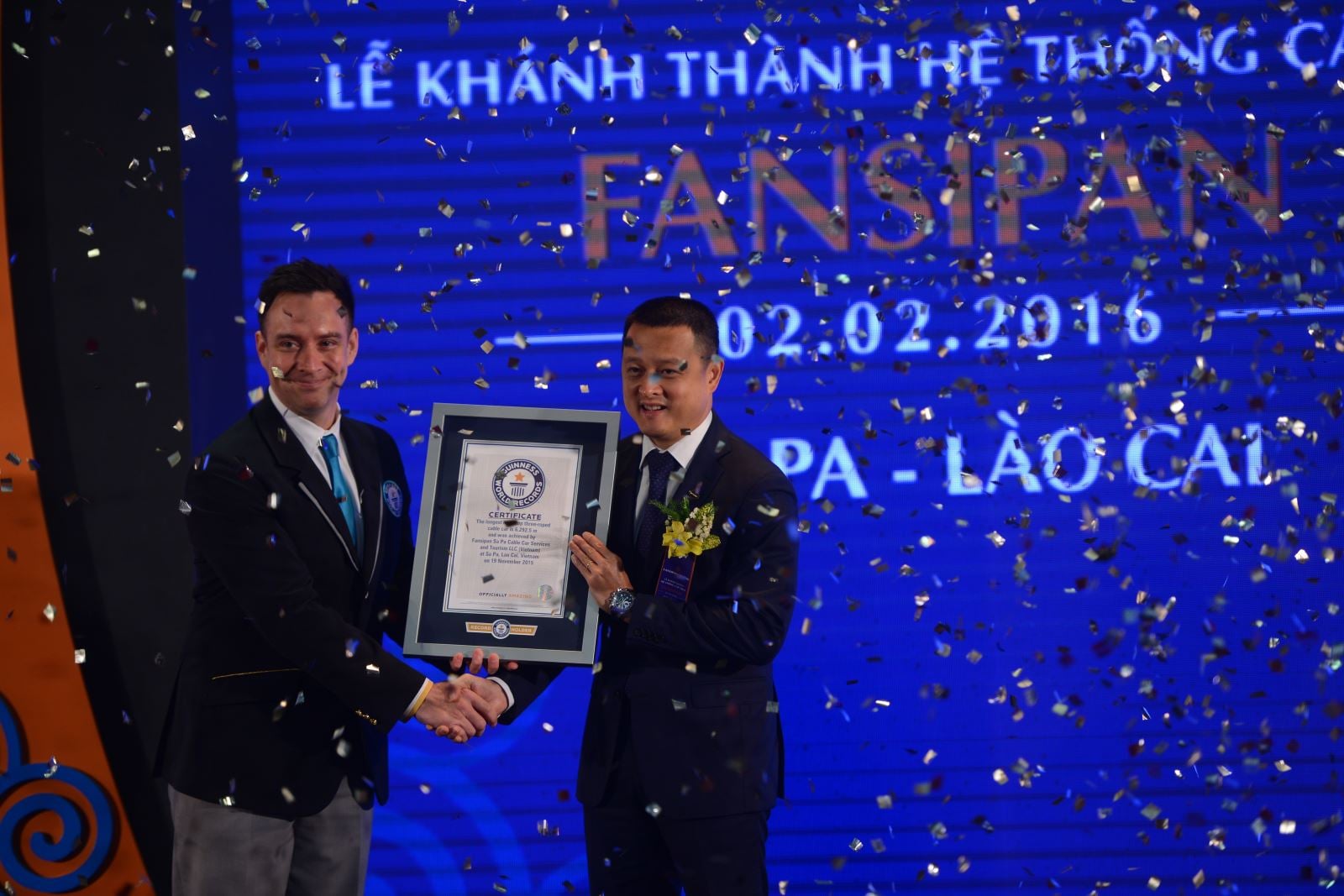
After nearly 800 days and nights of continuous construction, the Fansipan cable car line was officially inaugurated on the morning of February 2, 2016. On the same day, the Guinness World Records organization awarded two titles simultaneously to the Fansipan cable car: the longest three-wire cable car line in the world (6,292.5m) and the three-wire cable car line with the greatest elevation difference between stations in the world (1,410m).
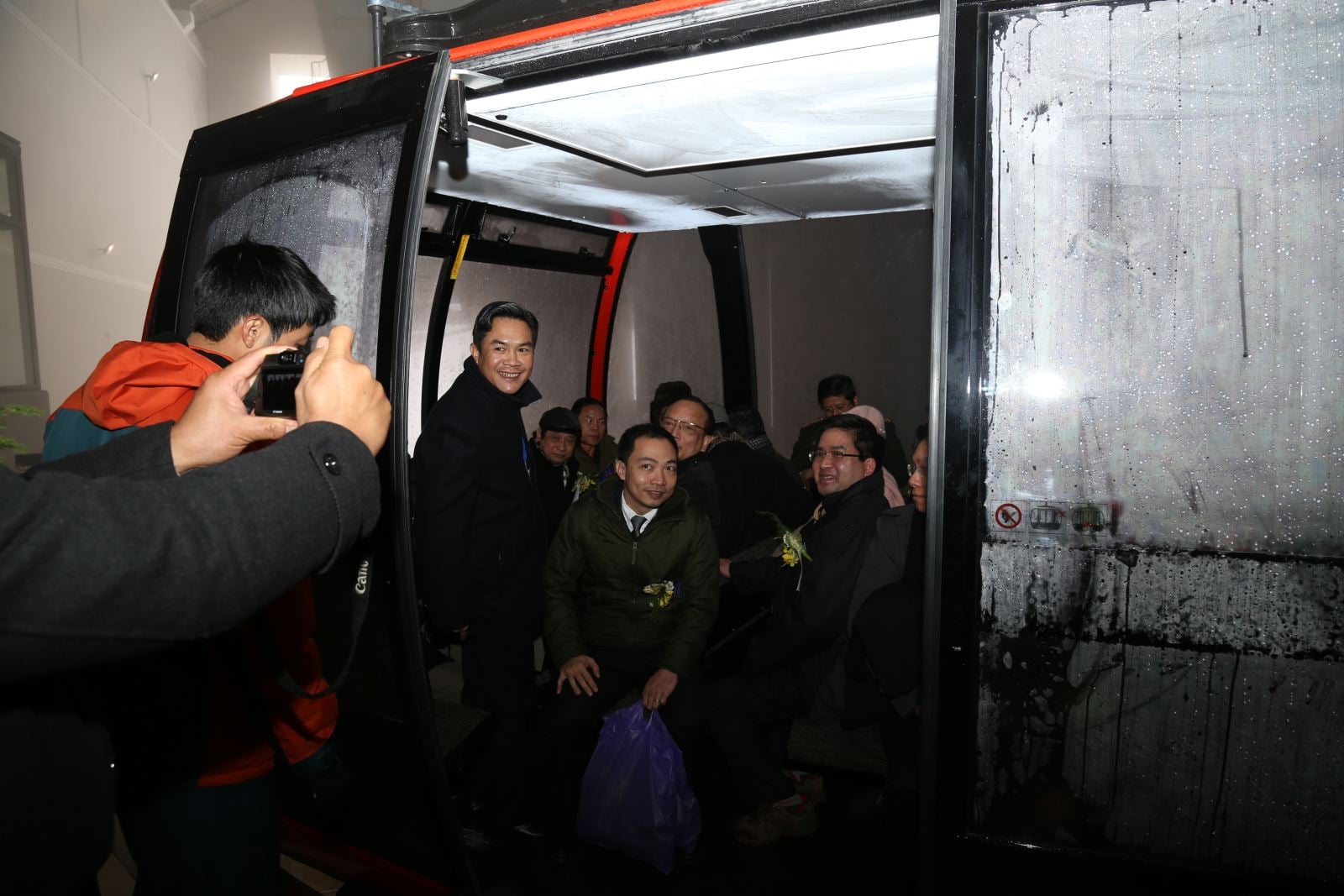
For the first time, the sacred peak of Fansipan is no longer the "privilege" of a select few. The elderly, children, and even people with disabilities have conquered the "Roof of Indochina" thanks to the Fansipan cable car. The photo shows the first visitors to ride the Fansipan cable car on its opening day.

Over the past ten years, Fansipan has continuously transformed. From the cable car system that holds two Guinness World Records, Sun Group has gradually built the Sun World Fansipan Legend tourist complex into a vibrant destination, constantly evolving and always offering new things to discover. The tourist complex on the summit of Fansipan has also been repeatedly honored by the World Travel Awards as "World's Leading Natural Scenic Destination" and "World's Leading Cultural Destination".
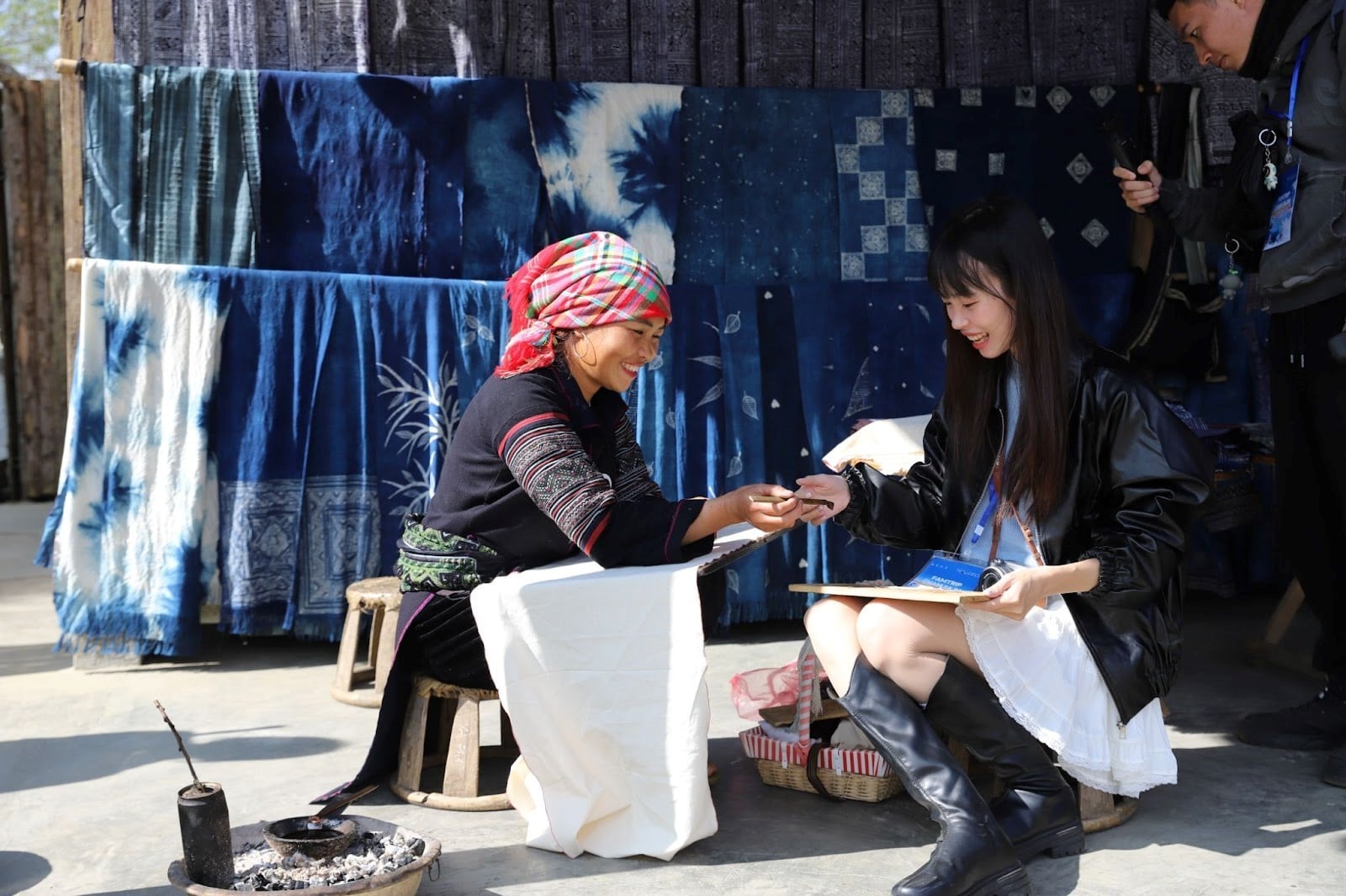
This is also where the cultural identity of Northwest Vietnam is preserved and honored in the most respectful way, the first place to create Ban May - a "living museum" that brings together the cultural essence of the H'Mong, Dao, Tay, Giay, and Xa Pho ethnic groups... The ethnic minority people, who were previously only familiar with traditional farming, have now become the mainstays of the culture, accounting for more than 60% of the workforce in the tourist area. Visitors here not only get to admire the dances and listen to the songs of Northwest Vietnam, but also immerse themselves in the flow of local culture with traditional customs and festivals, and experience the crafts of weaving, incense making, and beeswax painting... of the ethnic people.
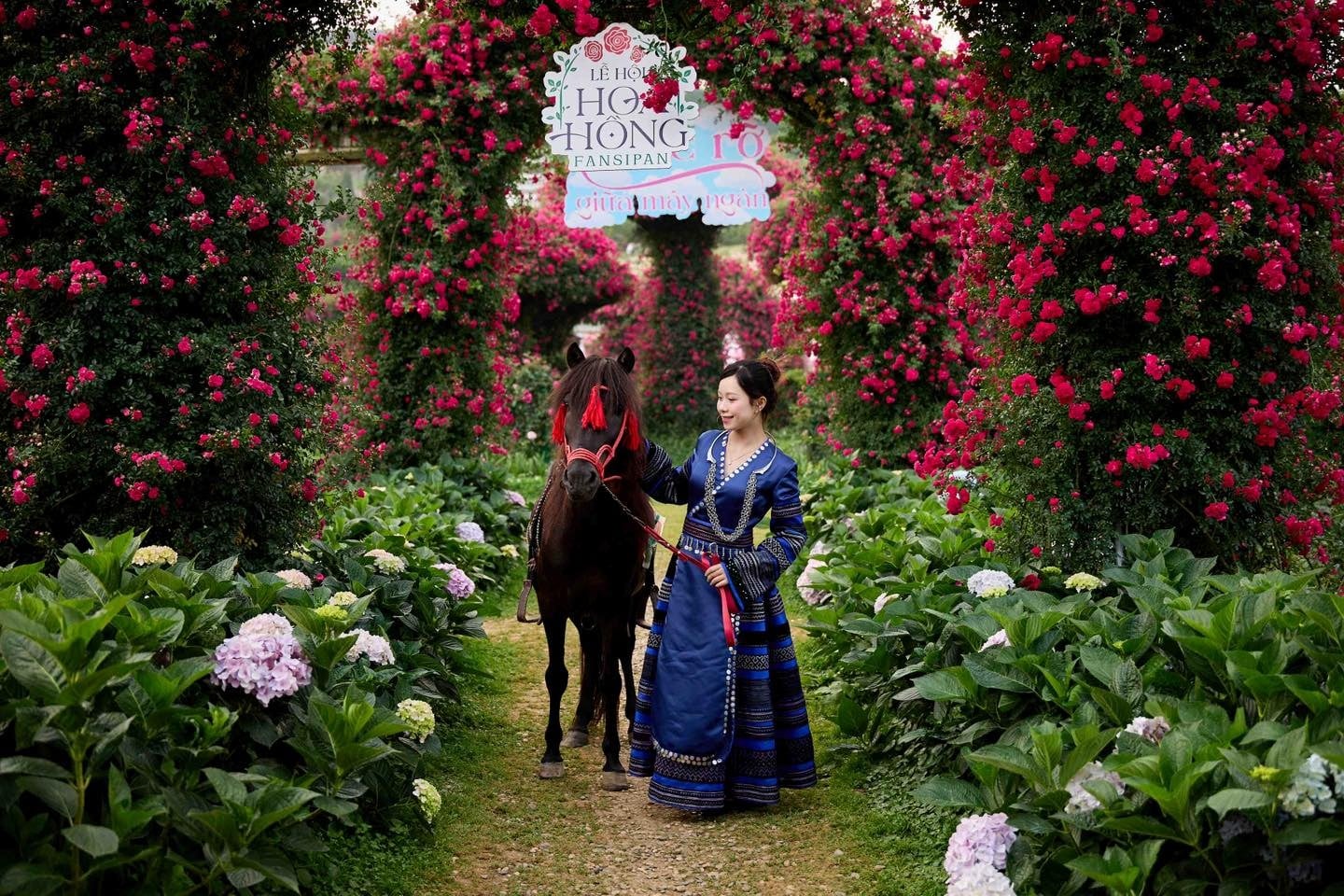
Sun World Fansipan Legend has also created a magnificent spiritual complex on the sacred peak and become a famous flower paradise in the North, where rhododendrons, roses, canola flowers, aster flowers, cherry blossoms… bloom brilliantly all year round.
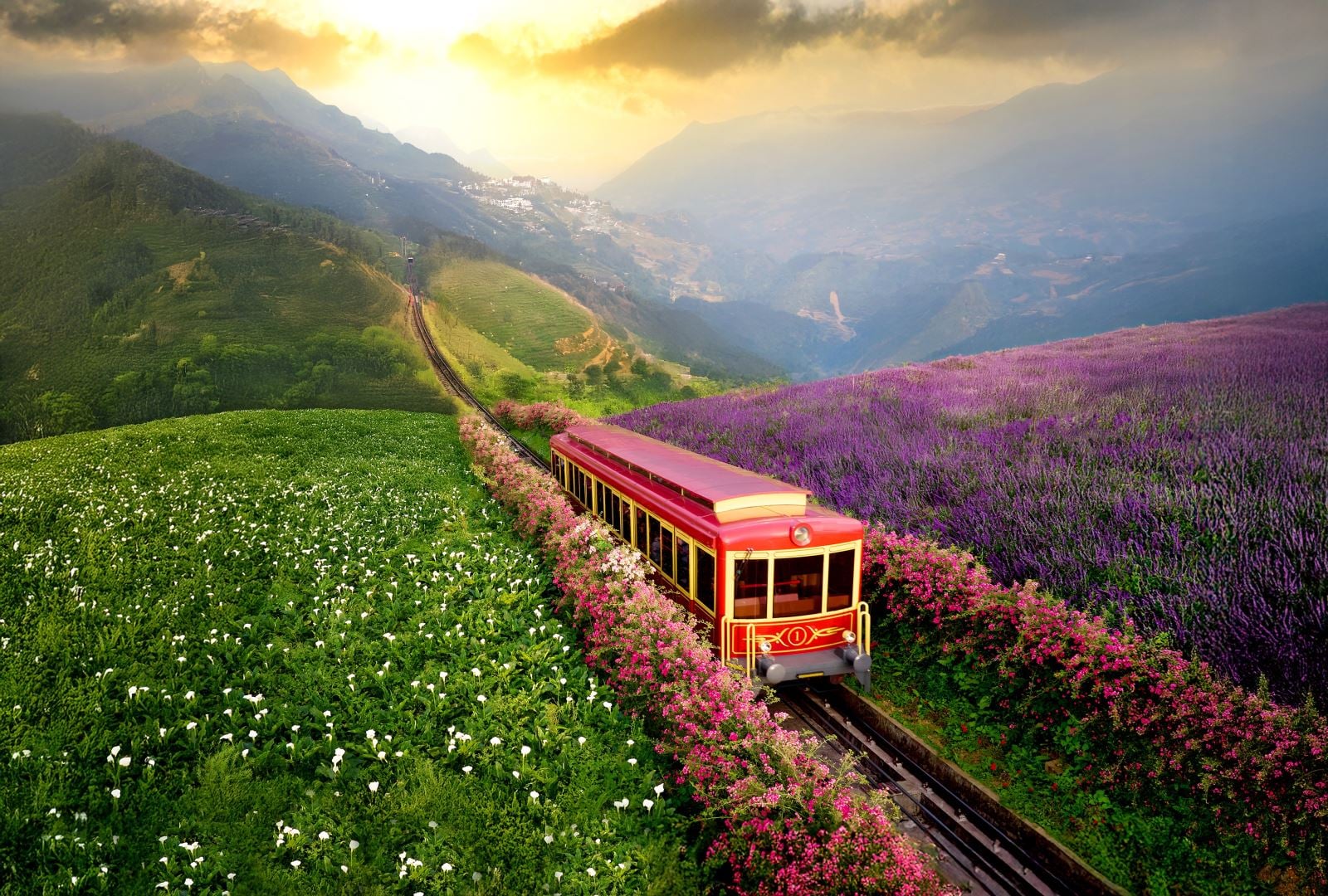
After a decade of flourishing development, Sun World Fansipan Legend has transformed from a trekking destination primarily for backpackers into the leading destination in Vietnam in terms of bookings, according to online travel platform Agoda, based on statistics from 8 Asian markets in the first 6 months of 2026. Meanwhile, Sa Pa is recognized as the fastest-growing destination in Asia by 2025 and is also one of the 53 most beautiful towns in the world, according to international travel magazine Condé Nast Traveller.