


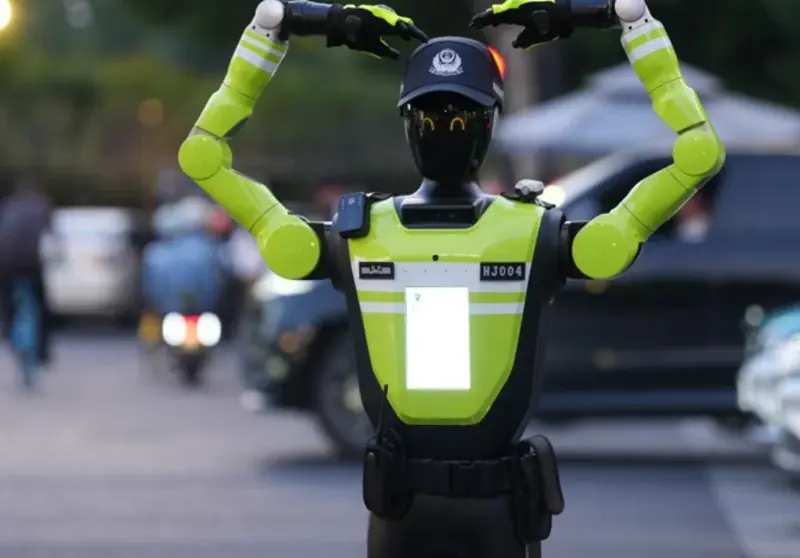
According to channelnewsasia, from AI systems coordinating passenger pick-up at train stations and robots that can communicate with humans to robotic dogs that can patrol and inspect industrial infrastructure, Hangzhou is demonstrating its ambition to become China's leading artificial intelligence (AI) hub. The city, once famous as the home of Alibaba, is now being referred to as the new "Silicon Valley," where technology is rapidly emerging from laboratories to permeate every aspect of life.
AI is present on every street corner.
Upon arriving at Hangzhou West High-Speed Rail Station, passengers can immediately sense how AI is transforming their daily lives.
Instead of waiting in crowded waiting areas, passengers can simply sit in air-conditioned waiting rooms and monitor real-time electronic screens. An AI camera system automatically identifies each ride-hailing vehicle, pinpoints its exact parking location, and immediately notifies passengers when it arrives. This organizational approach not only reduces congestion but also provides a more convenient experience for users.
This is just one example of how AI has moved beyond the realm of research to become part of urban infrastructure.
As the home of Alibaba, Hangzhou has long been considered the cradle of e-commerce in China. However, in recent years, the city has also emerged as a new AI hub with over 500 businesses operating in the artificial intelligence field. Among them are six prominent startups known as the "AI Six Dragons," including DeepSeek, Deep Robotics, Game Science, Unitree Robotics, BrainCo, and Manycore Tech. They are developing technologies ranging from large-scale language modeling, robotics, and video games to brain-computer interfaces and intelligent design.
According to observers, DeepSeek's success is only part of a larger picture. What Hangzhou aims for is to build a comprehensive AI ecosystem where the technology is applied to manufacturing, logistics, healthcare , robotics, and public services.