


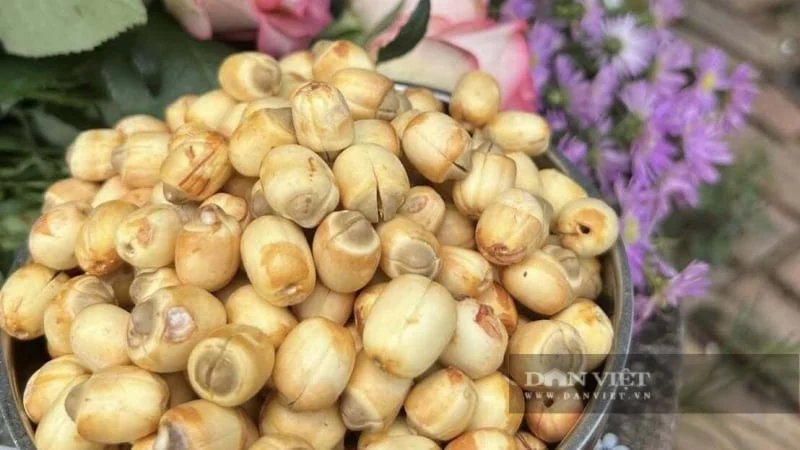
A reporter from Dan Viet newspaper interviewed Associate Professor Dr. Nguyen Minh Chon from the Institute of Biotechnology and Food, Can Tho University, to learn about integrated farming techniques and advanced preservation technologies for this value chain.
Professor Nguyen Minh Chon, from a scientific perspective, what are the specific nutritional values of fresh lotus seeds that are making them increasingly popular with consumers?
Lotus seeds are an incredibly valuable food source. Our research shows that lotus seeds have a relatively high content of starch, sugar, and protein, but are very low in fat, making them very suitable for the current trend of green and healthy consumption.

In particular, lotus seeds contain a high amount of calcium, an essential nutrient for bone and blood development and for regulating body fluids.
In addition, the moderate magnesium content helps maintain cellular osmotic pressure and produces salts necessary for nucleotide synthesis. Notably, the chromium content in the seeds is quite high, a micronutrient directly involved in carbohydrate metabolism.
A deficiency in chromium can easily lead to diabetes, cataracts, atherosclerosis, and nervous tension. Therefore, improving the quality of lotus seeds is essential to protecting this natural nutrient.
-Currently, farmers have many choices of lotus varieties. Can you give advice on promising lotus varieties and the optimal planting schedule?
Currently, there are about 50 lotus varieties serving various needs, from harvesting seeds, rhizomes, and tubers to ornamental flowers. For the seed-producing segment, popular and promising varieties include the C1 variety, the Dong Thap pink lotus with purple mirror, the Dong Thap pink lotus with green mirror, the Thoai Son pink lotus, and the Tra Met white lotus.
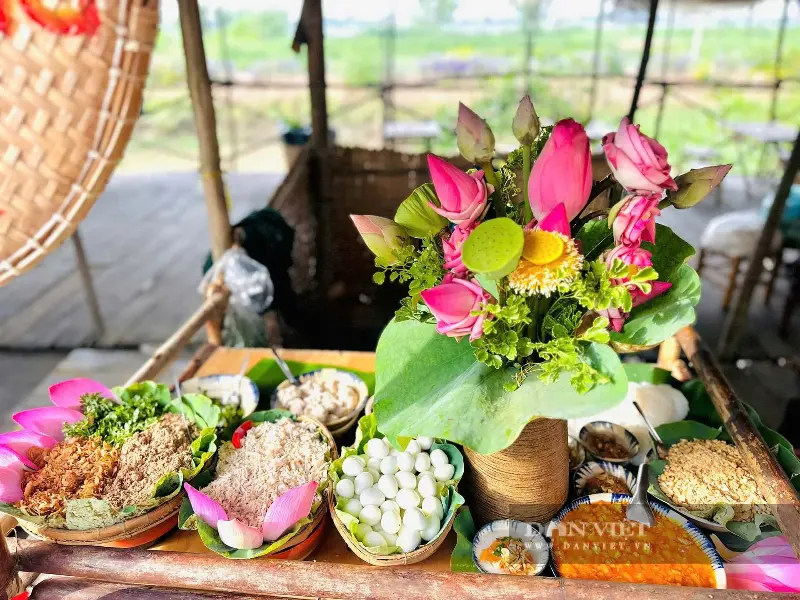
If you want to grow lotus specifically for its tubers, you should choose the white lotus from My Tu, China, or Japan.
Regarding planting seasons, the two main crops in the Mekong Delta are the Winter-Spring crop, planted from November to January, and the Summer-Autumn crop, planted from May to June. Of these, the Winter-Spring crop, which involves rice rotation with lotus, usually yields higher productivity and fewer pests and diseases. Farmers should adjust their planting schedules flexibly based on local water levels.
-One of the biggest obstacles for fresh lotus seeds and lotus roots after harvesting is the rapid browning phenomenon. Does the Institute have any technological solutions to completely overcome this problem, sir?
This is indeed a limitation that significantly reduces the commercial value of lotus seeds. To prevent browning, the optimal processing procedure consists of three steps. First, after peeling and cleaning, the lotus seeds should be immediately soaked for 30 minutes in a 0.3% citric acid solution to inhibit oxidizing enzymes.
Afterward, drain the water and rapidly freeze at minus 40 degrees Celsius for one hour to stabilize the tissue structure.
Finally, the lotus seeds are packaged in PA packaging with an 85% vacuum, and continuously stored in a cold storage facility at -40 degrees Celsius. This standardized process helps the lotus seeds retain their color, crispness, and nutritional content for up to 6 weeks, opening up great opportunities for long-distance transportation and export.
For lotus roots, browning can also be controlled similarly by cleaning off the muddy sap and soaking them in a combined organic acid solution to preserve their natural whiteness before packaging and storing them in a cool place.
-Thank you, Associate Professor Dr. Nguyen Minh Chon!