


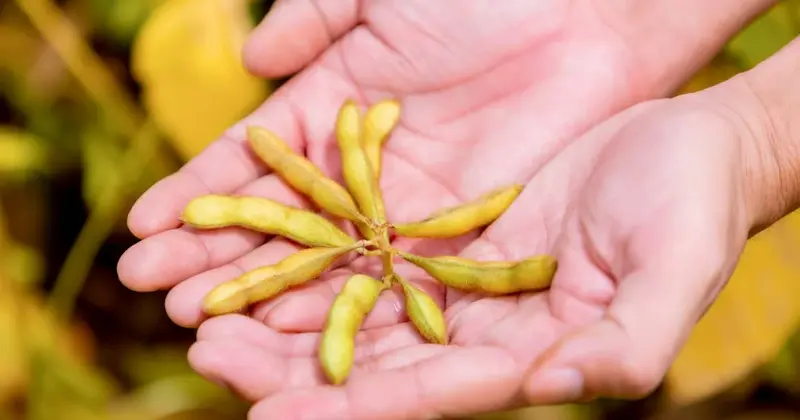
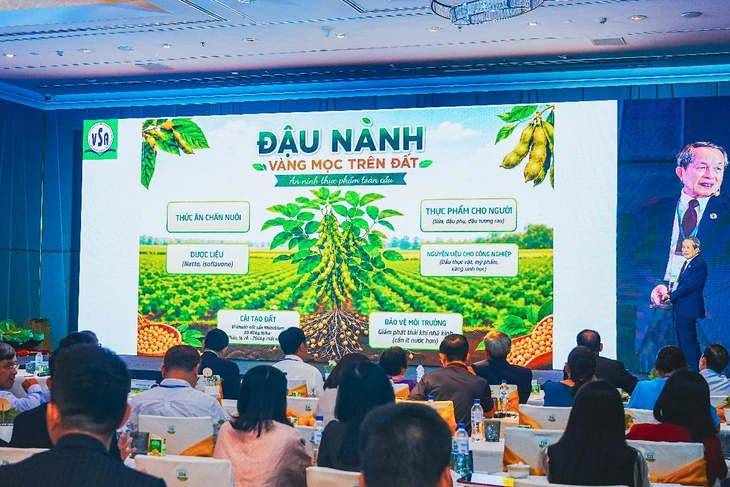
Soybeans are one of the crops that possess value in terms of agriculture , nutrition, and sustainable development - Photo: DNCC
Comparing the humble soybean to 'gold growing in the soil' not only celebrates the nutritional and economic value of this crop in the present, but also suggests its potential for future agricultural development.
'Gold' for human health
Sharing the reason for choosing this name, Professor Tran Dinh Long said: "Soybeans are a multi-purpose plant. They are a food source for humans, a raw material for animal husbandry, industry, cosmetics, and pharmaceuticals."
In particular, soybeans not only bring economic benefits but also help improve soil, use significantly less water than many other crops, and contribute to reducing greenhouse gas emissions. Soybeans can be used to produce over 800 different products for daily life. That's why I call them 'Gold growing on the soil'.
It's no coincidence that soybeans have been a staple in Vietnamese meals for generations. 100g of dried soybeans contains approximately 36-40g of protein, while 100g of beef contains only about 20-22g of protein.
It is also one of the few plant-based protein sources that provides all nine essential amino acids. With a PDCAAS index of 1.0, soy protein is considered high-quality and effectively meets the body's essential amino acid needs.
Soybeans also provide unsaturated fats, including omega-3, omega-6, and omega-9, along with fiber and bioactive compounds such as isoflavones. These components contribute to cardiovascular health, bone health, and provide important nutrients for the gut microbiome.
It is from this belief in the natural value of soybeans that Vinasoy has chosen soybeans as its core research area.
The company has built a bank of over 2,200 natural soybean germplasm resources – one of the largest soybean germplasm banks in Vietnam – as a foundation for the selection and breeding of purebred, non-GMO varieties suitable for the soil and climate conditions of each growing region.
Alongside breeding research, Vinasoy, during nearly 30 years of dedicated work with soybeans, has researched and gradually mastered the technology of whole grain milling. The aim is to retain as much of the natural nutritional components of soybeans as possible, especially fiber and other valuable nutrients, contributing to bringing the natural value of soybeans closer to consumers.
The research findings are applied in Fami Green Soy soy milk product. Each 180ml carton provides 4.5g of high-quality plant-based protein, nearly 2g of fiber, and Omega 3-6-9 unsaturated fatty acids, with a delicious, smooth taste.
'Gold' for land and sustainable agriculture.
While its nutritional value makes soybeans "gold" for human health, its ability to nourish the soil is what makes this plant so special in agriculture.
Unlike many crops that rely on fertilizers for nitrogen, soybeans can produce some of their own nitrogen through a symbiotic relationship with Rhizobium bacteria in their roots. These bacteria help the plant absorb nitrogen from the air and convert it into a usable nutrient. Therefore, each soybean plant is often described as a natural nitrogen factory.
According to Professor Tran Dinh Long, depending on the variety and cultivation conditions, each hectare of soybeans can fix approximately 94-168 kg of nitrogen, equivalent to about 200-400 kg of urea fertilizer. After each harvest, the remaining biomass continues to enrich the soil, contributing to reducing the need for chemical fertilizers and improving soil fertility and looseness.
This natural source of nitrogen helps reduce the need for chemical fertilizers for crops in the next season, contributing to reduced greenhouse gas emissions and environmental pollution. In addition, soybeans generally have lower water requirements than rice. After harvest, the stems, leaves, and roots continue to decompose, adding organic matter, improving soil fertility, and enhancing the soil's microbial ecosystem.
That is also why soybeans are increasingly seen as an important crop in green agriculture, circular agriculture, and sustainable agriculture models around the world .
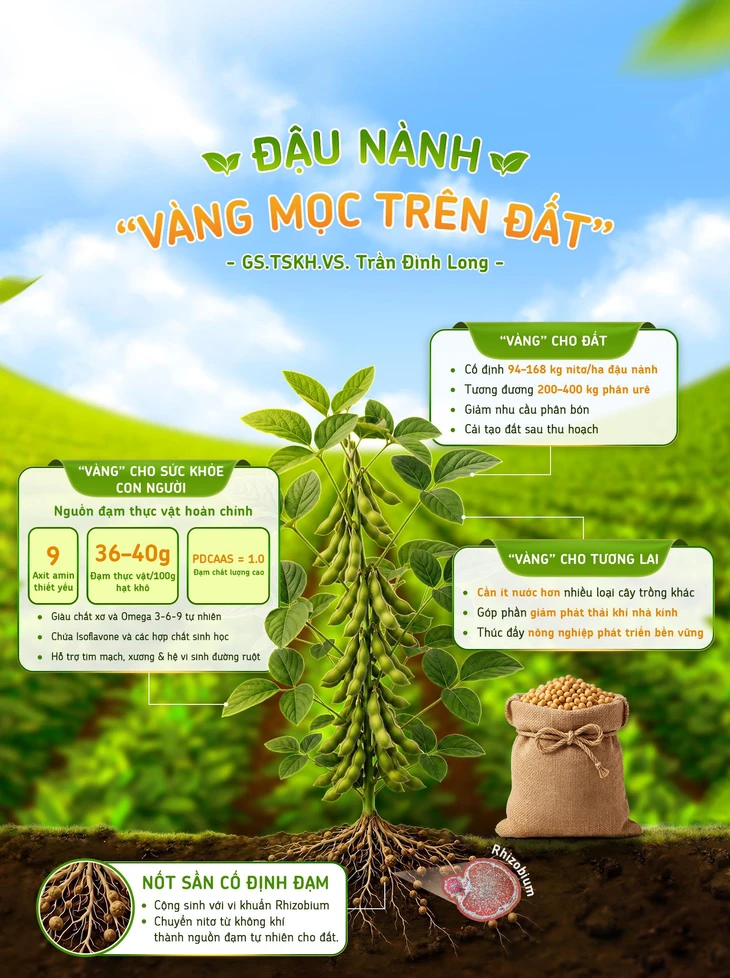
The ability to nourish the soil makes soybeans particularly special in agriculture - Photo: DNCC
For Vinasoy, the value of soybeans lies not only in the nutritional product but also starts right in the field. Researching genetic resources, selecting and breeding suitable varieties, and developing high-quality raw material areas are the foundation for enhancing the value of agricultural products from the roots, contributing to preserving the "gold growing on the land."
'Gold' for the future
In the context of climate change and increasing pressure on land and water resources, crops that provide nutritional value, use resources efficiently, and contribute to improving arable land will become increasingly important.
Soybeans simultaneously fulfill these values. Not only are they a highly nutritious food source, but they are also a crop that contributes to promoting low-emission agriculture and sustainable development.
Perhaps that's why, after more than 60 years of working with soybeans, Professor Tran Dinh Long still calls them "Gold growing on the soil." A simple name, yet it contains a profound insight into a plant that both nourishes people and enriches the land, contributing to shaping the future of agriculture.
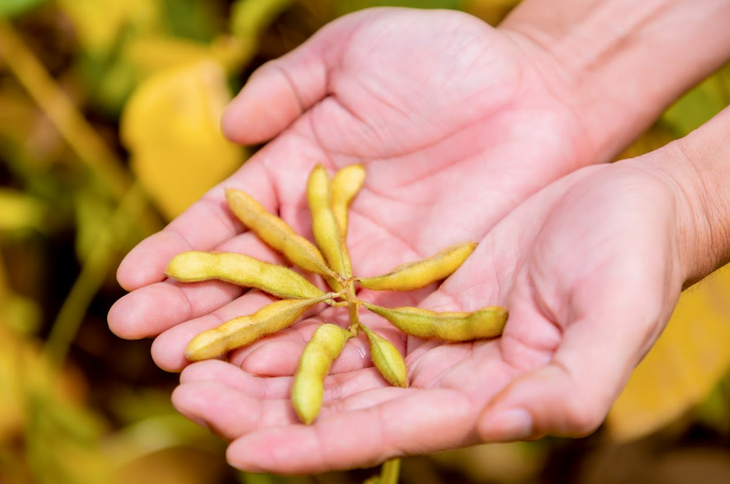
The "gold" of the soybean plant also lies in the long-term values it brings to humans and the ecosystem - Photo: DNCC
Throughout its nearly three-decade journey of soybean research and processing, Vinasoy has chosen to uphold these values – starting from the seeds, the fields, and the technology – so that each product not only provides nutrition from soybeans but also contributes to spreading a healthier lifestyle, more in harmony with nature, and towards sustainable development, helping to ensure national and global food security.