


Timeless milestones
Standing atop Trau Hill, the Po Klong Garai Tower emerges with a beauty that is both majestic and serene. The dark red brick blocks, arranged in a continuous sequence, form unique architectural structures, a testament to the ancient Panduranga region preserved to this day. The complex was built around the late 13th to early 14th centuries, associated with the worship of King Po Klong Garai – a king revered by the Cham community. Over the centuries, the complex has relatively well-preserved its three main structures: the Main Tower (Kalan), the Gate Tower (Gopura), and the Fire Tower (Kosagrha).
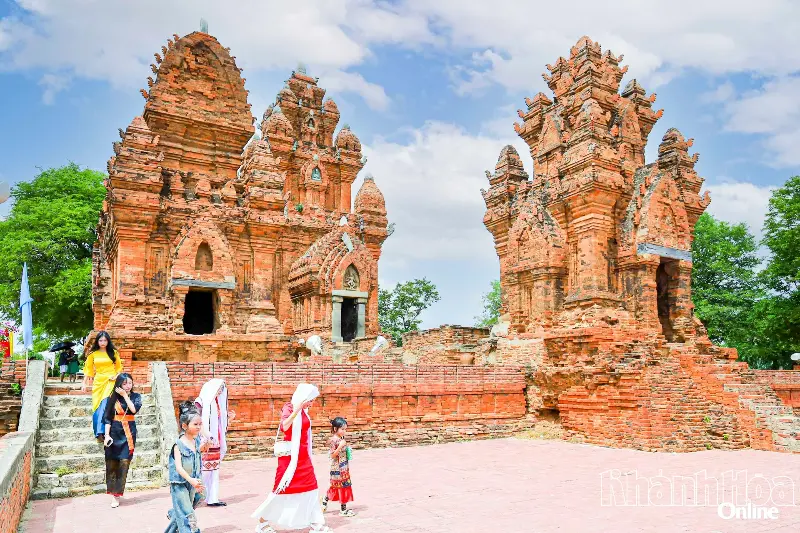 The beauty of the Po Klong Garai Tower National Special Monument.
Instead of using common building materials like stone or mortar, the structures are built primarily from brick, combined with unique construction techniques and material bonding. The lines on the tower's body, the system of doors, roofs, reliefs, statues, and decorative patterns show the astonishing technical and artistic skill of the ancient Cham craftsmen. But the value of Po Klong Garai Tower lies not only in what can be seen with the naked eye. Within that space lies the religious life of the Cham Brahman community, passed down through many generations. Every Katê season, the tower becomes a place where the community returns to perform rituals, meet, and continue traditional cultural values. In 1979, Po Klong Garai Tower was classified as a national architectural and artistic monument. In 2016, the monument was classified as a Special National Monument by the Prime Minister .
Impact of nature
Behind that almost timeless beauty, the effects of nature are also gradually becoming apparent. Rain, sunshine, temperature, humidity, wind, solar radiation, and the growth of vegetation on the surface are all factors affecting the materials and components of the structure. For an architectural complex built hundreds of years ago, regular preservation and proper restoration are of particular importance. “From afar, the shape of the ancient architectural structures still retains its majestic appearance, but upon closer inspection, some signs of deterioration can be seen in the components and material surfaces. We hope that the Po Klong Garai Tower will soon be preserved, restored, and rehabilitated to safeguard its inherent values for future generations,” shared Venerable Dong Ba, Vice Chairman of the Council of Cham Brahman Dignitaries and Head of the Customs Committee of the Po Klong Garai Tower.
The signs of deterioration in a centuries-old monument are not simply a matter of an architectural structure. Every brick, every pattern, every remaining component is a part of history. Therefore, without appropriate preservation solutions, small impacts over time can accumulate and affect the integrity of the monument.
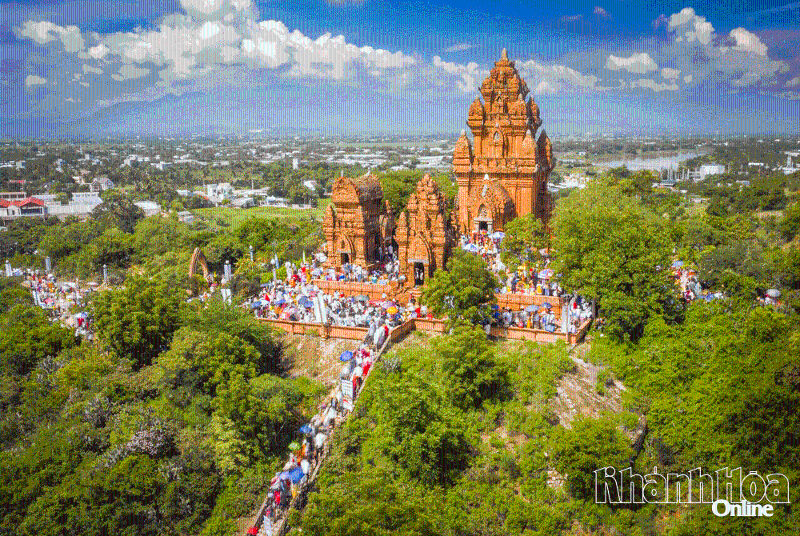 The Po Klong Garai Tower is a special national historical site.
Restoration aims to preserve what is already there.
For the Po Klong Garai Tower, restoration does not mean making the towers look newer. The important thing is to preserve as much of the existing structure as possible, from its components, materials, architectural traces, to the space and landscape associated with the structure. This is also the principle set forth in the research and planning process for the preservation, restoration, and rehabilitation of the Po Klong Garai Tower, a special national monument. Intervention solutions must be based on scientific research results, documentary evidence, remaining traces, and the actual condition of each component. Components that are still salvageable will be prioritized for preservation and reinforcement; replacement will only be considered when absolutely necessary and based on scientific grounds. For elements requiring restoration, it is crucial to have clear justification, avoiding restoration based on speculation, thereby ensuring the authenticity and inherent value of the monument. This is also why special attention is paid to preparing documentation, researching the current situation, and developing plans before implementing specific restoration projects.
Gradually improving the infrastructure for restoration.
Following the direction of the Provincial People's Committee, the Department of Culture, Sports and Tourism, in coordination with specialized units and consulting units, focused on completing the dossier for the task of developing a plan for the preservation, restoration, and rehabilitation of the Po Klong Garai Tower, a special national historical site. The dossier was reviewed, revised, and supplemented based on feedback from specialized agencies at the central level. After the completion process, the Department of Culture, Sports and Tourism advised the Provincial People's Committee to report to the Ministry of Culture, Sports and Tourism for consideration and appraisal according to its authority.
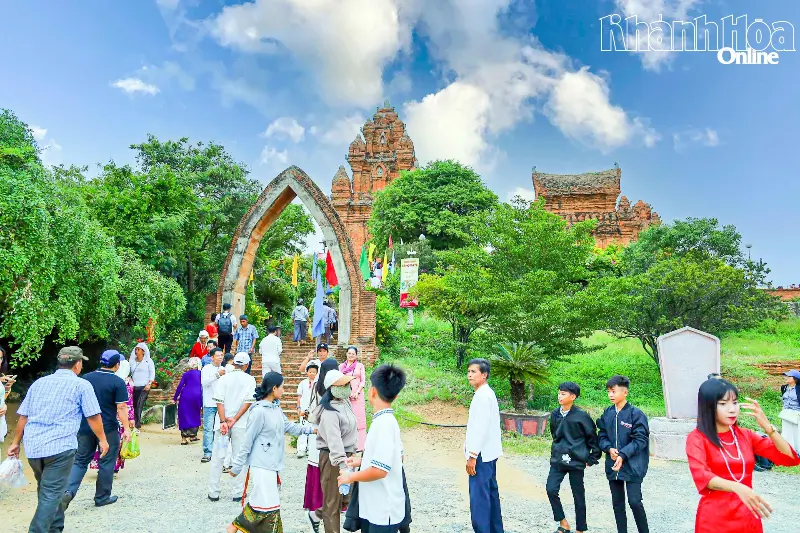 The Po Klong Garai Tower, a special national monument, is located on Trau Hill.
According to Ms. Thai Thi Le Hang, Director of the Department of Culture, Sports and Tourism , the preservation, restoration, and rehabilitation of the Po Klong Garai Tower must be considered within a unified whole, encompassing architecture, landscape, and cultural space connected to the community. The planning also aims to establish a basis for determining the overall conservation direction, protected areas, preservation, restoration, and control of space and landscape within the monument area. “For a monument of special value like the Po Klong Garai Tower, the most important thing is to ensure the original elements and authenticity of the monument. Restoration work must be carried out cautiously, based on scientific principles, and in harmony with maintaining the cultural and religious space of the Cham community,” Ms. Thai Thi Le Hang stated.
Preserve a living cultural space.
Viewing the Po Klong Garai Tower merely as an ancient architectural structure would fail to fully appreciate its value. This site remains a vibrant cultural space. Rituals, festivals, and religious practices of the Cham Brahman community continue, with the Katê Festival being one of its most significant cultural events. The drums, trumpets, dances, traditional costumes, and ceremonies performed within this historical site are the very "soul" that gives this heritage its vitality. Therefore, preserving, restoring, and rehabilitating the Po Klong Garai Tower is not just about bricks, stones, or architectural components. It's also about safeguarding a cultural space where the community continues to practice, transmit, and revive values cultivated over generations. During the restoration process, the preservation of the monument must go hand in hand with ensuring the conditions for the community to continue practicing its beliefs, festivals, and traditional cultural activities.
To allow heritage to continue telling its story.
Today, the Po Klong Garai Tower is not only an attractive destination for tourists but also a symbol of Cham culture, an important landmark in the journey of understanding the history and culture of Khanh Hoa province. When preservation, restoration, and rehabilitation work is carried out on a scientific basis and in accordance with conservation principles, the monument will have better conditions to endure over time. The architectural, artistic, and cultural values passed down through centuries will continue to be preserved, while the religious space and cultural life of the community will be maintained.
Preserving a centuries-old monument is not about transforming it into a "new" structure, but about ensuring that the most authentic aspects of history continue to be present. For the Po Klong Garai Tower, it's a journey of preserving the old bricks, the ancient architectural features, the historical stories, and the living cultural space. So that in the future, when standing on Trau Hill and looking towards the towers, generations will still recognize the imprint of a unique Cham culture that existed and flourished in this land.
GIANG DINH