



Many families have a habit of cooking a large pot of rice and storing it in the refrigerator to eat over several days. However, this method poses a food safety risk and can cause food poisoning if stored incorrectly.
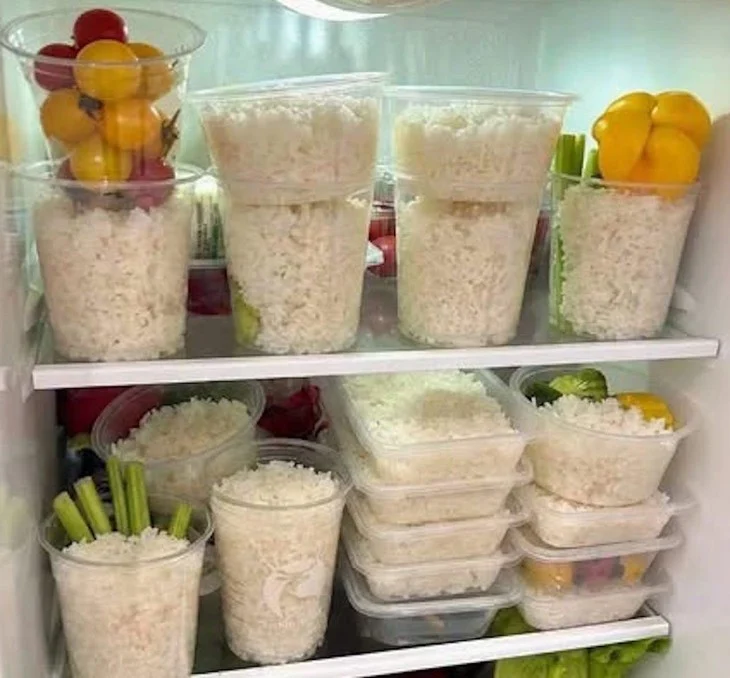
Storing rice in the refrigerator for several days poses many risks of food poisoning - Illustration image.
Recently, many people have been sharing ways to save time in the kitchen by freezing rice in the refrigerator. These portions of rice are divided into small glass or plastic containers to be used over several days.
However, nutritionists warn that storing rice in this way poses many risks of food poisoning.
According to Dr. Le Thi Huong Giang, Head of the Nutrition Department at 19-8 Hospital, rice left at room temperature for too long after cooking can become a favorable environment for bacteria to grow, especially Bacillus cereus.
This type of bacteria can survive in the form of spores in rice and is not completely destroyed by cooking. When conditions are favorable, they multiply and produce toxins that cause food poisoning. Symptoms can appear quickly: vomiting within 1-6 hours or diarrhea within 6-15 hours.
It's important to note that the toxins produced by this bacteria are not completely destroyed by reheating the rice. Therefore, if the rice was already contaminated, reheating it in the microwave or by boiling it again will not guarantee safety.
In fact, many people following this trend are also making common mistakes such as leaving rice at room temperature for hours before refrigerating it, leaving a large pot of rice untouched, causing it to cool slowly, or reheating it multiple times. Some people even thaw rice at room temperature. All of these habits increase the risk of bacterial contamination.
To safely use leftover rice, you need to follow these guidelines: do not leave rice at room temperature for more than 1-2 hours after cooking. It's best to divide the rice into smaller portions to cool quickly before storing it.
Store in the refrigerator below 4°C if using within the day, or freeze if needed for longer storage. Rice should only be consumed within 24 hours if refrigerated. When eating, reheat thoroughly and avoid reheating multiple times.
For families storing food in the freezer, a temperature of around -18 degrees Celsius only slows down bacterial growth, not completely eliminates it or removes toxins that have already formed. Therefore, freezing is only meaningful if the rice is properly chilled from the start; it's not a way to "save" rice that has been left out for too long.
"Cooking a large batch to last for several days isn't impossible, but it requires proper storage. If you do it incorrectly, the risk of food poisoning still exists even if the rice looks and tastes normal," Dr. Giang warned.