



Sam Altman, CEO of OpenAI, argues that the debate about AI's energy consumption is unfair, emphasizing that training humans also consumes similar resources.
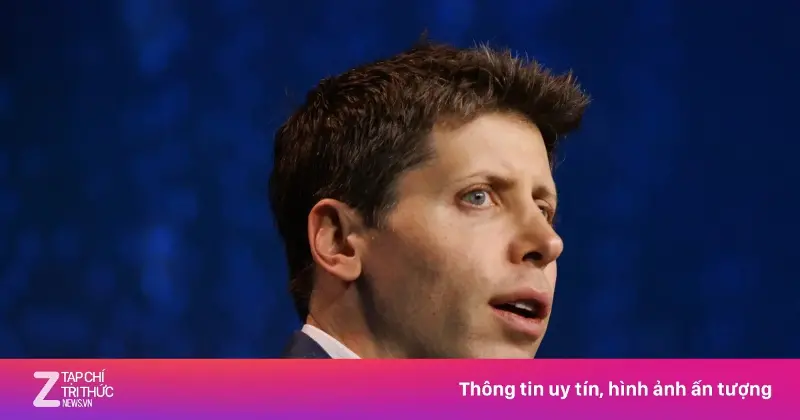
At an event hosted by Indian Express, OpenAI CEO Sam Altman addressed concerns about the environmental impact of AI, particularly regarding water and energy consumption.
Altman was in India to attend a major AI summit. When asked about reports surrounding the amount of water systems like ChatGPT use, he stated that much of the information circulating online is inaccurate. According to Altman, concerns about AI consuming water are “completely unfounded,” although he acknowledged that this was a real issue in the early days when data centers used water cooling.
“Now that we’re no longer doing that, you’ll see things on the internet like ‘Don’t use ChatGPT, each query uses 17 gallons of water’ or something like that. This is completely untrue, completely insane, and has nothing to do with reality,” Altman said.
While rejecting specific figures, the CEO of OpenAI argued that it is reasonable to be concerned about the overall energy consumption of AI. He emphasized that the issue is not the energy consumed by each individual query, but rather the ever-increasing scale of AI usage globally. According to Altman, this means the world needs to accelerate the transition to energy sources such as nuclear, wind, and solar.
Currently, there are no legal regulations requiring technology companies to disclose details of their electricity and water usage. Therefore, many scientists have conducted independent studies to estimate the environmental impact of data centers.
The CEO of OpenAI also argued that debates about the energy ChatGPT uses are sometimes "unfair," especially when focusing on the amount of electricity needed to train an AI model. He argued that training a human also consumes significant resources.
"Training a human being also requires a lot of energy. It takes about 20 years of life and a huge amount of food before we become adults," Altman said. He also mentioned the evolutionary process that spans many generations to form human knowledge.
According to Altman, a more reasonable comparison would be to measure the amount of energy AI needs to answer a question after training, compared to the energy a human needs to perform the same task. He argues that, viewed from this perspective, AI may have already caught up in terms of energy efficiency.